Fishing boats by Venice — History & Facts
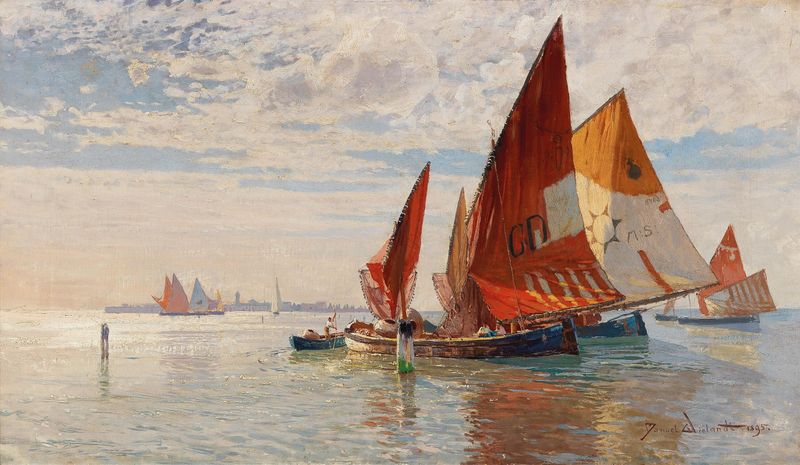
Is this a mirror — or a memory? In Fishing Boats by Venice, the fleeting nature of time and the reverberations of nostalgia intertwine seamlessly, inviting the observer into a realm where past and present converge. Look to the foreground, where the vibrant hues of red and orange brush strokes define the fishing boats bobbing gently on the water. Each vessel, a palette of life, contrasts with the cool blues and greens of the Venetian lagoon. Notice how the light dances upon the surface, creating shimmering reflections that blur the line between sky and water, painting a dreamlike tableau.
The artist employs soft, impressionistic strokes to evoke a sense of movement, suggesting that these boats are not merely anchored but are alive, teetering on the cusp of departure. Delve deeper into the composition, and you'll find that beneath its serene surface lies a poignant tension. The boats, laden with the weight of untold stories, seem to whisper of long-forgotten voyages and the fishermen who once sought bounty in these waters. The interplay of light and shadow signifies the transient passage of time, while the muted background hints at a world both familiar and distant.
This duality captures not just a scene but an emotional landscape, inviting viewers to reflect on their own memories and the connections that bind them to places they have loved. In 1893, the artist created this piece in the vibrant cultural atmosphere of late 19th-century Venice, a time when the city was a hub of artistic innovation and change. Wielandt, influenced by the Impressionist movement, sought to capture the essence of everyday life through this work. The period was marked by a growing interest in the fleeting aspects of experience, and the blending of colors reflects both a personal and collective longing for recollection amid a rapidly modernizing world.