Fishing- Bottom Fishing — History & Facts
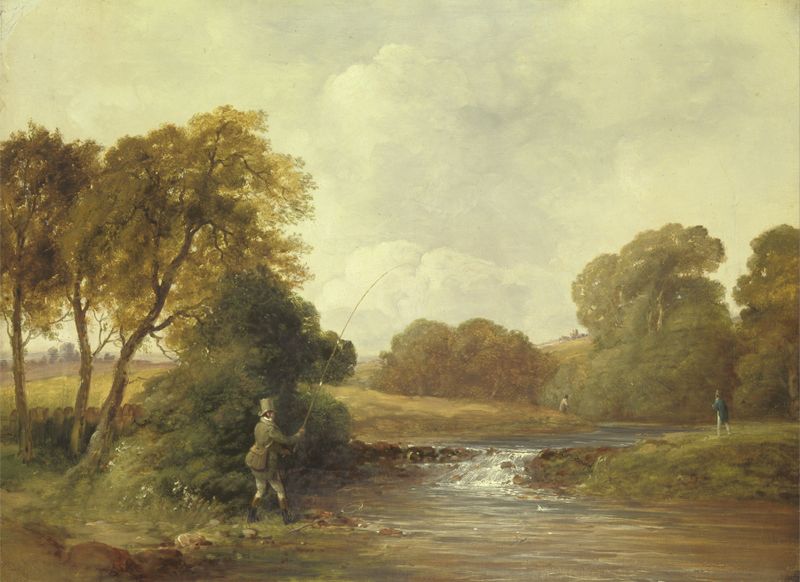
In Fishing - Bottom Fishing, the haunting juxtaposition of elegance and violence reveals an unsettling truth lurking beneath the surface. As the viewer is drawn in, the shimmering allure of the gold upon the canvas beckons, promising tranquility while hinting at deeper conflicts. Look closely at the central figures, rendered in rich, tactile hues that contrast starkly with the muted background. The fisherman’s weathered hands grasp the rod with an intensity that betrays a deeper struggle, every muscle taut with focus.
Notice how the light dances across the water, illuminating the scene with a deceptive clarity that masks the darker undertones of this endeavor. The swirling brushstrokes evoke movement, capturing the tension of anticipation, while the deep blues and greens create a sense of both depth and melancholy. Beneath this surface beauty lies a narrative of violence that is both implicit and critical. The act of fishing, often romanticized, transforms here into a metaphor for the human struggle against nature and the self.
The gold glimmers not only as a symbol of bounty but also as a facade that conceals the brutality of the chase and the sacrifice it demands. In every stroke, there is an undercurrent of conflict—between life and death, sustenance and ritual, allure and despair. William Jones painted this work during a period when the art world was increasingly exploring themes of realism and the human condition. Operating at a time when the tension between industrialization and nature was palpable, his choice to depict such rawness speaks volumes.
In this undefined moment, the struggles of everyday life are immortalized, echoing the complexities of existence that remain relevant today.