Fishing- Playing a Fish — History & Facts
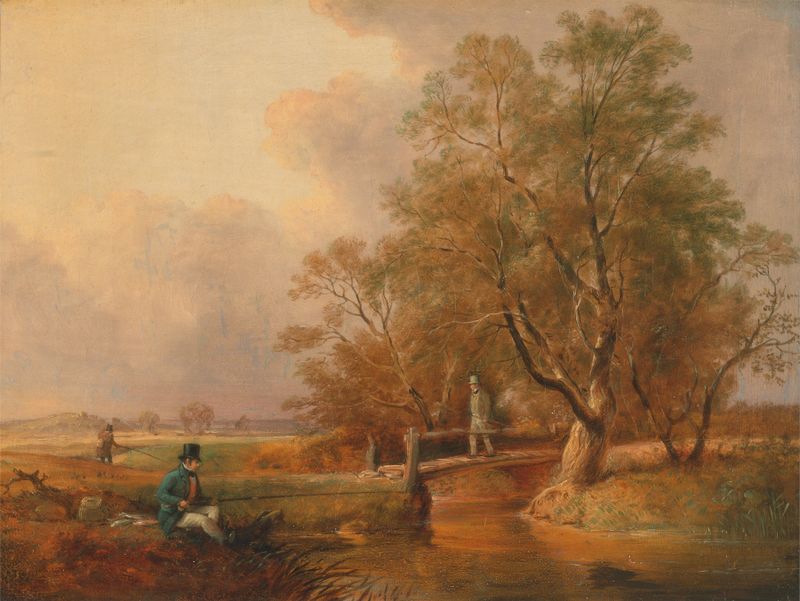
In the realm of art, transcendence often manifests in unexpected ways, capturing fleeting moments that resonate deeply within us. Focus first on the center of the canvas, where the vivid flash of the fish draws your eye—its scales glimmering with hues of blue and green that dance under the light like a memory surfacing from the depths of the subconscious. The surrounding water, with its fluid strokes, swirls in a rhythmic motion, echoing the struggle between the fisherman and his catch. Notice how the warm tones of the fisherman’s skin contrast with the cool colors of the aquatic world, creating a palpable tension that surrounds this moment of triumph and surrender. The composition invites contemplation on the relationship between man and nature, where the act of fishing is more than a mere pursuit; it symbolizes a journey of connection and reflection.
The splattered paint near the water’s edge hints at the chaos often found in life, while the serene expression of the fisherman suggests a transcendence that bridges the physical and spiritual realms. Each detail, from the taut fishing line to the rippling surface of the water, adds layers to this narrative of perseverance and grace. William Jones created this work during a period marked by artistic exploration and introspection. Working in the late 19th to early 20th century, he was influenced by the naturalistic movements of his time, as well as the emerging modernist ideas that sought to capture the essence of human experience.
This painting, though undated, reflects the era's shift towards personal expression and a deeper understanding of the interplay between humanity and the environment.