
Fiskerhytter, Kinn — History & Facts
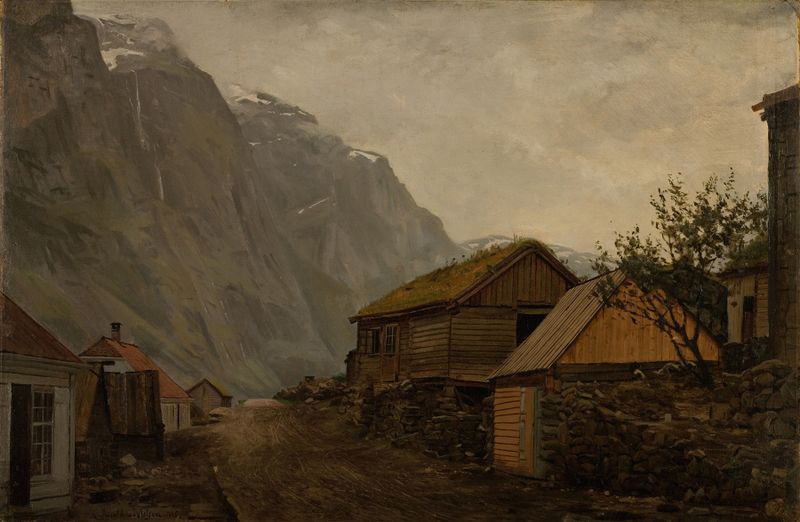
This thought lingers in the air as one gazes upon the tranquil landscape, where nature conceals the tumult of human desire beneath its serene surface. The delicate balance between longing and fulfillment emerges, hinting that obsession often camouflages itself within poetic beauty. Look to the foreground where the charming fishermen’s cabins, painted in soft ochres and muted greens, stand sentinel against the rugged backdrop of the rocky coastline. Notice how the light bathes these structures in a warm glow, creating an inviting aura that contrasts with the stormy waves crashing in the distance.
Nielsen’s careful brushwork breathes life into the scene, capturing the play of light and shadow, evoking a sense of nostalgia while simultaneously drawing us into the depths of longing for a simpler existence. As you delve deeper into the composition, you may find hidden tensions at play. The vibrant colors of the cabins juxtapose the distant tumult of the sea, suggesting an internal struggle between stability and chaos. Each cabin, while picturesque, can also symbolize isolation, a stark reminder of the solitary lives led by those who seek solace in nature’s embrace.
This duality reflects the artist’s fascination with the relationship between man and his environment, illustrating the fine line between admiration and obsession over this idyllic setting. In 1868, Nielsen painted this piece in Norway, during a time when the Romantic movement was flourishing across Europe. He was inspired by the dramatic landscapes of his homeland, yet wrestling with his own artistic identity amidst changing artistic conventions. This painting exemplifies the tension of the era, capturing not only the beauty of Norway’s coast but also the internal conflicts of an artist striving to find his voice within a world increasingly drawn to modernity.
More Artworks by Amaldus Nielsen
Browse all →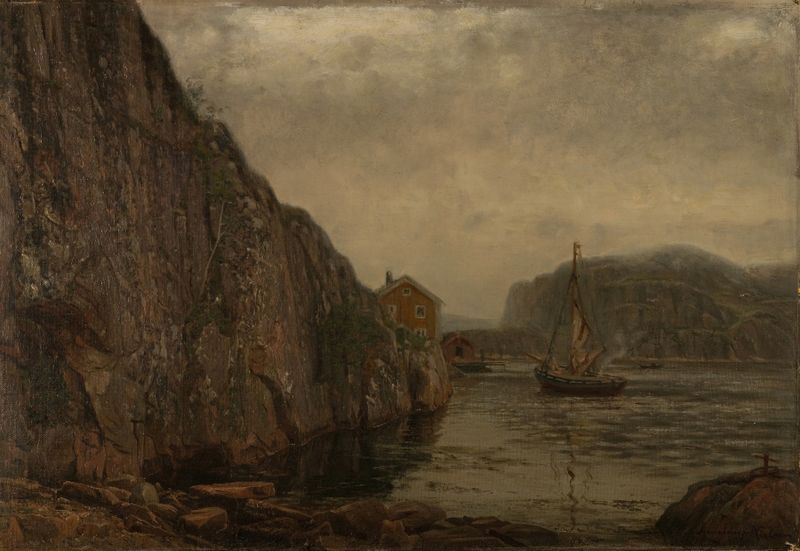
Skjærgård, Ny-Hellesund
Amaldus Nielsen
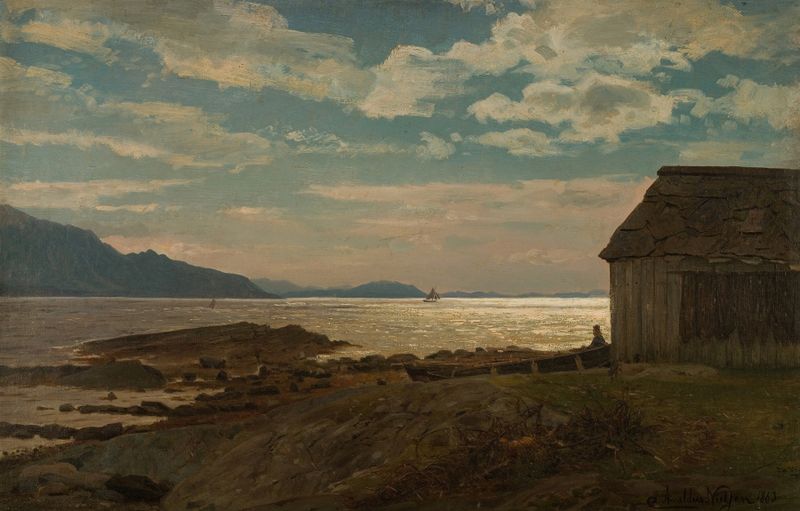
Fra Ølvestranden, Hardanger
Amaldus Nielsen
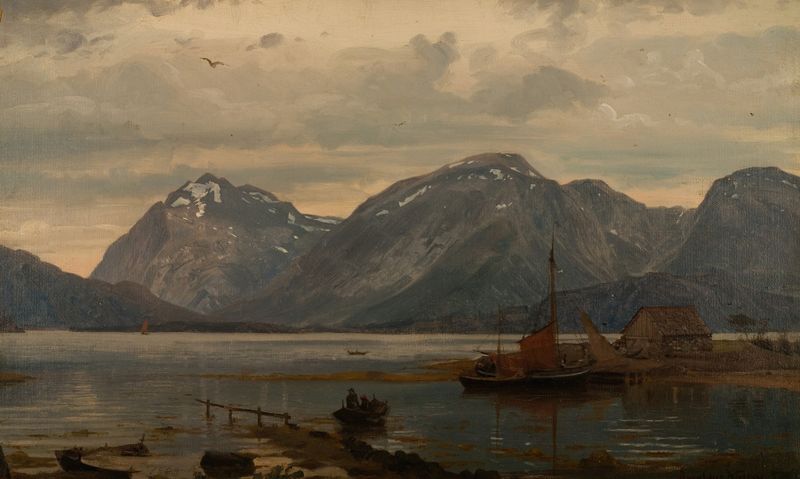
Fra Englafjellene, Hardanger
Amaldus Nielsen
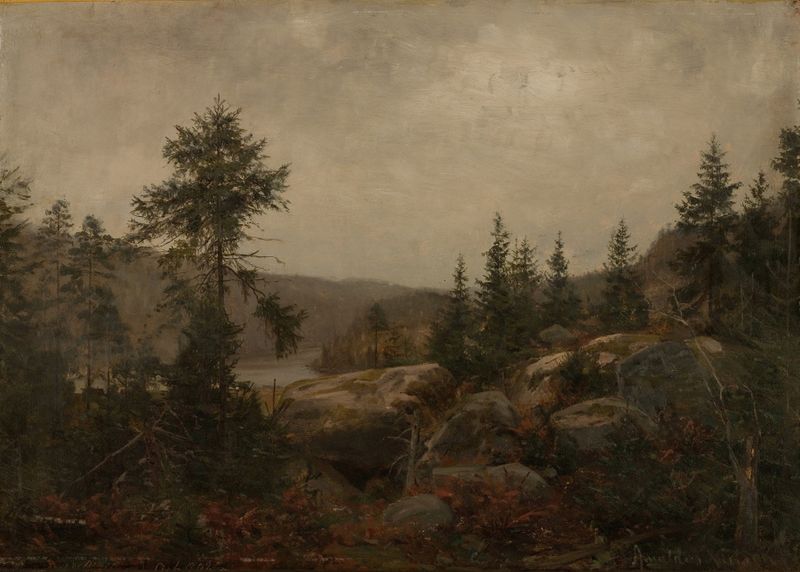
Duskregn . Gården Foss, Mandalselven
Amaldus Nielsen
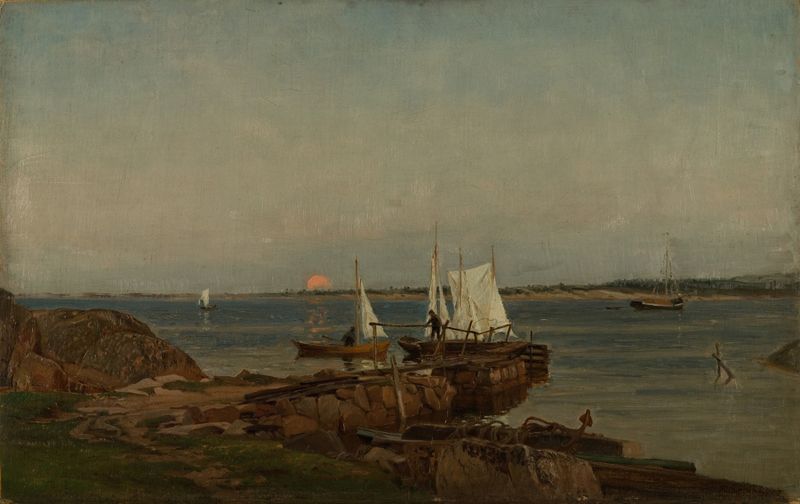
Sommernatt, Hvaler
Amaldus Nielsen
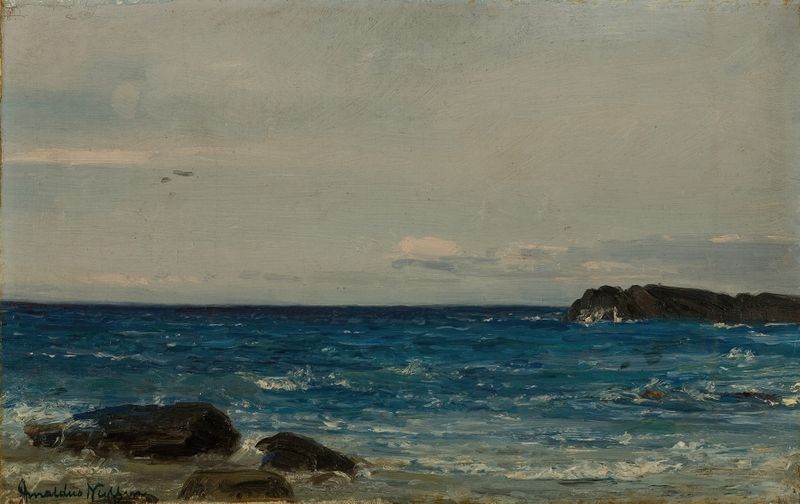
Fra Jæren
Amaldus Nielsen
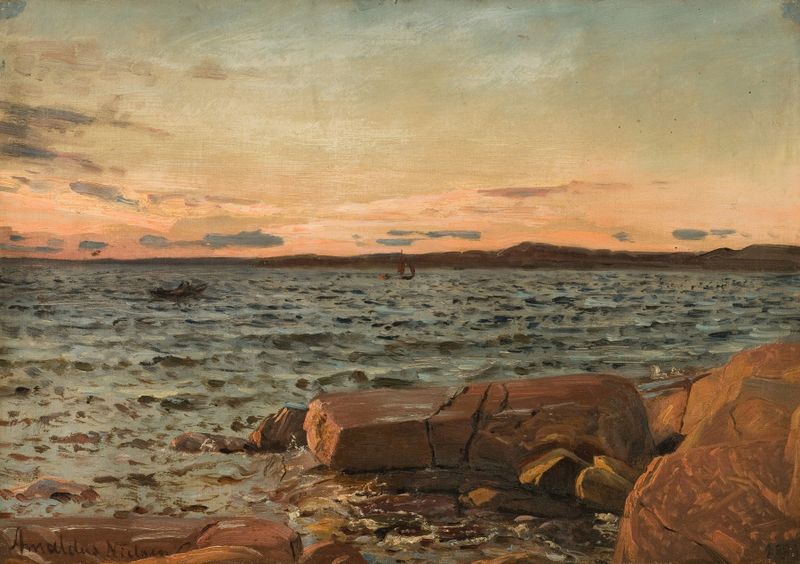
Solgangsvind, Hvaløene
Amaldus Nielsen
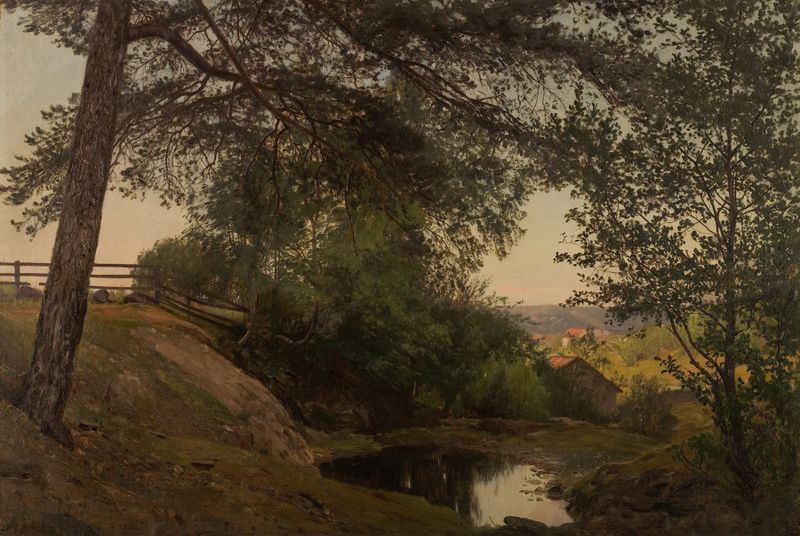
Mellom trærne. Lervik, Stord
Amaldus Nielsen

Båtbyggeri, Lillesand
Amaldus Nielsen
Regnstemning, Gudvangen
Amaldus Nielsen





