
Fleurs et poires — History & Facts
What first captures the eye in Fleurs et poires is not the subject itself, but the way the light seems to hover—soft, almost powdery—over both fruit and bloom. The pears settle heavily on the pale tabletop, their yellow-green skins modeled with dabs of color that echo the loose, fluttering petals above. The flowers, rising just behind, are not arranged for grandeur but for intimacy: a single red carnation breaks the pastel hush, while roses in cream and blush lean gently into one another, their forms dissolving at the edges.
The artist’s brushwork is visible everywhere, each stroke a small decision, giving the surface a kind of living texture that asks the viewer to linger and look again. Painted in 1909, this work belongs to a moment when French artists were reimagining the still life—not as a static display, but as a quiet stage for the drama of light and color. Achille Laugé, working at the crossroads of Impressionism and Pointillism, often chose humble subjects: fruit, flowers, the everyday objects of rural life. Such paintings were rarely grand commissions; they were made for collectors who wanted beauty distilled into its simplest form, or for the artist’s own circle.
The source records this particular painting as photographed in 2018 and held in a private collection, a reminder that history has kept few traces of its journey. Yet the painting’s gentle clarity, its sense of a fleeting afternoon, still invites us to imagine the room and the quiet moment it was painted for.
More Artworks by Achille Laugé

Ruelle au balcon fleuri
Achille Laugé
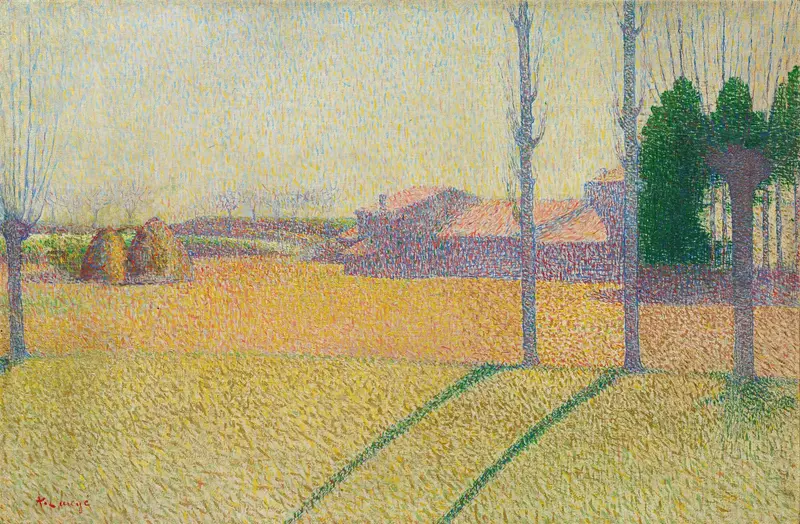
L’hort À Cailhau
Achille Laugé
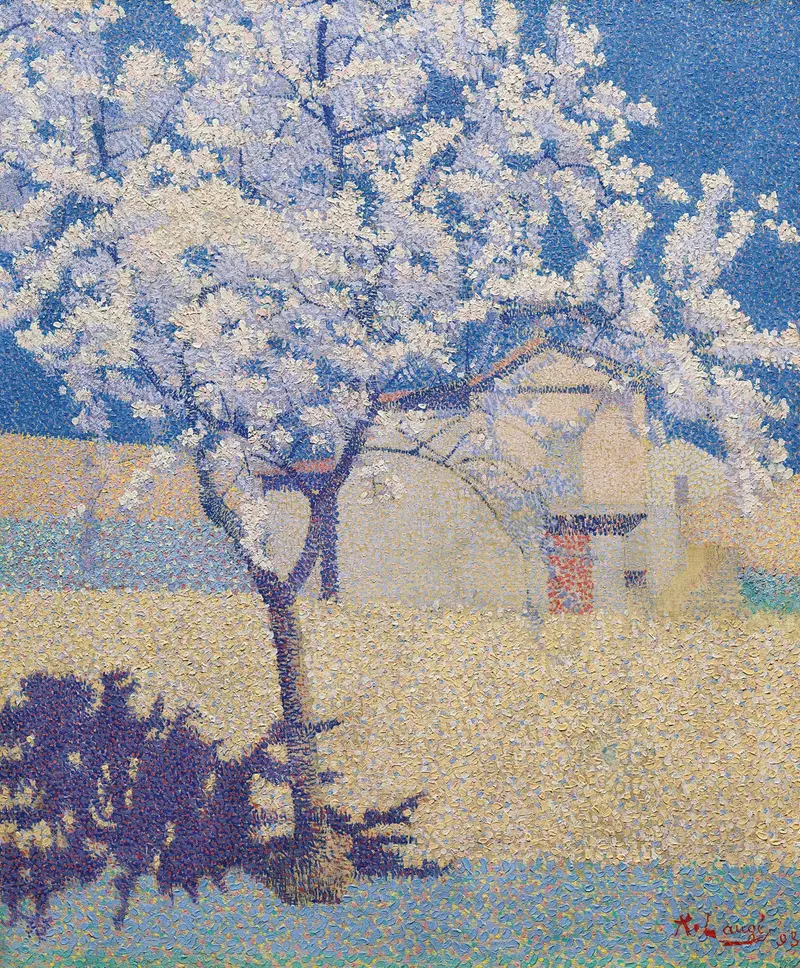
L’Arbre En Fleur
Achille Laugé
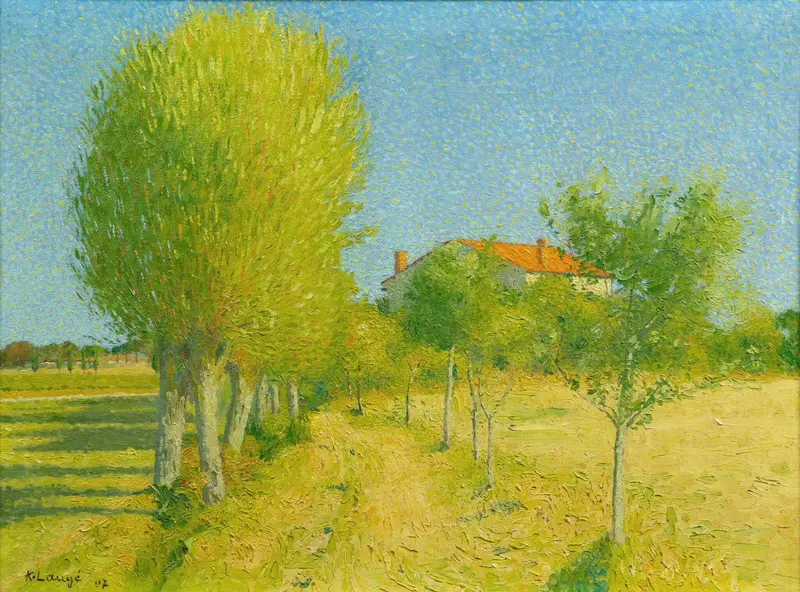
L’allée de saules derrière l’Alouette à Cailhau
Achille Laugé
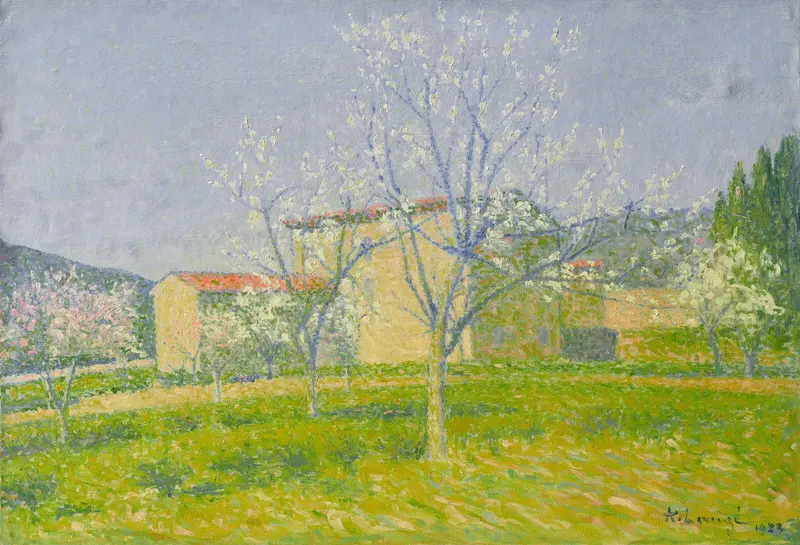
Verger en fleurs à Alet-les-Bains (Aude)
Achille Laugé
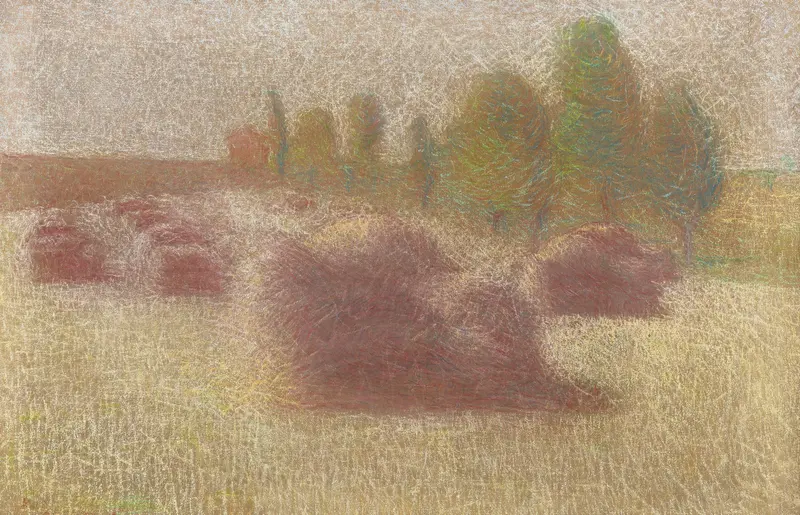
Les Gerbes
Achille Laugé
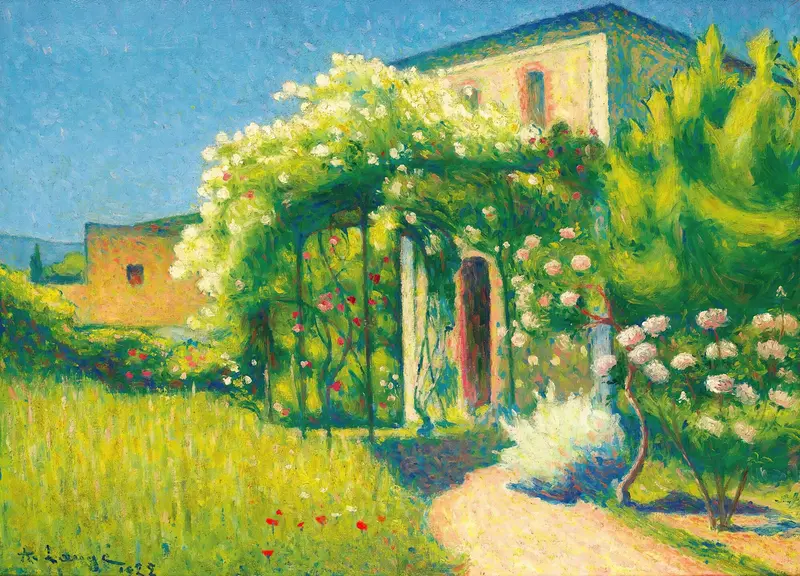
L’Atelier À Alet-Les-Bains
Achille Laugé
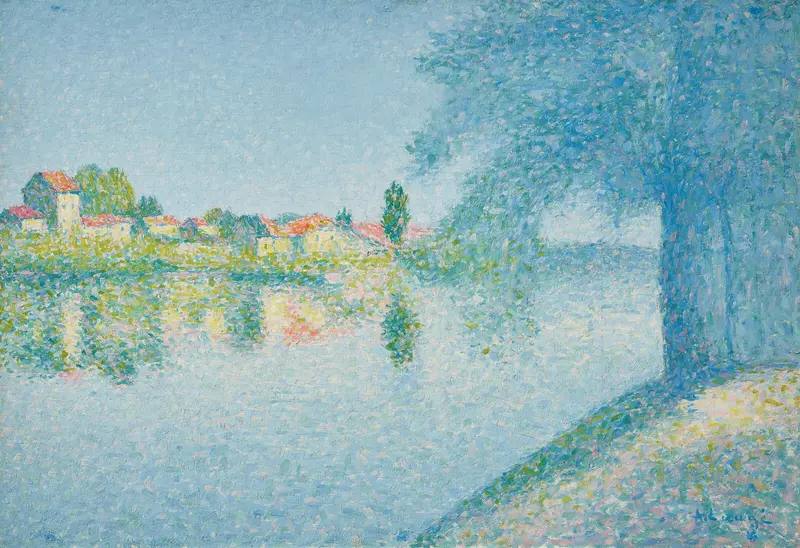
Vue des quais de la Garonne
Achille Laugé
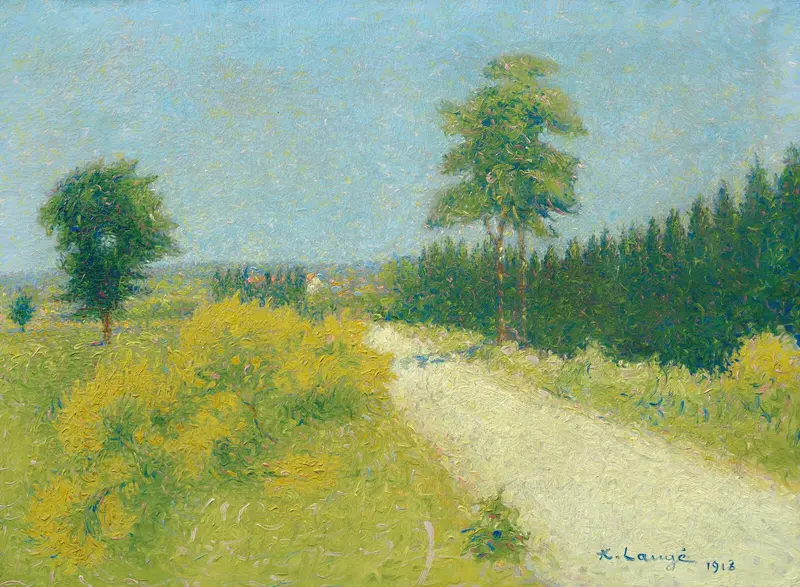
La route de Belvèze vers le relais
Achille Laugé
La route (The Road)
Achille Laugé





