Flußlandschaft mit Viehherde — History & Facts
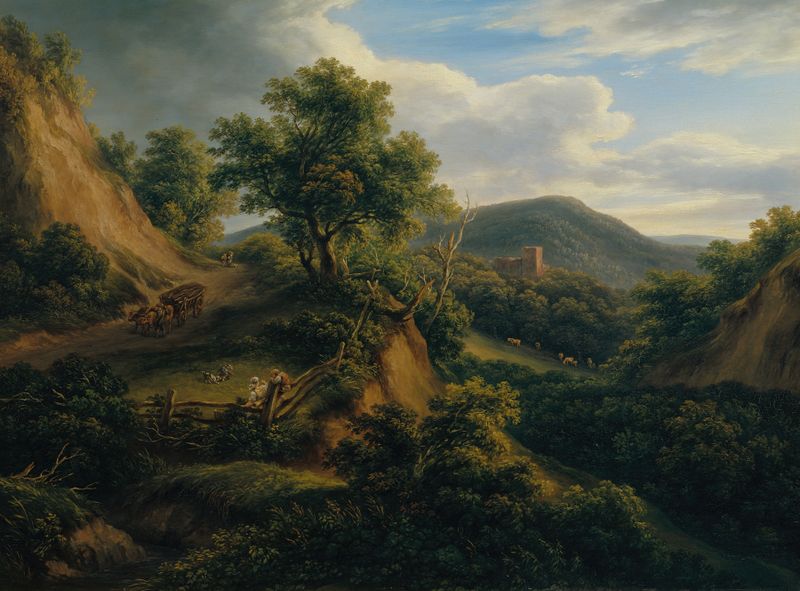
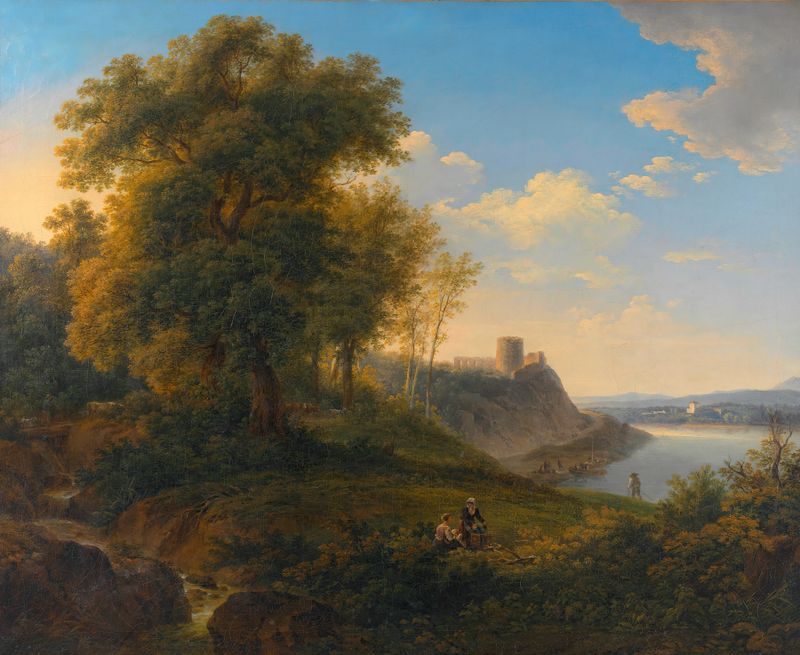
In the delicate interplay of nature and nurture, balance emerges as a silent force, guiding us through the pastoral landscape depicted in this piece. Begin with the soft hues of green and blue that blanket the canvas, inviting your gaze to the serene waters of the river. Look to the left at the gentle curve of the shoreline, where soft grasses meet the reflective surface, emphasizing the unity between earth and water. Notice how the herding cattle, scattered yet harmoniously arranged, echo the natural rhythms of the surrounding landscape.
The light dances upon the water, highlighting the delicate brushwork and creating a palpable sense of tranquility. Subtle contrasts breathe life into the scene: the rough texture of the cattle against the smooth, flowing water, the warmth of the sunlit patches juxtaposed with the cool shadows of the overhanging trees. Each element is a note in a symphony of balance, suggesting a harmony that exists between human presence and the untamed beauty of nature. The calmness, however, hints at a deeper emotional tension—an awareness of the fragility of this idyllic existence, forever teetering on the edge of change. In 1826, Mössmer painted this work during a formative period in the Romantic movement, where the celebration of nature was paralleled by an exploration of human emotion.
Living in Germany, he sought to cultivate a connection to the landscapes that surrounded him, reflecting the cultural sentiments of a changing world. At this time, art was increasingly viewed as a medium for personal expression, and his commitment to portraying the balance between humanity and the natural world found its voice in this serene landscape.