Waldige Berglandschaft mit Ruine — History & Facts
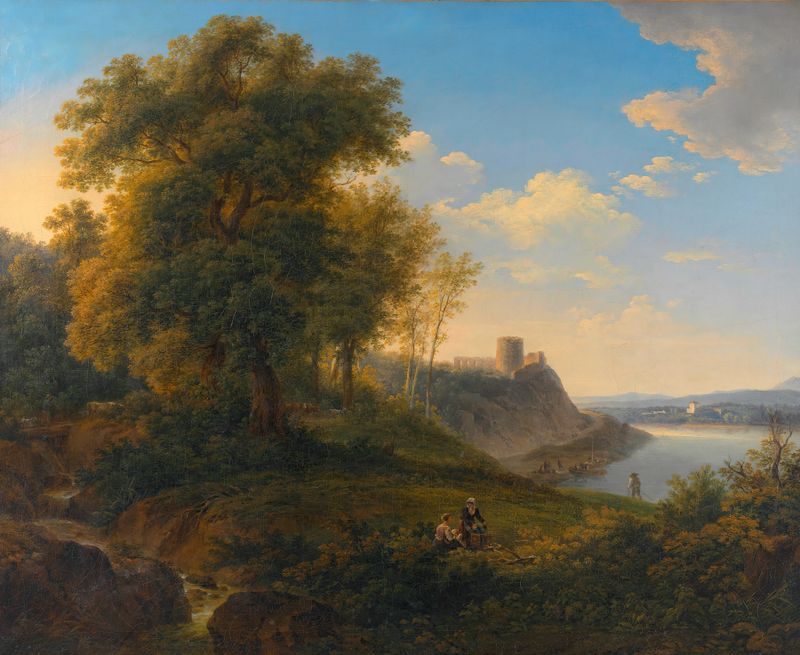
What if silence could speak through light? In the delicate interplay of shadow and illumination, loss becomes palpable. Look to the foreground, where the remnants of a crumbling ruin emerge from the lush green landscape. Notice how the painter employs soft, muted greens and browns, evoking a sense of nostalgia and fading glory. The light gently spills over the hills, highlighting the contours of the mountainous terrain, while the sky above swells with the promise of an impending storm, suggesting an emotional undercurrent.
The composition subtly guides your gaze from the ruins upward, inviting contemplation of what once was. The juxtaposition of robust nature with the skeletal remains of human endeavor speaks volumes. As the hills stand tall and untouched, the ruin hints at lost aspirations and forgotten lives, a poignant reminder of mortality. Each brushstroke seems to grapple with the weight of history, capturing both beauty and decay in a single frame.
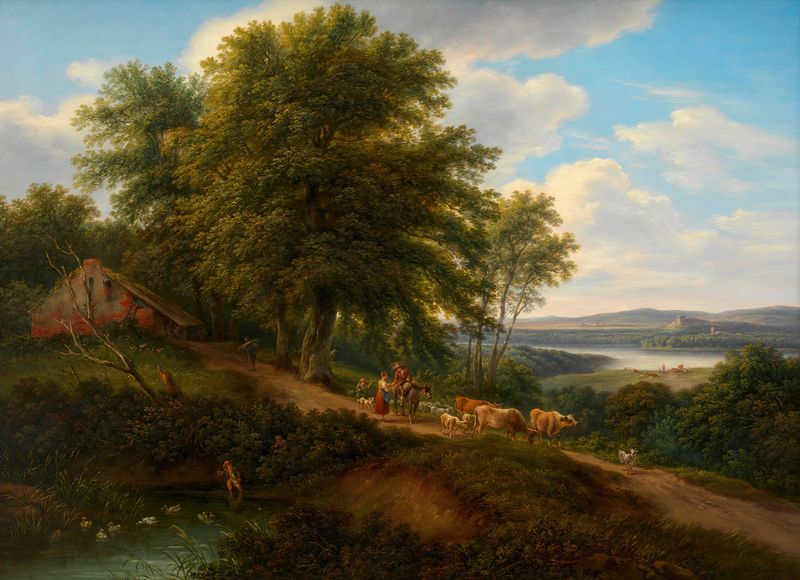
The absence of human presence intensifies the dialogue between the viewer and the landscape, fostering a sense of solitude that resonates deeply. Created in 1829, this piece reflects Joseph Mössmer’s exploration of romantic ideals during a time of profound change in Europe. Living in Bavaria, he was influenced by the burgeoning Romantic movement, which emphasized emotion and nature. This painting captures a moment where personal grief intertwines with broader cultural shifts, marking a transitional period as artists began to depict the complexities of human experience in harmony with the sublime aspects of the natural world.