Landschaft an der Donau — History & Facts
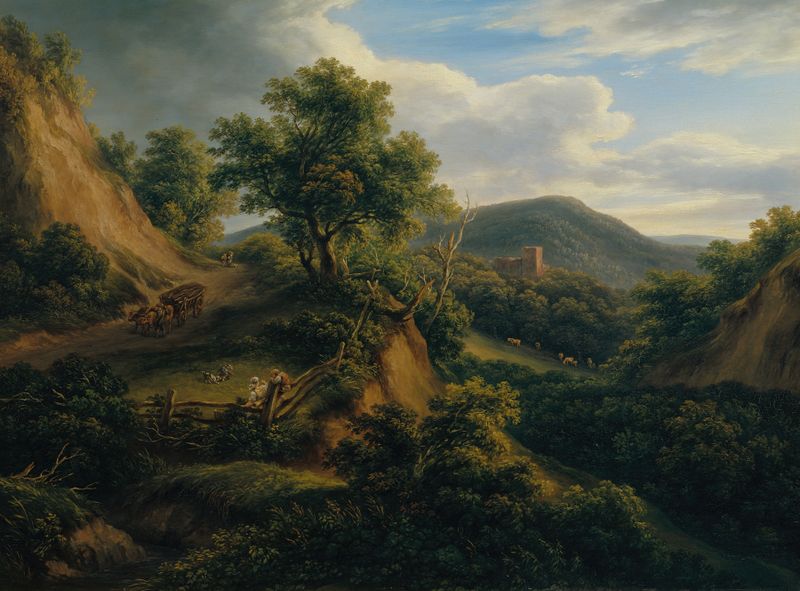
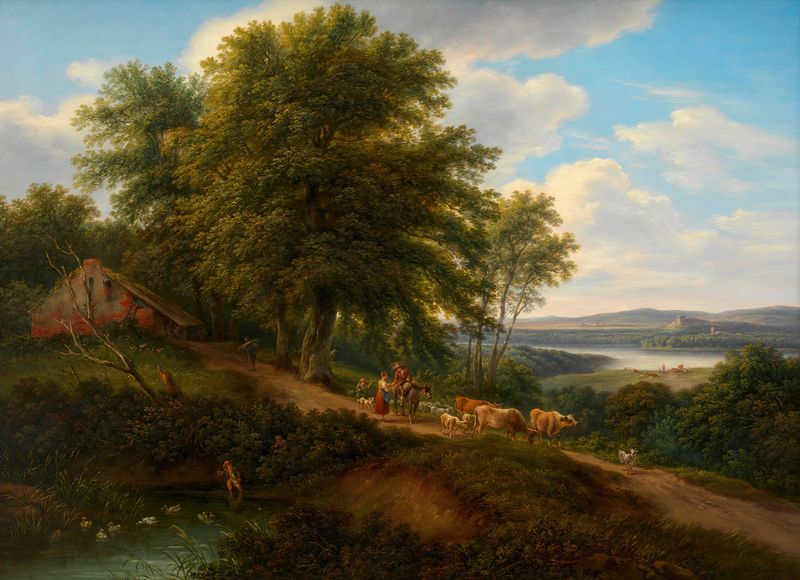
Did the painter know this moment would outlive them? The mist enveloping the river, the looming shadows cast by distant hills—each brushstroke lingers in time, a testament to fleeting beauty and an undercurrent of fear. Look to the left at the dense cluster of trees, their dark greens creating a stark contrast against the soft pastels of the sky. Notice how the light gently caresses the water’s surface, illuminating patches of golden reflection that hint at the day's end. The horizon stretches across the canvas, drawing the eye into an endless expanse that feels both inviting and ominous, as if the landscape itself harbors secrets waiting to be uncovered. In this serene yet unsettling composition, the tension between tranquility and foreboding resonates deeply.
The tranquil water, while beautiful, also evokes a sense of isolation and vulnerability, a reminder of nature’s duality. The interplay of light and shadow suggests an inevitable transition, perhaps reflecting the artist's own trepidations about the impermanence of life and art. Joseph Mössmer created Landschaft an der Donau in 1809, during a period marked by political upheaval in Europe and a shift toward Romanticism in art. Living in the wake of the Enlightenment, he was part of a movement that sought to express the emotional experience of nature and humanity.
This painting, emerging from his studio, captures not just the beauty of the Danube landscape but also the complexities of existence that surrounded him.