Flussaue mit Bauernhaus und Viehhirte — History & Facts
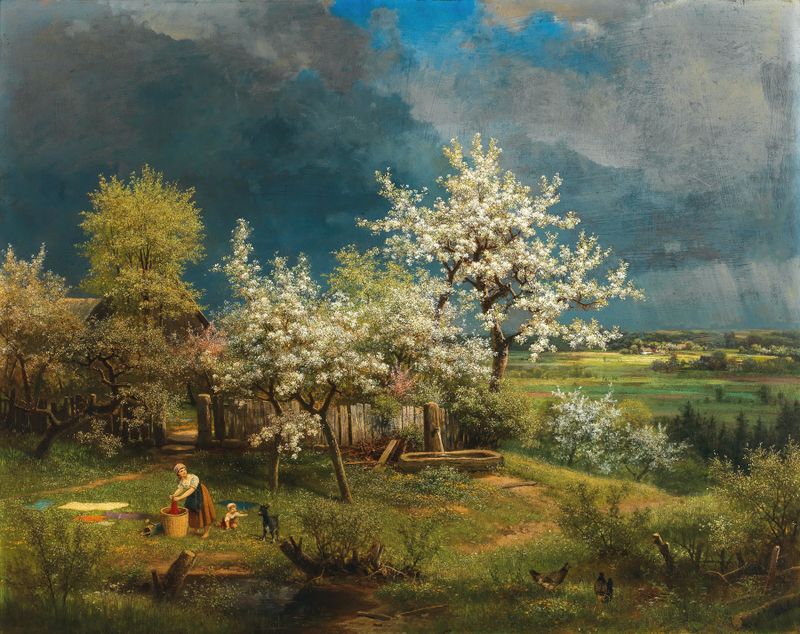
In the delicate interplay of light and shadow, we find a world both serene and fragile, echoing the transient nature of life itself. Look to the left at the soft contours of the farmhouse, its rustic charm radiating warmth amidst the surrounding greenery. Notice the gentle brushstrokes that bring texture to the thatched roof, while the vibrant hues of the fields contrast with the somber clouds above, hinting at an impending change. As your gaze travels to the right, the figure of the herdsman emerges, his posture both relaxed and watchful, embodying a connection to the land that feels both timeless and precarious. This composition captures the tension between stability and fragility.
The farmhouse stands as a fortress of tradition, yet the encroaching storm clouds introduce a sense of urgency, suggesting that even the most steadfast elements of life are vulnerable to the whims of nature. The herdsman, though anchored in his role, mirrors the delicate balance of existence, showcasing the intimate relationship between humanity and the pastoral world. Here, we are reminded of the ephemeral beauty of rural life, where each moment could shift with the slightest breeze. Eduard Leonhardi painted this scene in 1867, during a period marked by significant changes in the landscape of German art.
Living in Bavaria, he was influenced by the Romantic movement's embrace of nature and the everyday, seeking to capture not just the physical beauty of his surroundings, but the emotional resonance they held for viewers. This painting reflects his commitment to portraying the intimate relationship between man and nature, showing a world where fragility and strength coalesce in quiet harmony.