
A springtime landscape — History & Facts
Can beauty exist without sorrow? In the delicate interplay of spring’s tender embrace, A springtime landscape invites a reflection on longing woven into the very fabric of nature. Look to the right at the vibrant greens of the meadows, where wildflowers bloom in a chaotic yet harmonious dance. The artist’s brushstrokes create a soft texture, contrasting with the sharp, defined outlines of the trees that stand tall against the azure sky. Notice how the light falls upon the water, glimmering like a thousand diamonds, hinting at both warmth and transience, while the gentle shadows suggest a moment caught between the past and the future. Amidst the picturesque beauty lies a profound tension; the lush landscape evokes a sense of joy yet carries an undercurrent of yearning.
The distant mountains loom like memories just out of reach, invoking a bittersweet feeling that beauty, although enchanting, often coexists with an ache for what cannot last. Look closer, and you’ll see the subtle movement of a solitary figure, perhaps a wanderer, standing still—an embodiment of contemplation amidst the splendor, whispering secrets of solitude and hope. Created in 1858, this piece reflects a period in Eduard Leonhardi’s life marked by exploration and emotional depth. He painted it during a time when Romanticism was evolving, showcasing not only the beauty of nature but also the complex emotions it evokes.
His work captured the essence of a world awakening from the confines of darkness, threading together personal introspection with broader artistic trends of the day.
More Artworks by Eduard Leonhardi
Browse all →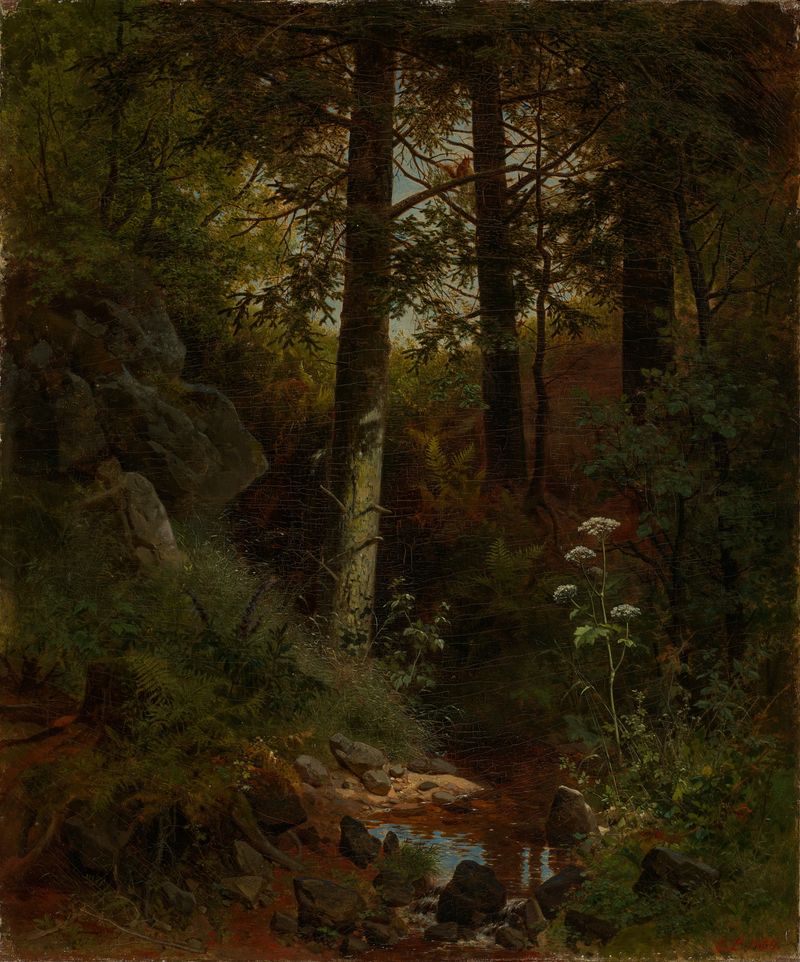
Waldeinsamkeit
Eduard Leonhardi

Schmuggler unter einer alten Eiche bei Mondaufgang
Eduard Leonhardi
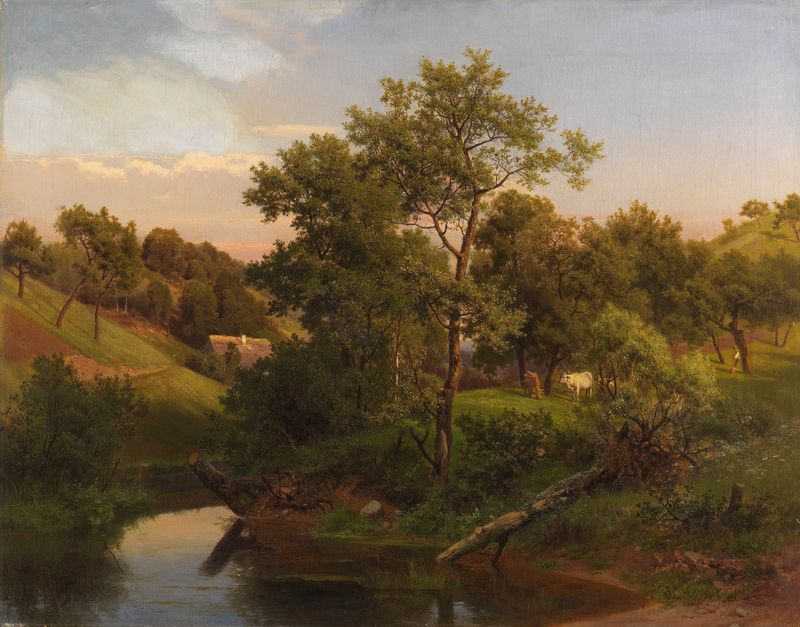
Flussaue mit Bauernhaus und Viehhirte
Eduard Leonhardi
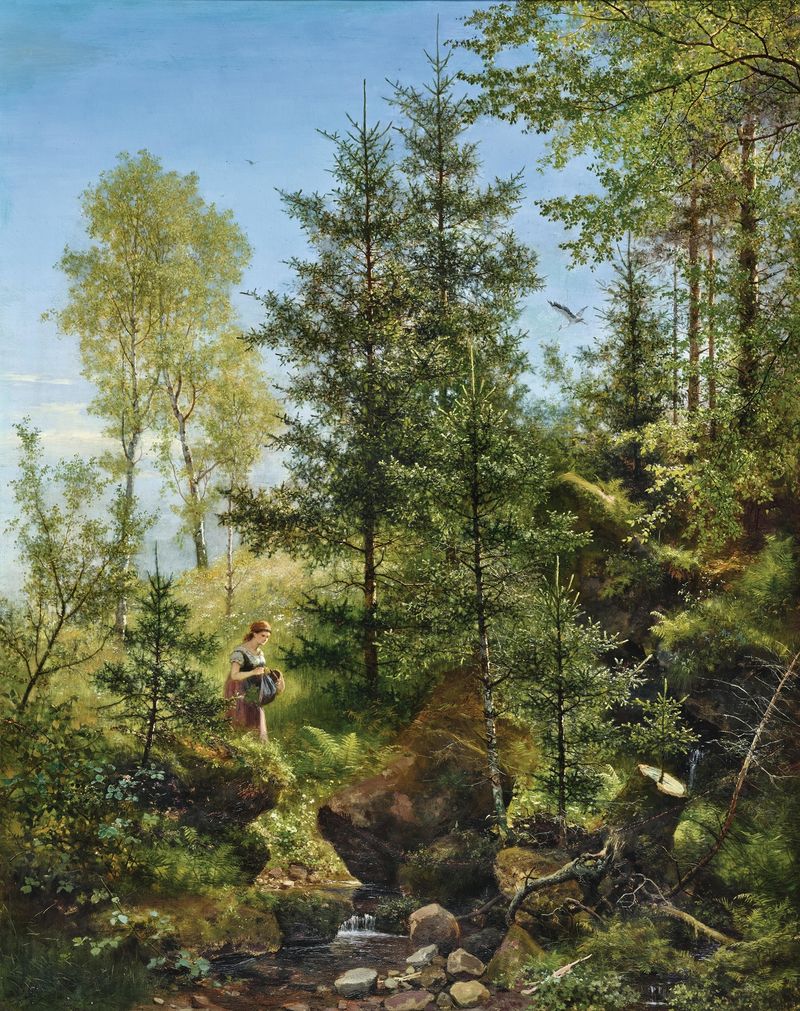
A Berry Picker by a Forest Brook, a Stork between the Trees
Eduard Leonhardi

Am Bächlein in der Maienzeit
Eduard Leonhardi
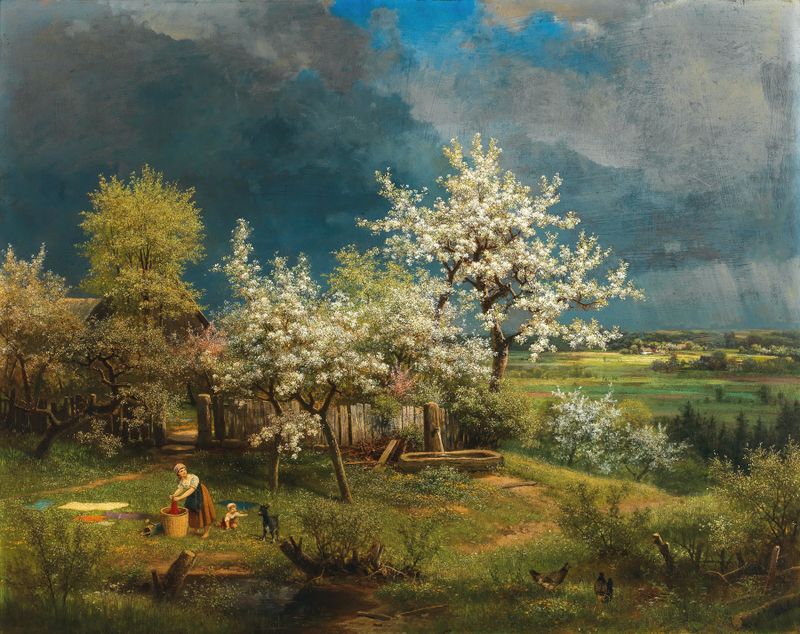
A Brewing Storm in Spring
Eduard Leonhardi





