
Waldeinsamkeit — History & Facts
Who listens when art speaks of silence? In Waldeinsamkeit, the stillness envelops the viewer, evoking a profound sense of nostalgia that invites contemplation. Look to the left at the figure partially hidden beneath the gentle canopy of trees, a solitary presence framed by the dappled light filtering through the leaves. The soft greens and browns create a soothing palette, intertwining with hints of sunlight that dance across the ground. Notice how the brushwork, both delicate and deliberate, guides the eye towards the figure's contemplative posture, suggesting a moment caught between introspection and the embrace of nature. Delving deeper, the contrast between the figure's solitude and the vibrant life of the forest amplifies the emotional weight of the artwork.
Each leaf rustles with an unspoken connection, reminding us of the balance between isolation and belonging. The silence of the forest feels almost palpable, urging the viewer to reflect on their own experiences of solitude and the memories it may conjure. In 1859, Eduard Leonhardi was crafting his vision amid a rapidly changing Germany, where Romanticism flourished, celebrating the individual's relationship with nature. He was exploring themes of introspection and tranquility in his work, as the world around him underwent industrialization.
This painting, a testament to his talent, speaks to a timeless connection between the self and the natural world, capturing an essence that resonates even today.
More Artworks by Eduard Leonhardi
Browse all →
Schmuggler unter einer alten Eiche bei Mondaufgang
Eduard Leonhardi
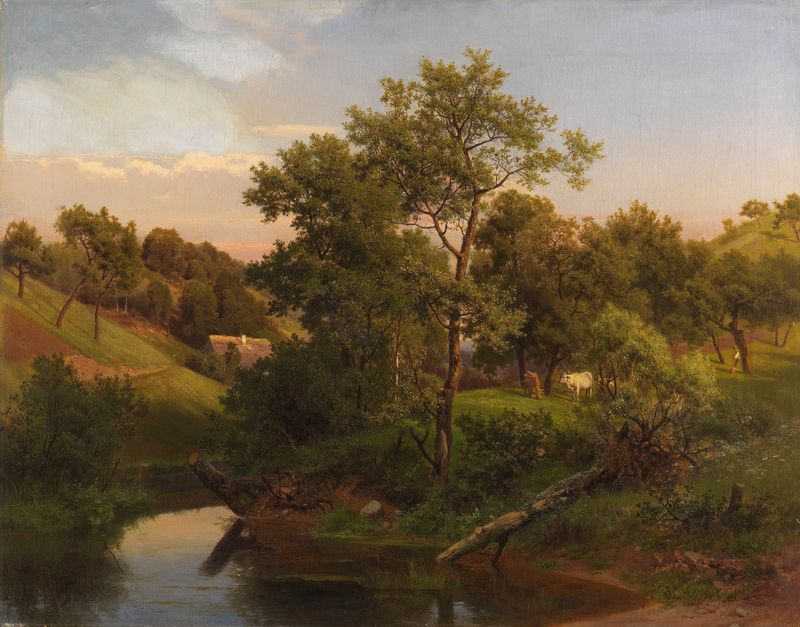
Flussaue mit Bauernhaus und Viehhirte
Eduard Leonhardi
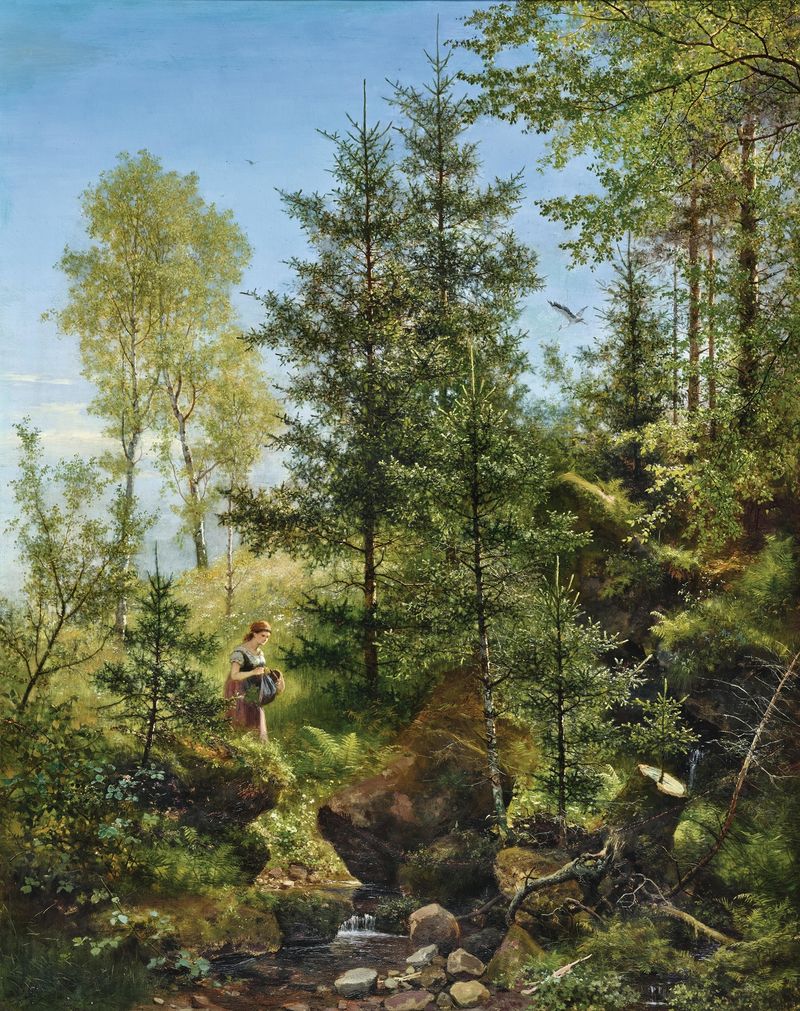
A Berry Picker by a Forest Brook, a Stork between the Trees
Eduard Leonhardi

Am Bächlein in der Maienzeit
Eduard Leonhardi
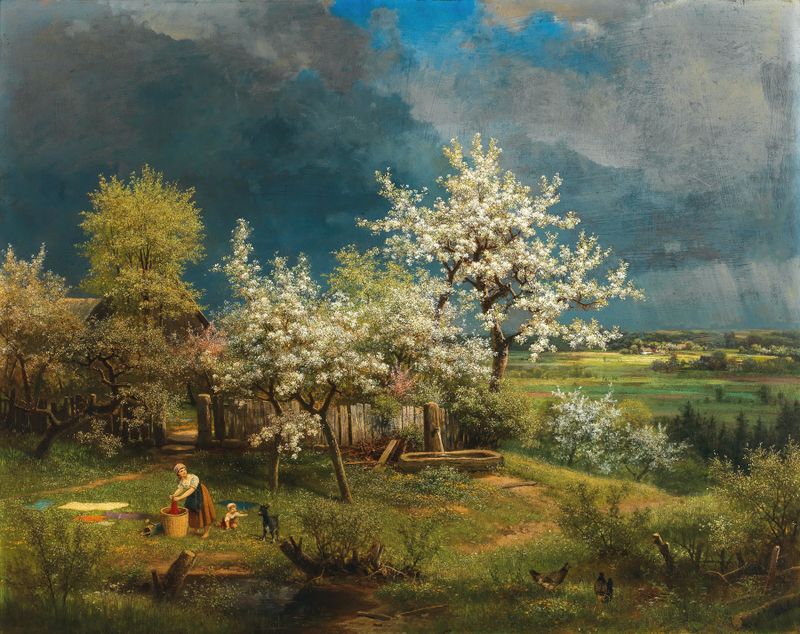
A Brewing Storm in Spring
Eduard Leonhardi
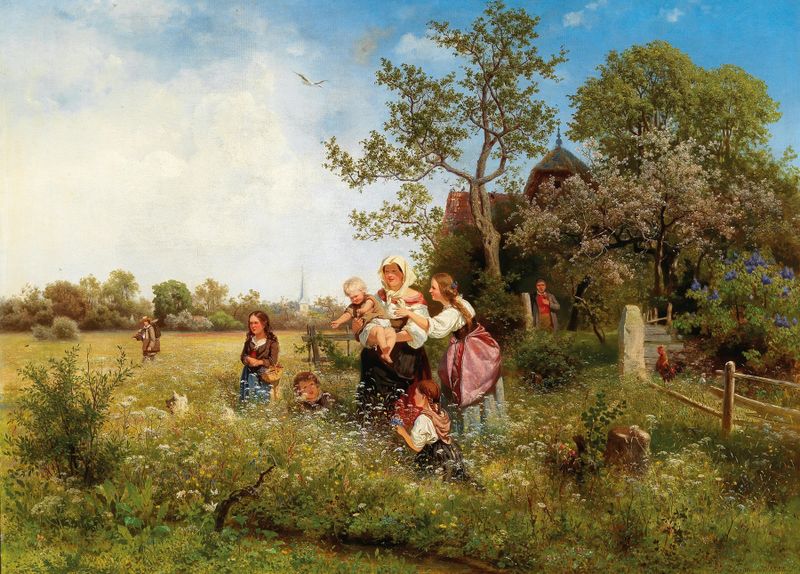
A springtime landscape
Eduard Leonhardi





