Flussufer — History & Facts
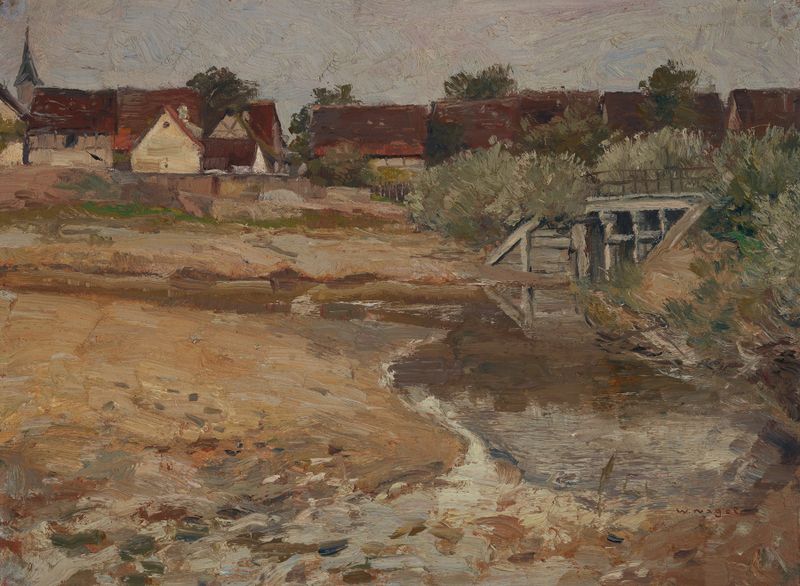
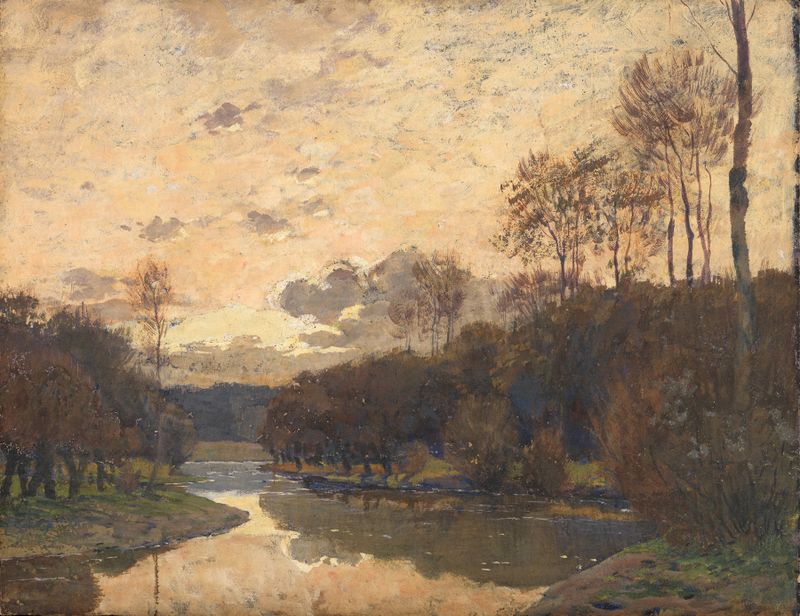
In the stillness of Flussufer, the reflective surface of the water beckons contemplation, inviting the viewer to delve into the unspoken truths that lie beneath its calm facade. Focus first on the delicate play of light upon the water, where the muted blues and greens create an ethereal atmosphere. Notice how the artist employs soft brushstrokes to render the gentle ripples, each one a silent whisper of the landscape. The foreground reveals a subtle gradient, leading the eye to the horizon, where the sky meets the water in a harmonious embrace.
The palette captures a moment suspended in time, echoing both tranquility and the latent tension of hidden depths. As you explore the painting, consider the juxtaposition between the serene water and the dense foliage framing the scene. The brushwork suggests a duality: the external calmness hides a world of complex emotions and secrets. Each blade of grass seems to lean in, as if eavesdropping on the confessions of the water, while the tranquil surface mirrors the sky's changing moods.
This tension hints at the profound interplay between nature and human experience. Wilhelm Nagel created Flussufer around 1925 during a period when European art was grappling with the aftermath of World War I. Living in Germany, he was immersed in a cultural landscape characterized by the search for healing and meaning. This work reflects not only the aesthetic movements of the time but also the personal introspection that many artists undertook in response to the world shifting around them.