Vor dem Dorf — History & Facts
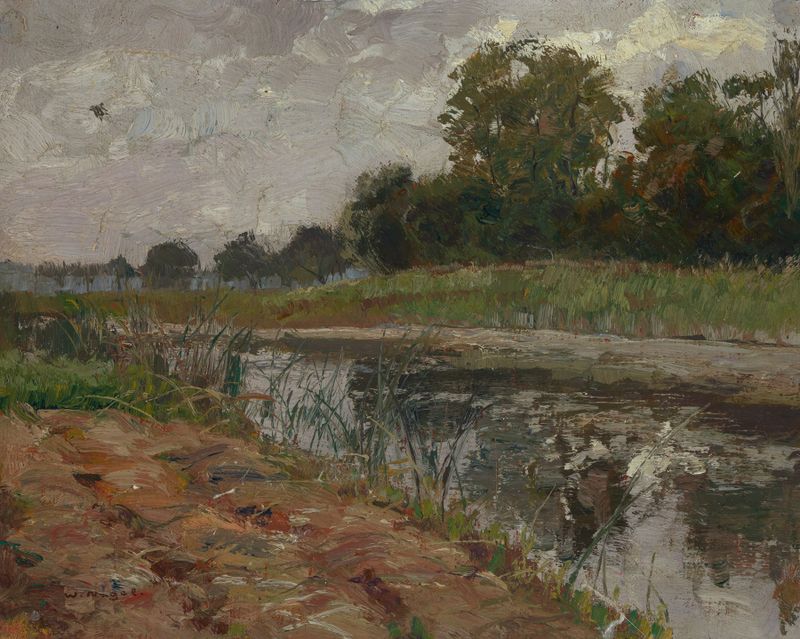
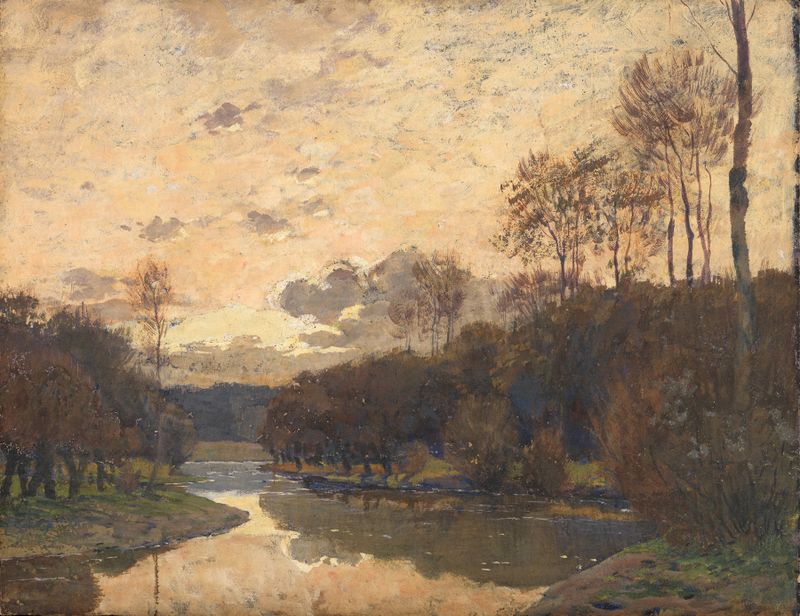
Can paint confess what words never could? In Vor dem Dorf, the stillness of decay lingers, suggesting stories whispered beneath the surface of life. Focus on the foreground, where the skeletal outlines of trees reach towards a muted sky, their gnarled branches intertwining like fingers grasping the remnants of a fading past. Notice how the cool palette of grays and browns envelops the village, casting a somber light that highlights the crumbling silhouettes of the buildings. Every brushstroke captures the essence of neglect, transforming the landscape into an elegy for what once thrived. In this work, the contrast between the lively village and the encroaching decay evokes a poignant tension.
The starkness of the abandoned structures stands in stark relief against the fleeting warmth of nature's resilience, suggesting both beauty and sorrow coexisting in harmony. Each detail, from the peeling paint to the unkempt fields, signifies a larger narrative on the passage of time and the inevitability of change, inviting the viewer to reflect on their own relationship with memory and loss. Wilhelm Nagel painted this scene around 1925, a time when Europe was grappling with the aftermath of World War I. Living in the Weimar Republic, he was immersed in a shifting artistic landscape that sought to capture the complexities of existence.
The era's focus on realism and emotional depth found a voice in his work, resonating with a society coming to terms with its own fragility and decline.