Frühlingslandschaft in Abendstimmung — History & Facts
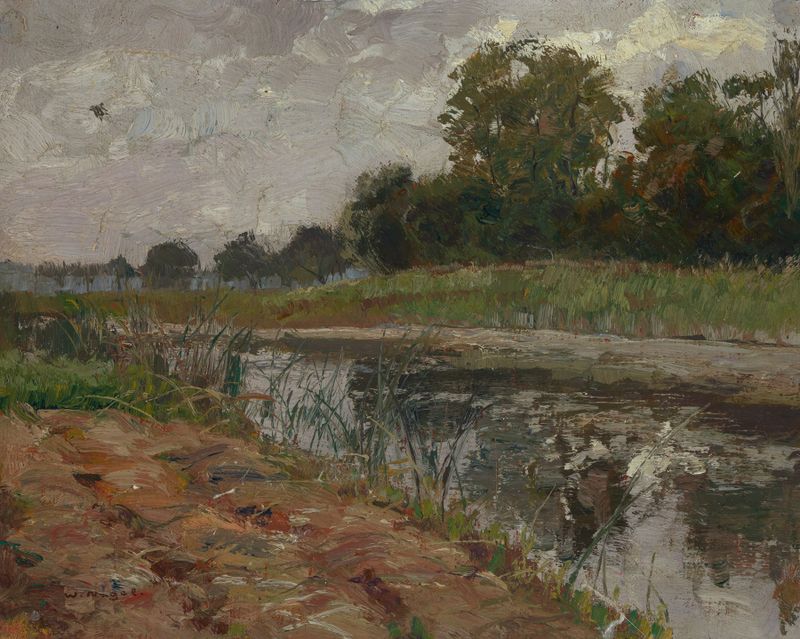
Could beauty survive in a century of chaos? The question lingers in the air, much like the delicate blooms captured in this evocative landscape. A sense of rebirth pulses through the colors and forms, suggesting that nature endures, even amidst tumult. Begin your exploration in the lower left corner, where vibrant greens burst forth from the earth, heralding the arrival of spring. Notice how the soft pastels of the sky transition from a gentle pink to a deeper blue, creating a serene backdrop for the lush foliage.
The brushwork is rhythmic, inviting your gaze to wander across the canvas, while the blending of color evokes a sense of warmth and hope, as though the light itself is woven through the scene. As you delve deeper into the painting, consider the symbolic interplay of light and shadow. The warmth of dusk hints at the fleeting nature of beauty, juxtaposed with the steadfastness of the trees standing tall. The harmony of the landscape belies the chaos of its time, suggesting that even in periods of uncertainty, moments of beauty can emerge.
This contrast invites reflections on resilience and the cyclical nature of life — a reminder that darkness is often followed by dawn. Wilhelm Nagel created this work at a time when Europe was grappling with the aftermath of war and the rise of modernism. The absence of a specific date indicates that it may have been a response to the emotional landscape of the era, blending traditional representation with a burgeoning desire to capture the essence of nature in a rapidly changing world. This painting not only reflects external realities but also serves as a personal expression of hope amid adversity.