Forellenweiher — History & Facts
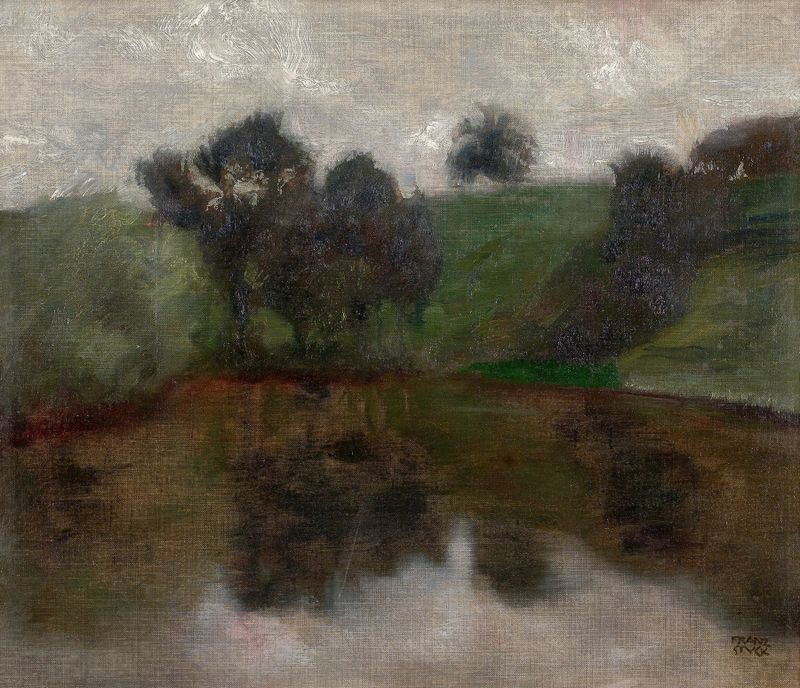
In a society that often overlooks the individual, deep feelings of loneliness emerge, resonating through the canvas and into our minds. Look to the center of Forellenweiher, where a solitary figure reclines on the banks of a tranquil pond. The muted color palette, dominated by soft greens and earthy browns, draws our gaze effortlessly, inviting us to linger on the water’s surface reflecting the cloudy sky. Notice how the gentle brushstrokes create a delicate interplay between light and shadow — the figure is both part of the landscape and remarkably apart from it, emphasizing the tension between communion with nature and isolation in existence. The stillness of the scene encapsulates a moment of introspection, yet it also whispers of unvoiced emotions.
The solitary figure embodies a profound yearning for connection, while the surrounding flora acts as a protective barrier, reinforcing their solitude. The water, still yet shimmering, symbolizes both calmness and a longing that ripples beneath the surface of quiet contemplation. Each element, from the bending reeds to the distant hills, contributes to a sense of being enveloped by beauty, yet feeling utterly alone within it. Franz von Stuck painted Forellenweiher in 1890, during a time when he was emerging as a prominent figure within the Symbolist movement in Germany.
Settled in Munich, he was navigating the complexities of a changing art world, grappling with themes of myth, nature, and the human psyche. The work reflects not only the artist's personal explorations of isolation but also a wider cultural introspection as society transitioned into modernity, unveiling the deep-seated loneliness that often accompanies progress.