Landscape — History & Facts
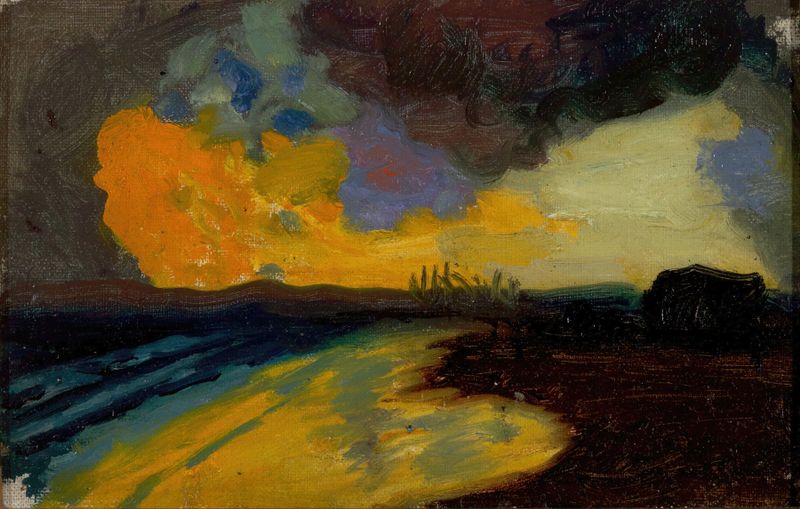
Could beauty survive in a century of chaos? Look to the left at the tranquil horizon, where soft blues and greens begin to mingle, creating a sense of infinite space. The delicate brushwork captures the gentle undulations of the land, inviting your gaze to explore the serene landscape. Notice how the rich earth tones in the foreground contrast with the ethereal sky, suggesting a delicate balance between the physical and the spiritual, and hinting at the faith required to appreciate beauty amidst turmoil. This painting reveals a quiet tension between light and shadow, a metaphor for hope and despair.
The calmness of the landscape belies the chaos of the late 19th century, as Europe grappled with rapid industrialization and social upheaval. In the soft strokes that define the trees and hills, there’s an underlying yearning for stability, an emotional resonance that compels the viewer to reflect on their own faith in beauty. The positioning of elements within the composition creates a journey through the canvas — from the foreground’s earthy grounding to the expansive sky, invoking thoughts of transcendence. Franz von Stuck painted Landscape around 1890 during a period of personal and artistic exploration.
Living in Munich, he was at the forefront of the Symbolist movement, which sought to blend the emotional depth of art with philosophical inquiries. This painting reflects not only his individual quest for meaning in a tumultuous era but also a broader cultural grappling with the nature of existence, aesthetics, and the human experience.