Paar am Waldrand — History & Facts
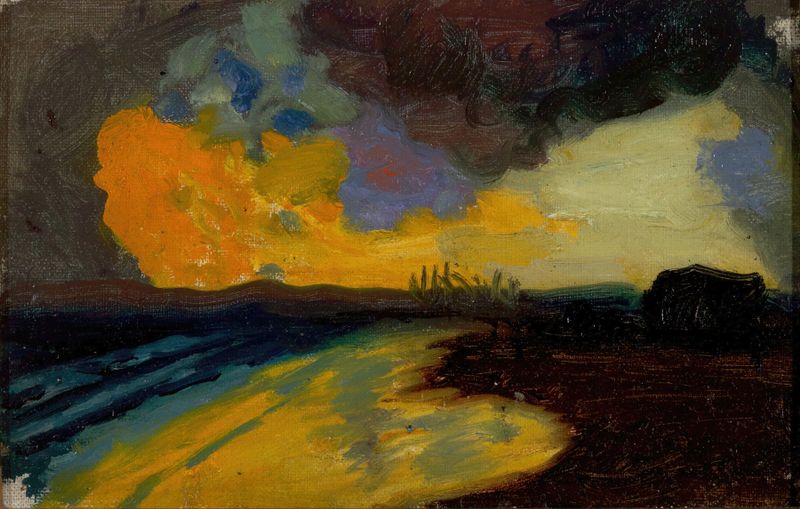
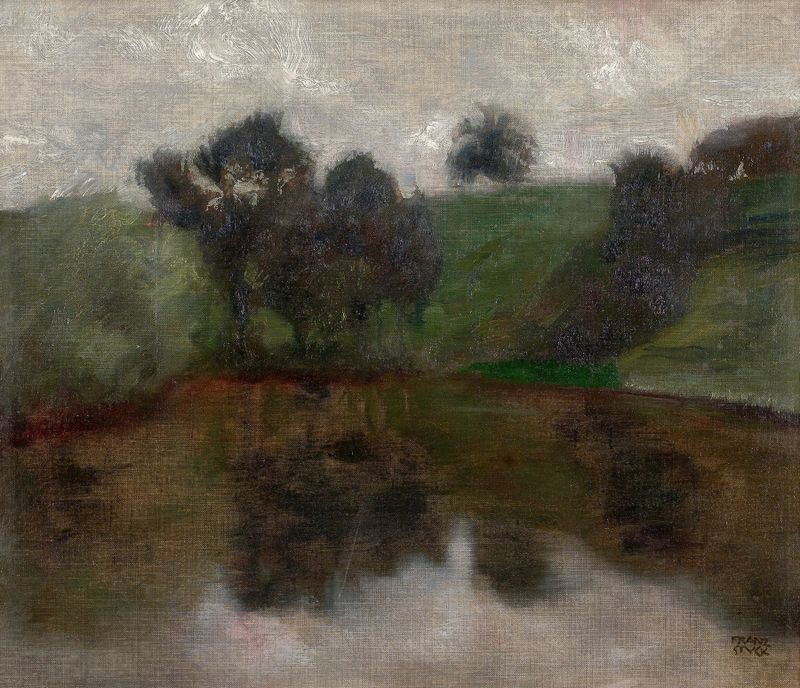
Can paint confess what words never could? In Paar am Waldrand, a profound narrative unfolds, whispering secrets hidden beneath the surface of an idyllic moment. Look closely at the couple on the edge of the dense forest, slightly to the left, their figures bathed in soft, dappled light. The gentle curves of their bodies suggest intimacy, while the darkening woods behind them loom like silent witnesses. Notice how the complementary colors of their garments contrast with the deep greens and earthy browns of the surroundings, creating a tension that invites scrutiny.
The artist's brushwork is delicate, almost ethereal, as it captures both the serenity of the scene and an undercurrent of uncertainty. In this moment, darkness and light collide, suggesting the duality of love and the complexities hidden within relationships. The woman's gaze, turned away from her partner, hints at inner conflict or unspoken thoughts, while the man appears both protective and anxious, enveloped in the ambient shadows. Each detail—from the subtle interplay of shadow across their faces to the encroaching trees—evokes a sense of vulnerability, making the viewer ponder what lay beyond this peaceful façade. Franz von Stuck painted Paar am Waldrand during a time when he was actively contributing to the Symbolist movement in Germany, which sought to express the deeper truths of human experience through art.
Created in the late 19th or early 20th century, this work reflects his exploration of psychological themes, as society grappled with rapid industrialization and shifting social dynamics. Stuck's ability to intertwine emotion and symbolism resonates deeply in this piece, embodying the complexities of love and human connection.