Forest At Fontainebleau — History & Facts
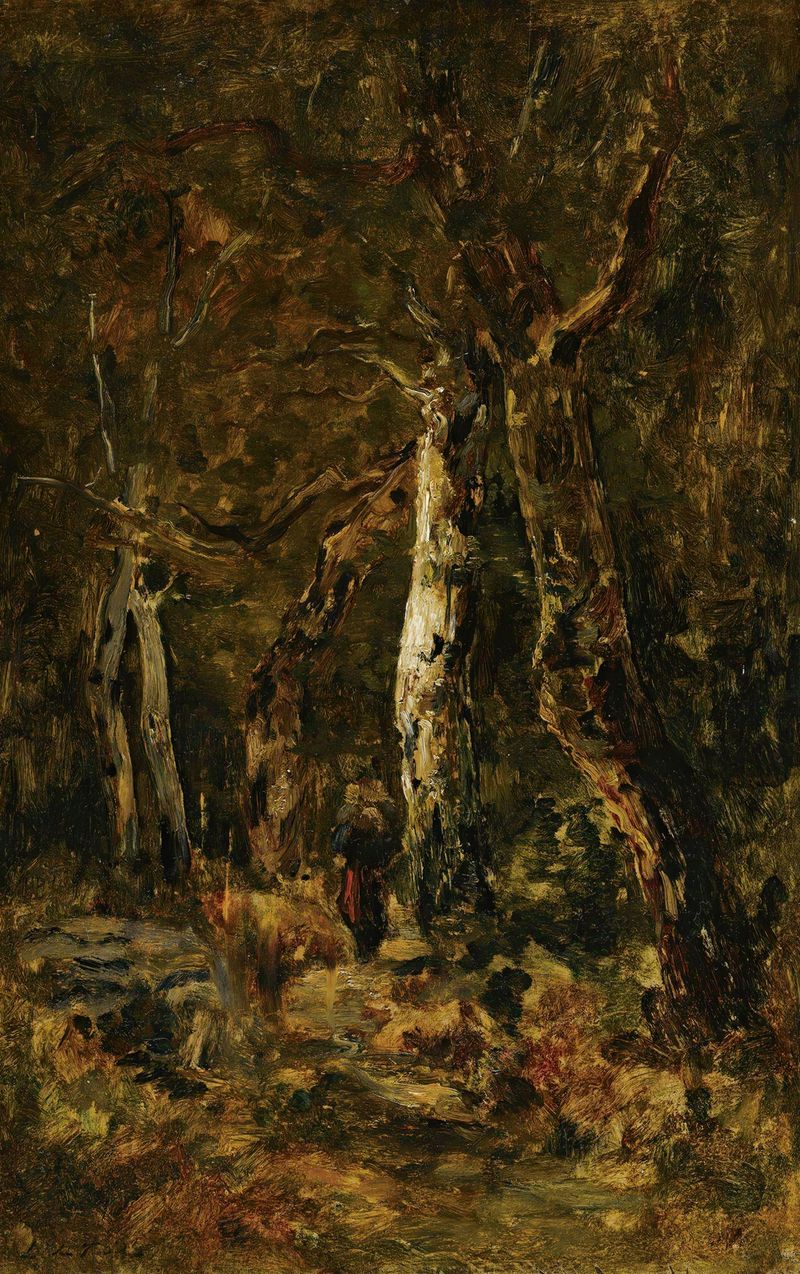
In an era where fleeting moments dissolve into memory, the act of creating becomes an act of defiance against the relentless passage of time. Look toward the heart of this canvas, where vast shades of green intermingle, inviting you into the dense embrace of the forest. The interplay of light and shadow creates an almost dreamlike illusion, guiding your eyes along the path formed by the dappled sunlight filtering through the trees. Notice how the soft brushstrokes evoke a sense of tranquility, while the vibrant foliage encapsulates both life and stillness, drawing you deeper into the serene depths of the scene. Within this composition lies a profound tension between nature's grandeur and its ephemeral beauty.
The towering trees, majestic yet fleeting, speak to the cycle of life and decay. Splotches of light conjure a moment of clarity against the darker underbrush, a metaphor for the contrast between the seen and unseen, the present and the past. Each element whispers stories of times long gone, inviting contemplation on what we may overlook in the rush of our daily lives. László Paál painted Forest At Fontainebleau in 1876, a time when he was deeply immersed in the Barbizon school of painting, emphasizing natural landscapes and plein air techniques.
His experiences in the tranquil woods of Fontainebleau reflect a burgeoning shift in the art world that favored realism and the raw beauty of untouched nature, marking a significant departure from the grand historical narratives that dominated earlier artistic expressions.