Forest Landscape — History & Facts
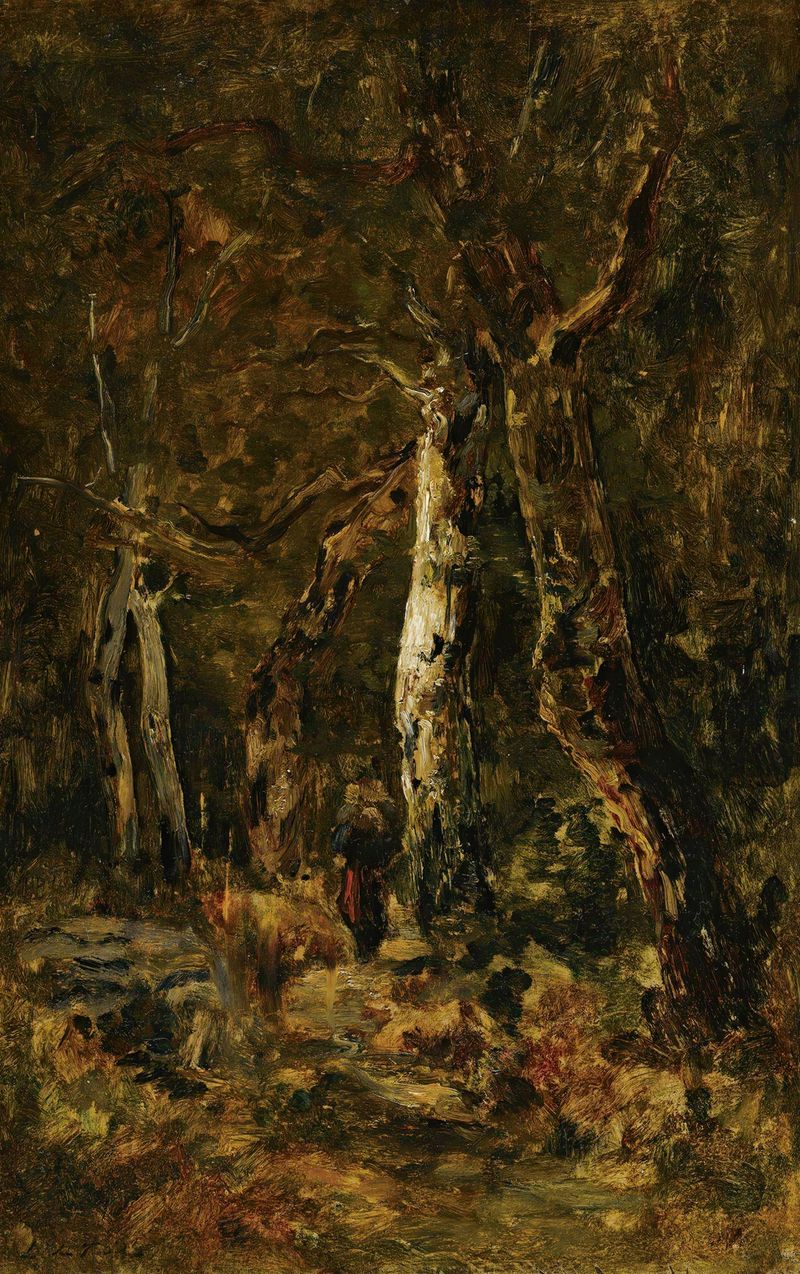
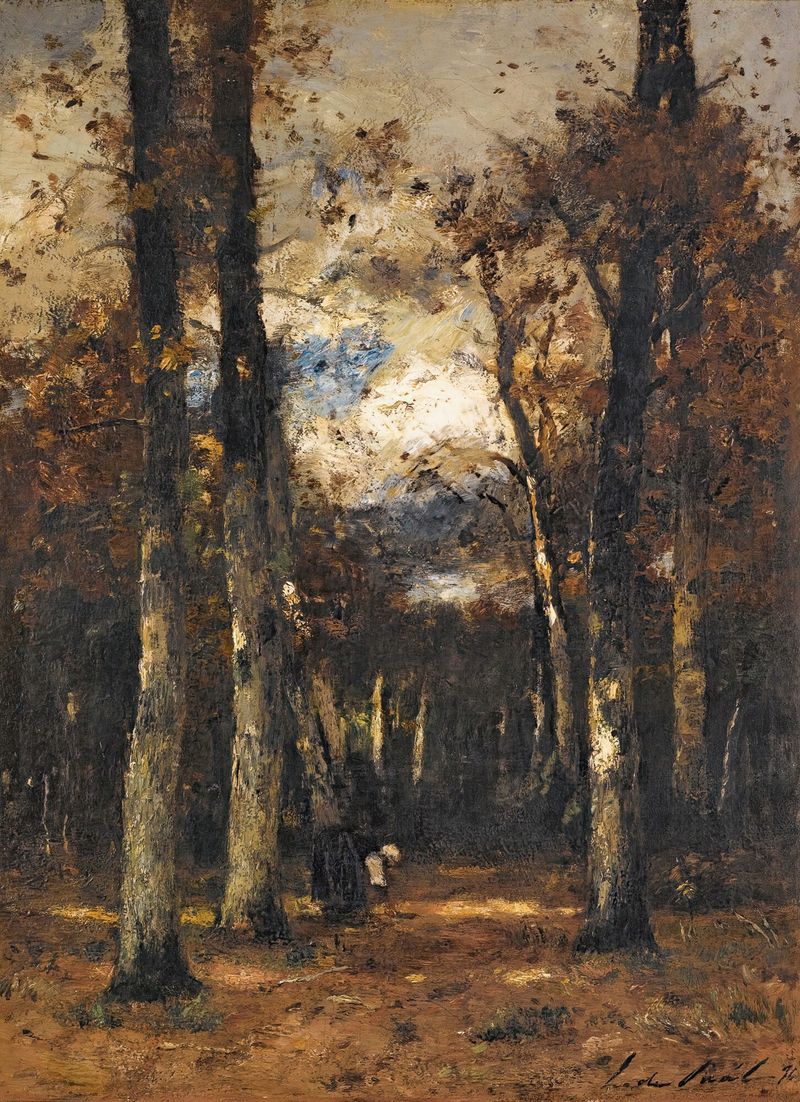
In the stillness of nature, where each leaf whispers secrets, one can sense an obsession lurking just beneath the surface of serenity. It is a reminder that solitude can often unravel the deepest of yearnings. Look to the foreground where a dappled path winds through the trees, drawing you into the heart of the forest. The subtle play of light filters through the branches, illuminating patches of ground with a soft, golden hue.
Rich greens dominate the palette, yet flecks of ochre and brown add depth, emphasizing the textured layers of foliage. Paál’s brushwork oscillates between smooth and rough, echoing the contrasts of life within this secluded space, inviting viewers to explore beyond the initial impression. As the eye travels deeper, stark contrasts emerge: the serenity of nature juxtaposed with the underlying tension of isolation. The trees, while standing tall and steadfast, cast long shadows that hint at unseen stories—perhaps of yearning for connection or the weight of solitude.
The light, while soothing, also serves as a reminder of the transience of beauty, every moment pregnant with the possibility of change, reflecting an obsession with both stillness and movement. During the time this work was likely created, László Paál was immersed in the vibrant world of 19th-century Hungarian landscape painting, a period marked by a growing interest in naturalism and emotional depth in art. Amidst a backdrop of personal struggles and a burgeoning artistic identity, the artist sought solace in the landscapes around him, capturing the profound intimacy of nature. Paál's mastery of light and shadow during this era would influence future generations, solidifying his place within the evolution of the genre.