Landscape With Cottage — History & Facts
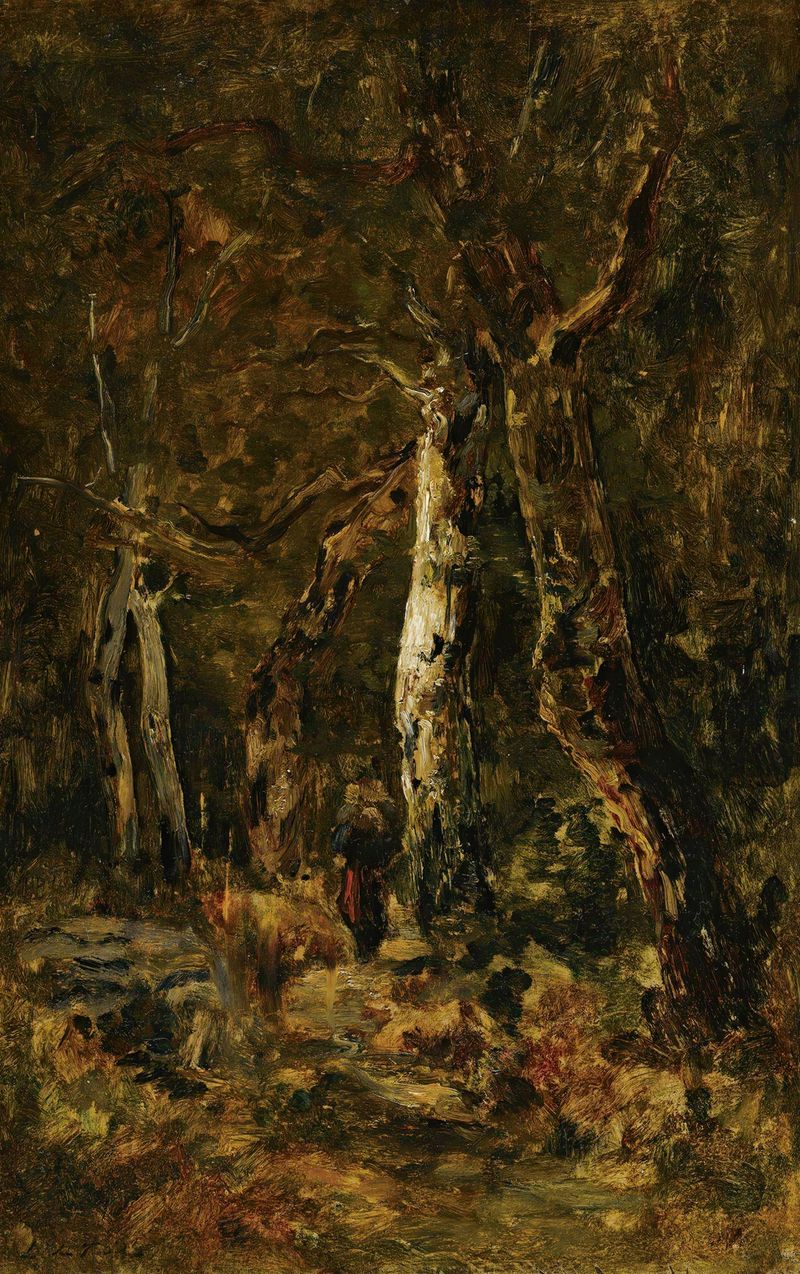
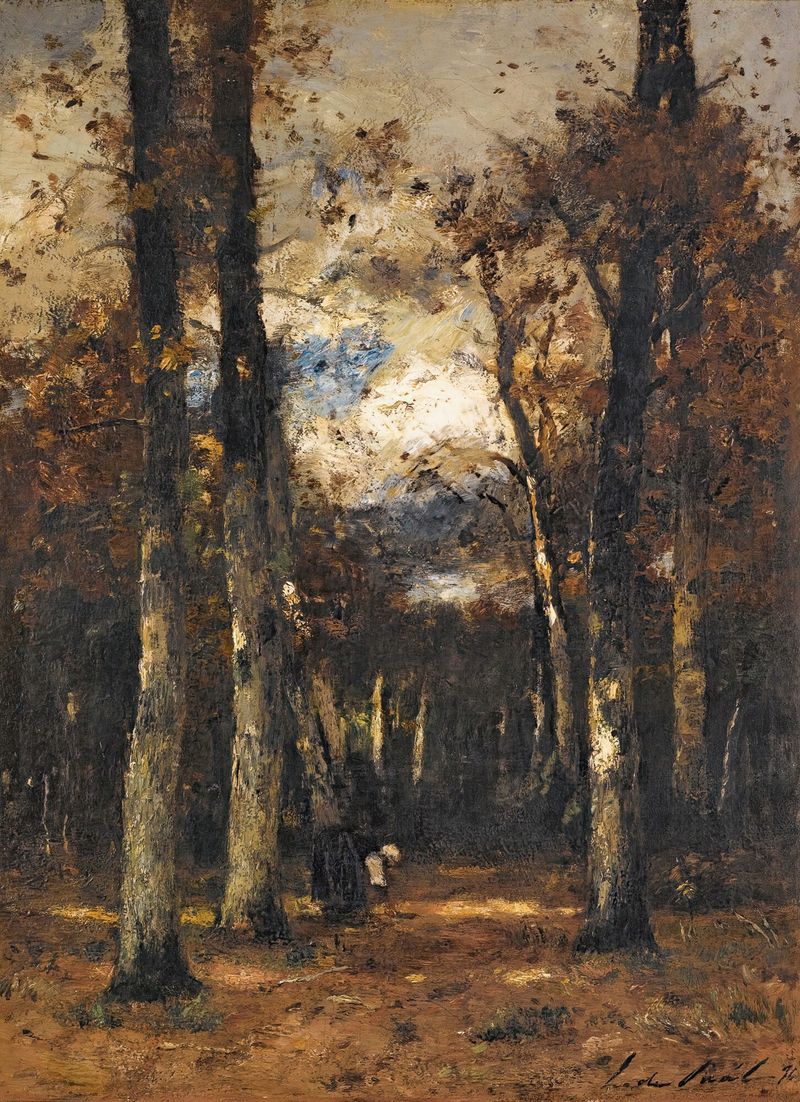
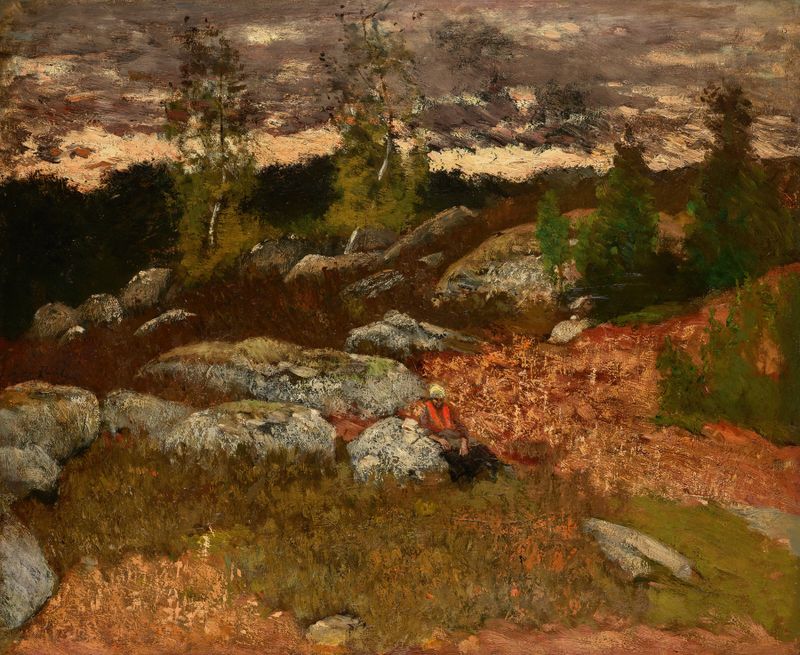
Can beauty exist without sorrow? In László Paál's Landscape With Cottage, the answer lingers in the shadows cast by the tranquil scene, hinting at deeper narratives beneath the surface. Look to the left of the canvas, where a quaint cottage nestles among rolling hills, illuminated by a warm, golden light. The artist’s deft brushwork captures the essence of the landscape; notice how the delicate greens of the foliage and the earthy browns of the cottage blend harmoniously, evoking a sense of peace. The chiaroscuro effect enhances the three-dimensionality, drawing your eye to the interplay of light and shadow that envelops the home, suggesting a story of solitude and introspection. Beneath the idyllic exterior lies an emotional tension—each shadow hints at a presence or a past, whispering of solitude or yearning.
The tranquil stillness of the scene resonates with a certain melancholy, as if time stands still, caught between moments of joy and sorrow. The cottage, while a symbol of comfort, may also represent isolation, a paradox that enriches the viewing experience and invites us to contemplate the life within its walls. This work emerged during Paál’s creative peak in the late 19th century, a time when he was deeply immersed in the landscape tradition of the Barbizon School. Painting in Hungary, he sought to connect the beauty of nature with the complexities of human emotion, reflecting his own experiences as a traveler and observer of changing environments.
The interplay of light and shadow in Landscape With Cottage showcases not only Paál's technical skill but also his philosophical inquiry into the heart of existence itself.