Forest landscape with a road and a river — History & Facts
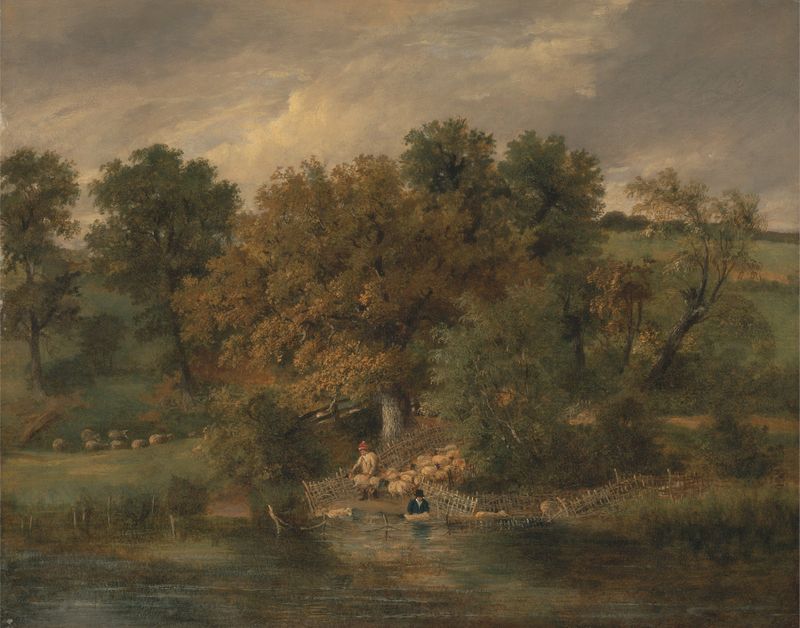
In that fleeting moment where nature and destiny converge, the landscape whispers secrets of paths taken and those yet to come. The serene interplay between light and shadow captures the essence of life’s journey, urging the viewer to consider their own roads less traveled. Look to the foreground, where a winding road beckons, bordered by lush greenery on either side. The gentle curves guide the eye into the depths of the canvas, leading to a shimmering river that reflects the vibrant hues of the sky.
Stark’s deft brushwork creates an atmospheric quality, with soft blues and greens merging into warm earth tones, evoking a sense of tranquility and contemplation. Hidden within this seemingly idyllic scene lies a tension between the tranquil water and the winding road. The river, a symbol of fate, flows effortlessly, while the path symbolizes the choices we make. Subtle details, like the flicker of sunlight filtering through the leaves, suggest both hope and uncertainty, reminding us that every journey carries the weight of what might have been. James Stark painted this tranquil landscape during a period marked by the burgeoning movement of Romanticism, where nature was revered as a source of inspiration and reflection.
Little is known about the exact date, but it aligns with his exploration of the English countryside around the mid-19th century. At this time, artists were increasingly drawn to the emotional power of nature, seeking to capture its beauty while contemplating humanity's place within it.