Former Medical School, rue de la Bucherie — History & Facts
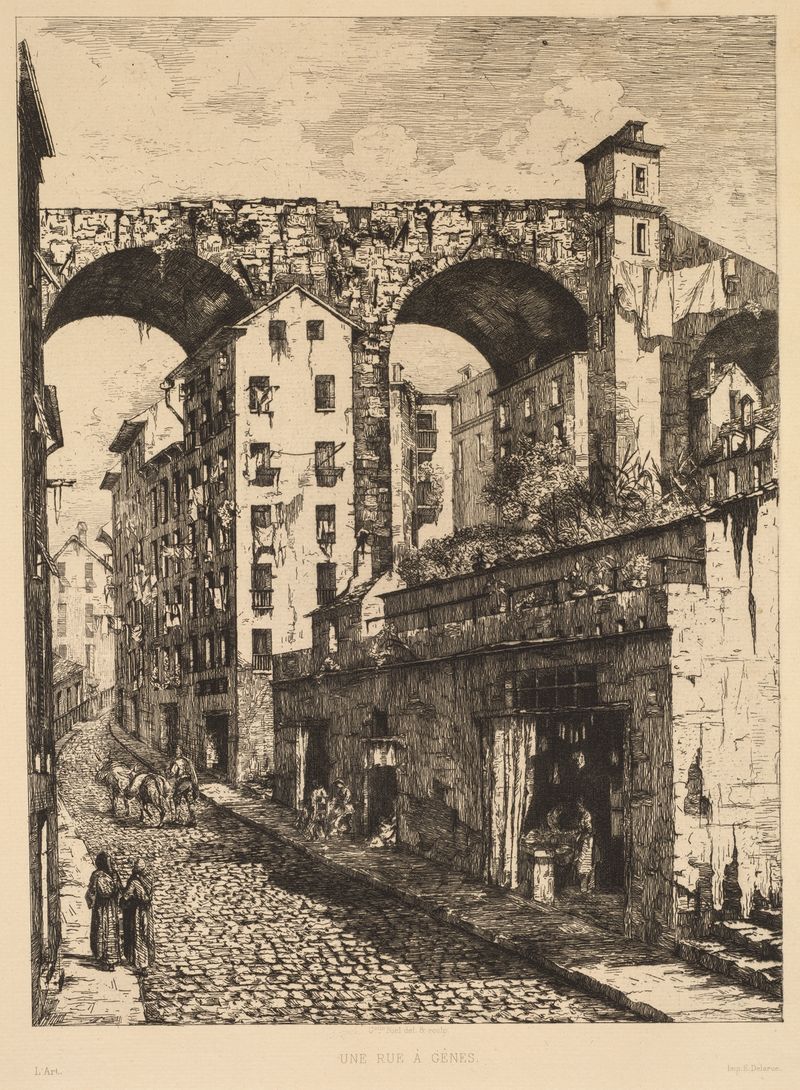
Amid the soft glow of an afternoon sun, a group of students gather on the cobblestone steps of a grand stone building, their laughter echoing against the weathered facade. The air is electric with the promise of knowledge, as they exchange ideas, books clutched tightly in their hands. A sense of hope and anticipation envelops the scene, stirring the viewer to feel the weight of their aspirations. Look to the left at the students leaning against the worn stone wall, their faces illuminated by the golden light, showcasing a spectrum of youthful exuberance.
Notice how the artist captures the intricate details of the architecture, from the arched windows to the elaborate cornices, blending the beauty of the structure with the spirit of its occupants. The warm palette of ochres and burnt siennas brings vibrancy to the moment, inviting you to step closer into their world. Beneath the surface of this bustling scene lies a contrast of emotion; the joy of learning is tempered by the underlying pressure of expectation. The way the students lean into one another suggests camaraderie, yet their eyes betray a lingering anxiety about their futures.
This tug-of-war between elation and trepidation is encapsulated in the clenching of their books, a symbol of both the treasure of knowledge and the burdens it imposes. In 1865, Gabrielle-Marie Niel painted this work while living in Paris, a city teeming with intellectual fervor and artistic innovation. The mid-19th century marked a significant time for the arts, as movements like Impressionism began to stir. Niel, having trained under prominent artists, infused her own observations of life and education into her work, capturing the essence of this moment in time with precision and empathy.