
Fountain and Pergola in Italy — History & Facts
In the delicate interplay of hues and the stillness of form, we confront the fleeting nature of existence. Focus on the lush greenery that envelops the fountain, where shades of verdant green cradle the scene in a protective embrace. Notice how the soft, dappled light filters through the leaves, creating a mosaic of light and shadow that dances across the stonework of the pergola. The fountain, central and serene, offers a tranquil spot, yet its water, constantly flowing, serves as a metaphor for the passage of time. Explore the juxtaposition of life and decay within the composition.
The vibrant flora surrounding the still water suggests vitality, yet the structure of the pergola reveals wear, hinting at the inevitable march toward obsolescence. Each droplet cascading from the fountain represents moments lost, echoing the artist's contemplation of mortality. This tension between life's vividness and the decay of beauty invites viewers to reflect on their transience. Fritz Petzholdt painted Fountain and Pergola in Italy between 1830 and 1835, during a period of personal and artistic exploration.
Living in the midst of Romanticism, he was drawn to nature's serenity and beauty, mirroring the growing interest in landscape painting. At this time, the art world was shifting, and Petzholdt sought to capture the essence of Italy, pouring both regional charm and transient beauty into his work, forever marked by the passage of time.
More Artworks by Fritz Petzholdt
Browse all →
Italian Mountain Landscape with Overgrown Rock, probably near Olevano
Fritz Petzholdt

German Landscape with View towards a Broad Valley
Fritz Petzholdt
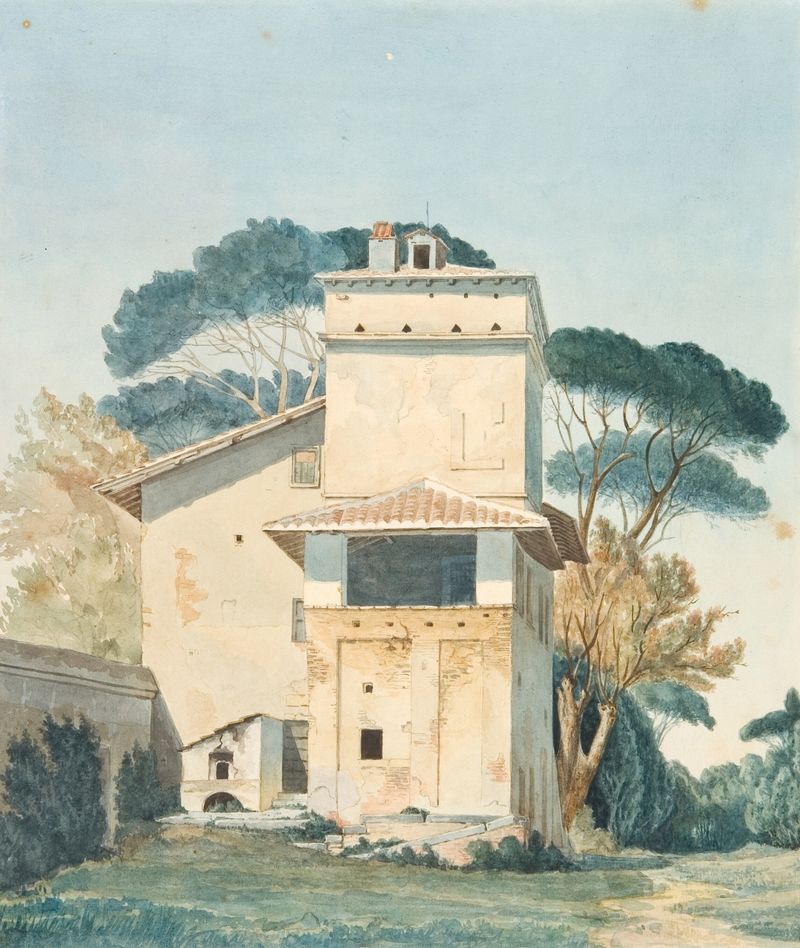
Raffaels atelier i Villa Borgheses have. Rom
Fritz Petzholdt

A Bog with Peat Cutters. Høsterkøb, North Zealand
Fritz Petzholdt
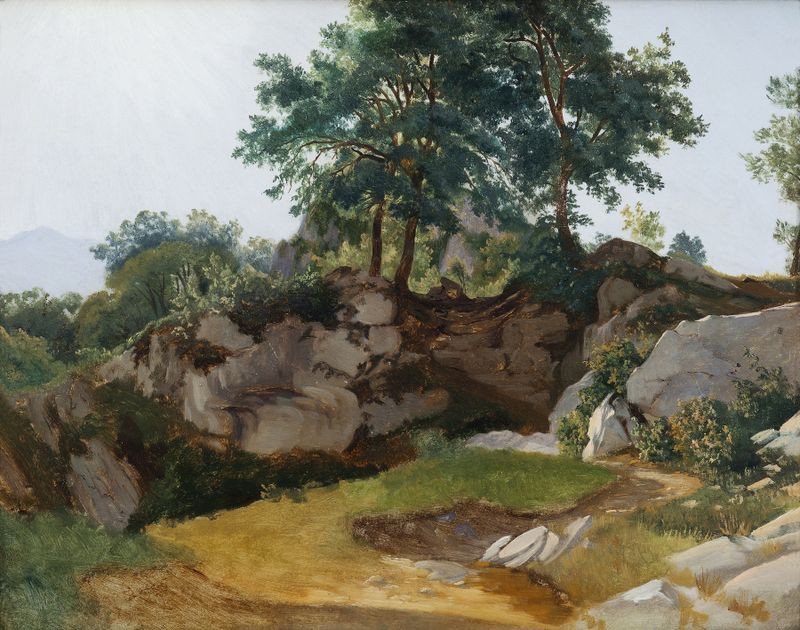
Italian mountainscape
Fritz Petzholdt





