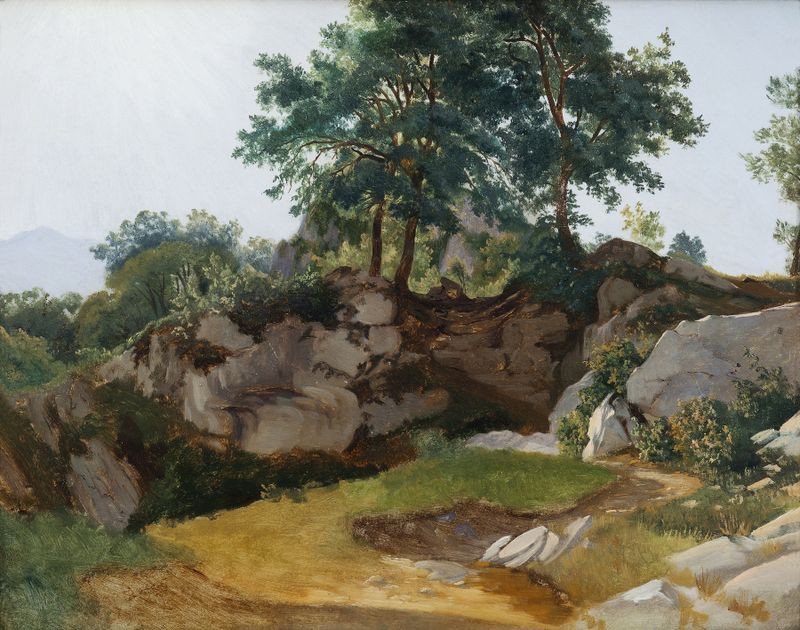
Raffaels atelier i Villa Borgheses have. Rom — History & Facts
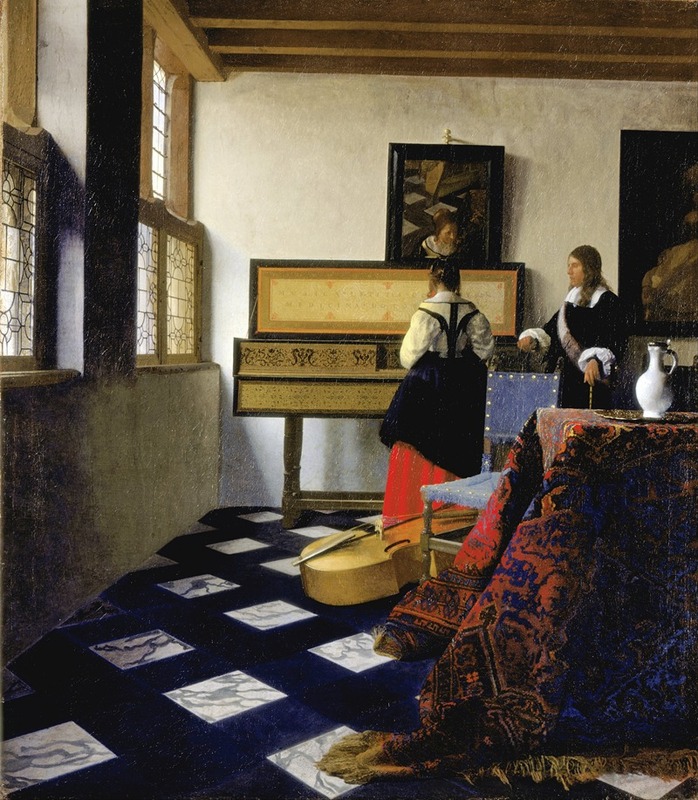
Can beauty exist without sorrow? The interplay of light and shadow in this piece suggests that every moment of brilliance is cradled by an undercurrent of loss. Look to the left at the soft forms of drapery, where the fabric catches the dappled light streaming from an unseen window. The artist skillfully employs a warm palette that evokes a sense of intimacy, while darker hues loom in the background, nearly swallowing the light. Notice how the subtle brushwork creates a delicate texture on surfaces, drawing the viewer deeper into the contemplative atmosphere of the studio. The juxtaposition of light and shadow here speaks to the duality of artistic creation.
Each beam illuminating the scene hints at inspiration, while the shadows linger like unfulfilled aspirations. The solitary figure, engrossed in their craft, embodies this tension—torn between the pursuit of beauty and the weight of unexpressed emotions. It’s in these contrasts that one feels the echo of an artist’s struggle for meaning in their work. Fritz Petzholdt painted this work during his time in Rome, between 1805 and 1838, when the art world was undergoing profound transformations.
The Romantic movement was blossoming, prioritizing individual emotion and the sublime, while Petzholdt himself grappled with the legacy of the classical artists who came before him. He aimed to bridge the gap between past and present, capturing not only the beauty of the studio but also the shadows that define the artist's journey.