Italian Mountain Landscape with Overgrown Rock, probably near Olevano — History & Facts
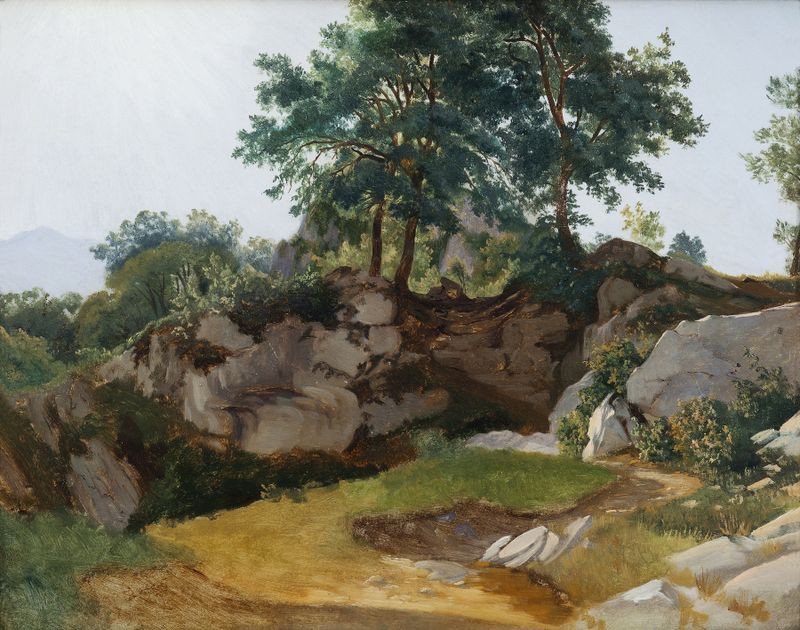
Is this a mirror — or a memory? In the delicate embrace of the Italian landscape, destiny meets the fleeting nature of time, captured beneath a canopy of vibrant greens and blues. Look to the left at the overgrown rock, its weathered surface a testament to both strength and decay. The texture is rendered with meticulous brushstrokes, creating an interplay of light and shadow that draws the eye inwards. Notice how the distant mountains rise majestically against the horizon, painted in soft pastels, suggesting an ethereal quality.
The sky above, brushed with wisps of clouds, invites contemplation, while the verdant foliage at the forefront bursts with life, symbolizing renewal amid stillness. Hidden beneath the surface of this serene vista lies an exploration of impermanence and resilience. The overgrown rock, almost blending into its surroundings, speaks to the relentless passage of time while simultaneously holding the promise of new life. The contrast between the robust, unyielding rock and the delicate foliage evokes a tension between nature’s harshness and its beauty.
Each element, from the gentle slope of the hills to the faintest whisper of breeze in the trees, conveys a sense of destiny weaving through the landscape, offering a silent narrative of transformation. Fritz Petzholdt created this captivating work between 1832 and 1835, during a period in which many artists were drawn to the picturesque landscapes of Italy. Living in the shadows of Romanticism, he sought to evoke emotional responses through the natural world. This painting reflects both his personal journey and a broader cultural movement that celebrated nature as a mirror of human experience, capturing not only the Italian countryside but also the timeless dance between memory and existence.