
Fragment of the Great Colossi at the Memnonium, Thebes. — History & Facts
Where does light end, and longing begin? In the vastness of time, an echo of ancient grandeur meets the harsh embrace of the present, revealing the violence with which history erodes our monuments. Focus on the colossal statues that tower in the foreground, their once-majestic forms now worn by the passage of ages. Notice how the sunlight caresses the remnants of their stone faces, illuminating the cracks that tell stories of decay and neglect. The stark contrast between the brilliant yellows of the desert backdrop and the muted, weathered grays of the sculpture evokes a sense of melancholy and nostalgia, inviting viewers to contemplate not only the beauty of these remnants but also the fragility of legacy. Delve deeper into the painting’s emotional landscape, where every scar on the stone signifies the turbulence of history.
The juxtaposition of the colossal figures against the expansive sky hints at a forgotten glory overshadowed by destruction and erosion, both literal and metaphorical. Each chipped edge reflects the violence of time’s passage, as well as the potential beauty hidden in decay. This tension between the former splendor and current desolation speaks to the human condition—our yearning to hold onto what is inevitably lost. David Roberts created this remarkable work between 1846 and 1849 during his travels through Egypt.
At this time, he was capturing the wonders of ancient civilizations, responding to a growing Western fascination with the East. His detailed renderings served as a visual narrative of discovery and nostalgia, reflecting not only his artistic journey but also the broader European context of exploration and colonialism.
More Artworks by David Roberts
Browse all →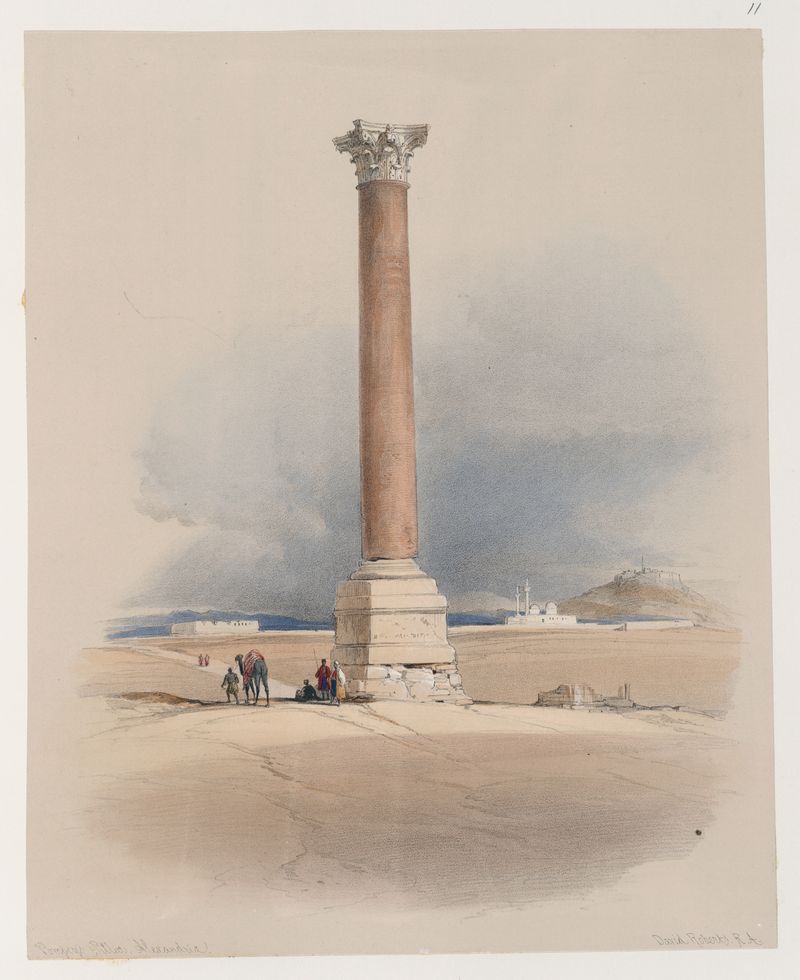
Pompey’s Pillar, Alexandria.
David Roberts

Approach to the Fortress of Ibrim.
David Roberts

Karnac [Karnak]. Nov. 29th, 1838.
David Roberts
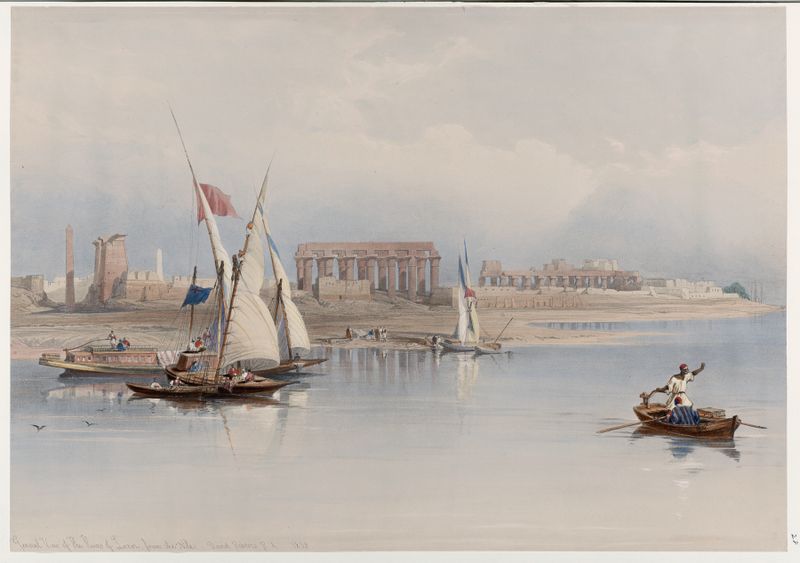
General view of the ruins of Luxor, from the Nile. 1838.
David Roberts

Statues of Memnon at Thebes, during the inundation.
David Roberts

Entrance to the tombs of the kings of Thebes. Bab-el-Malouk [Bîbân al-Mulûk].
David Roberts

The Fortress of the Alhambra, Granada
David Roberts
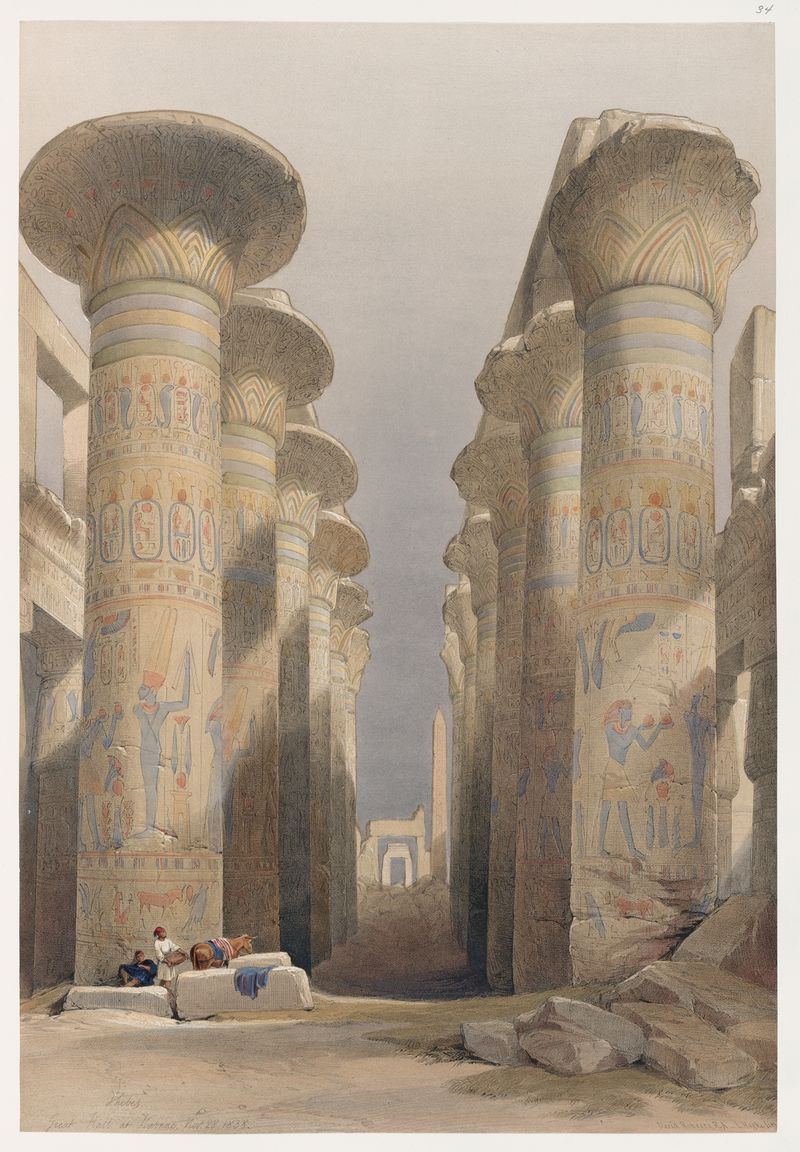
Thebes. Great Hall at Karnak. Nov. 28, 1838.
David Roberts
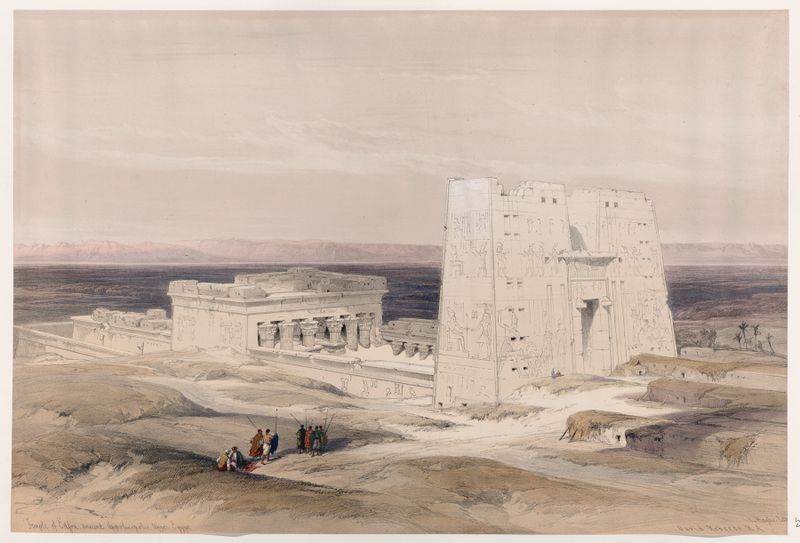
Temple of Edfou [Idfû], ancient Appolinopolis, Upper Egypt.
David Roberts

Temple of Kalabshee [Kalabsha, Kalâbishah], Nubia. Nov. 1838.
David Roberts
More Historical Art
Browse all →
The Night Watch Militia Company of District II under the Command of Captain Frans Banninck Cocq
Rembrandt van Rijn

Lincoln Memorial
Henry Bacon

The Third of May 1808
Francisco de Goya

Isaac and Rebecca, Known as ‘The Jewish Bride’
Rembrandt van Rijn

The Charge of the Mamelukes (1814)
Francisco de Goya

De vier ruiters van de apocalyps
Albrecht Dürer