
Frøislandsveien, Mandal — History & Facts
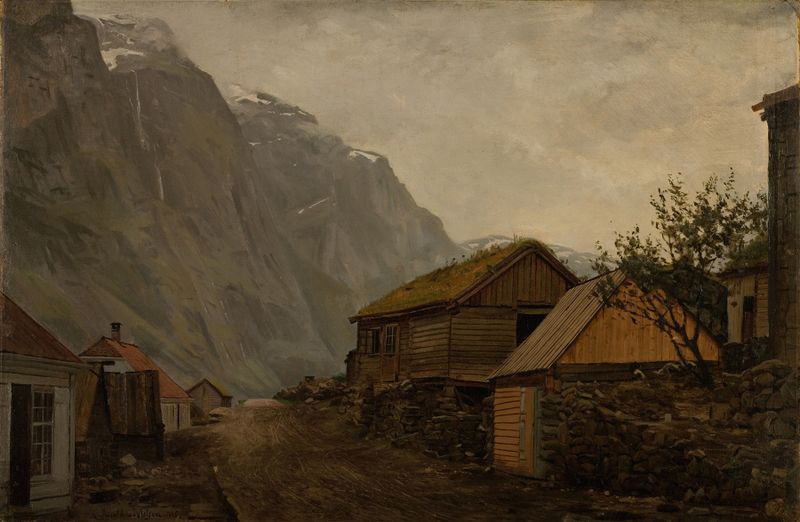
In this act of creation, the void transforms into a canvas filled with memories, each stroke a testament to moments lost yet vividly recalled. Focus first on the quiet serpentine path that meanders through the landscape, inviting your gaze to explore its gentle curves. Notice how the artist captures the interplay of light and shadow, with dappled sunlight filtering through the trees, illuminating patches of wildflowers in vibrant hues. The brushwork is both delicate and purposeful, imbuing the scene with a sense of serenity while hinting at the fleeting nature of beauty. Yet amidst this idyllic view lies an undercurrent of absence.
The horizon stretches wide, suggesting an openness that feels both inviting and isolating. In the soft blues of the sky, one can sense the weight of a lingering nostalgia, perhaps representing the artist's longing for a simpler time. The silhouettes of distant hills loom like memories waiting to be confronted, their presence echoing the paradox of longing and fulfillment. Amaldus Nielsen painted Frøislandsveien, Mandal in 1862 during a period marked by a renewed interest in naturalism within Scandinavian art.
Living in Norway, he was influenced by the Romantic movement, which sought to capture the essence of the Norwegian landscape while reflecting the artist's personal emotions. This work emerged at a time when Nielsen was establishing his reputation as a painter, navigating the confluence of tradition and innovation in an evolving art world.
More Artworks by Amaldus Nielsen
Browse all →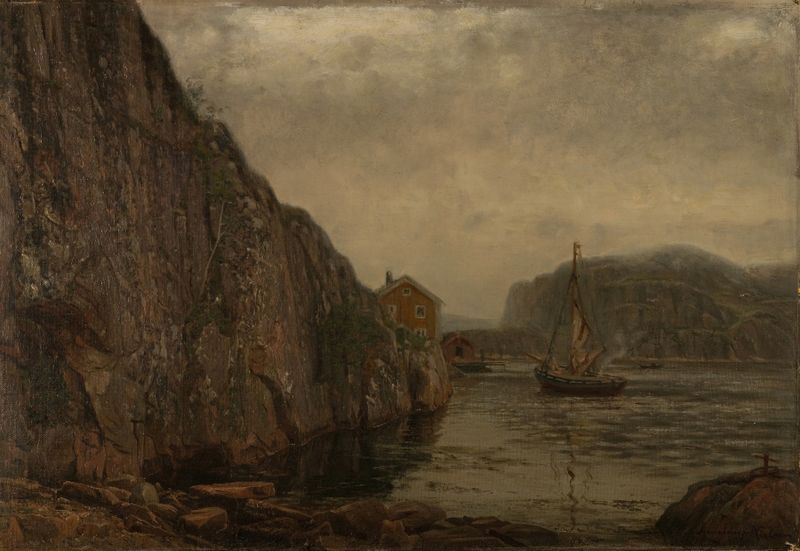
Skjærgård, Ny-Hellesund
Amaldus Nielsen
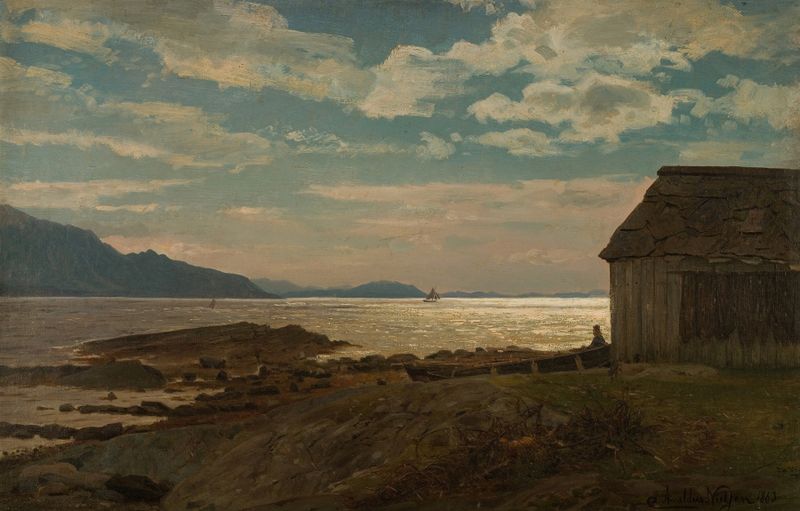
Fra Ølvestranden, Hardanger
Amaldus Nielsen
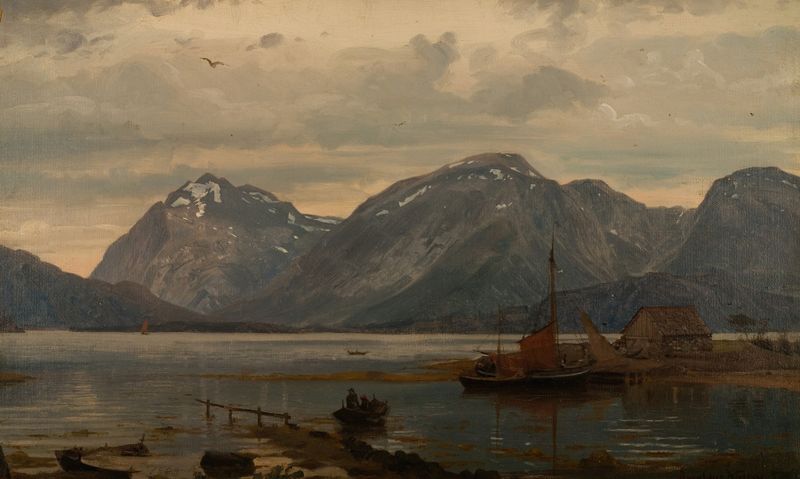
Fra Englafjellene, Hardanger
Amaldus Nielsen
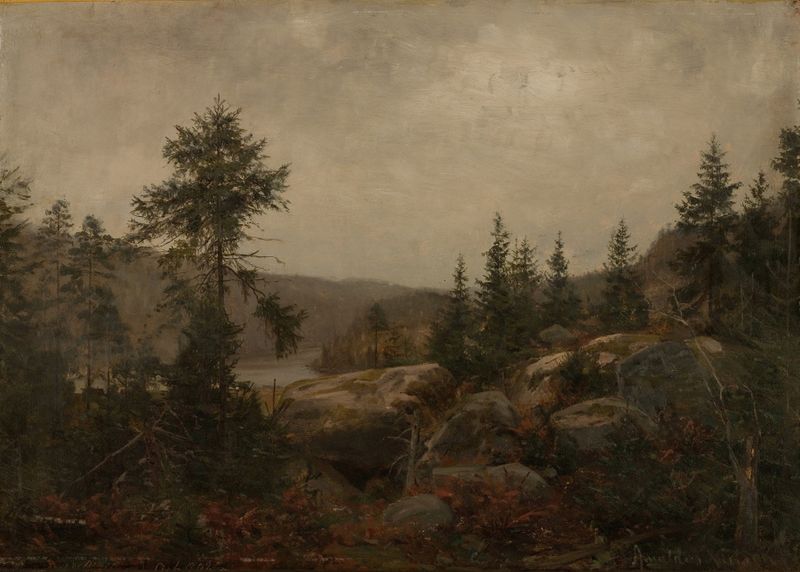
Duskregn . Gården Foss, Mandalselven
Amaldus Nielsen
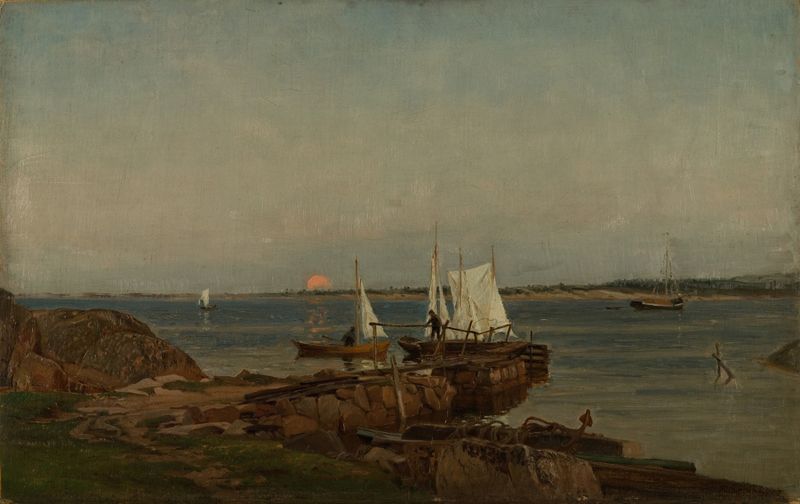
Sommernatt, Hvaler
Amaldus Nielsen
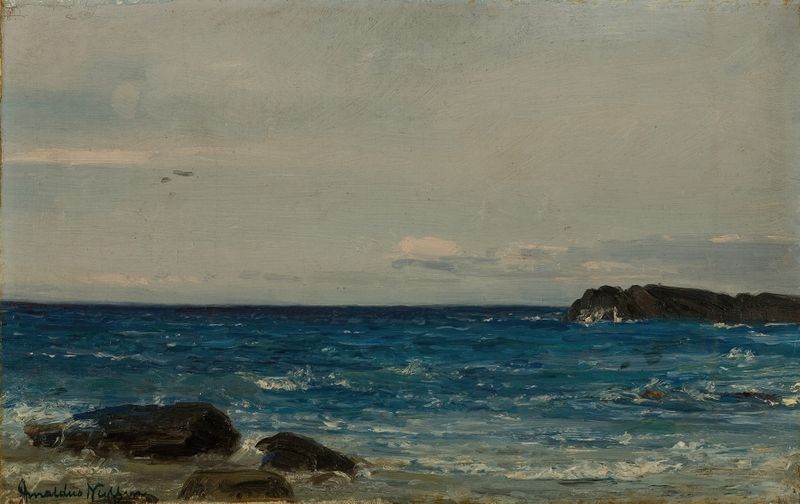
Fra Jæren
Amaldus Nielsen
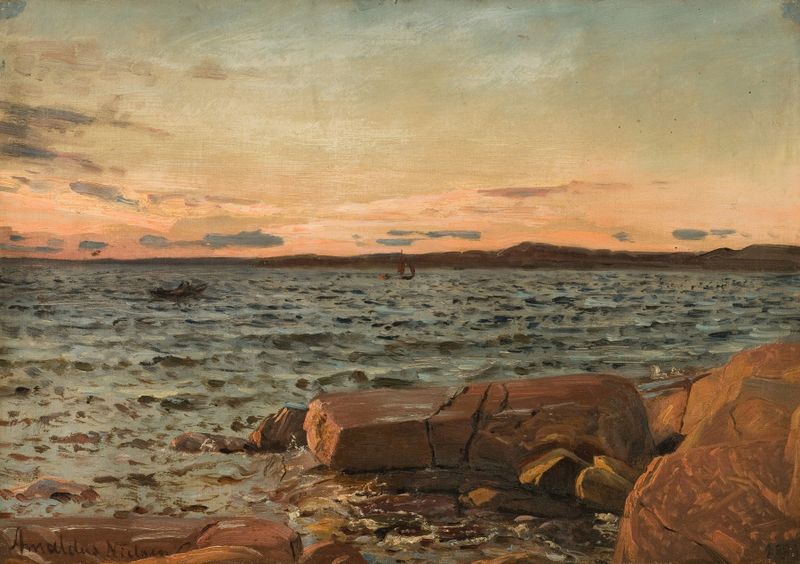
Solgangsvind, Hvaløene
Amaldus Nielsen
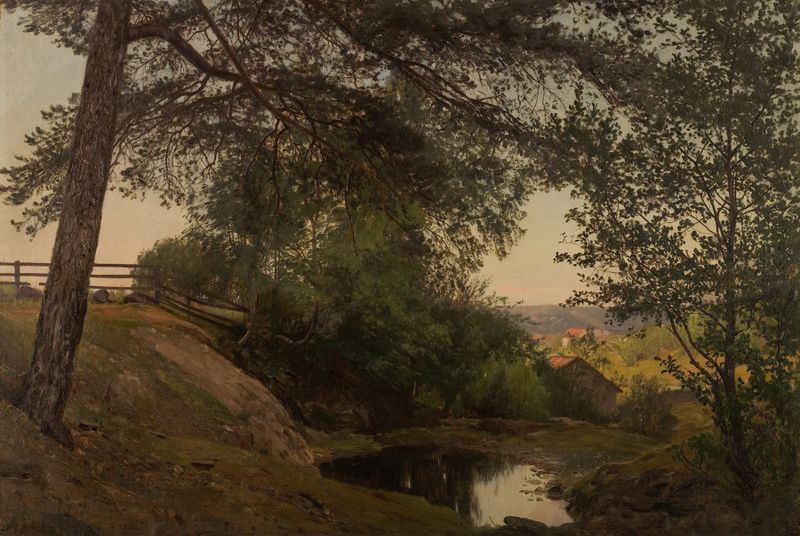
Mellom trærne. Lervik, Stord
Amaldus Nielsen

Båtbyggeri, Lillesand
Amaldus Nielsen
Regnstemning, Gudvangen
Amaldus Nielsen





