Fränkische Landschaft — History & Facts
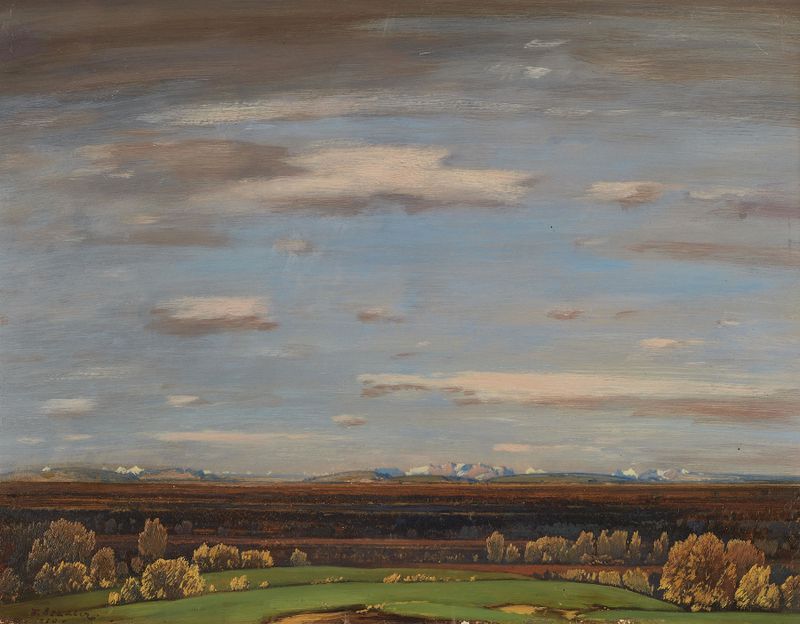
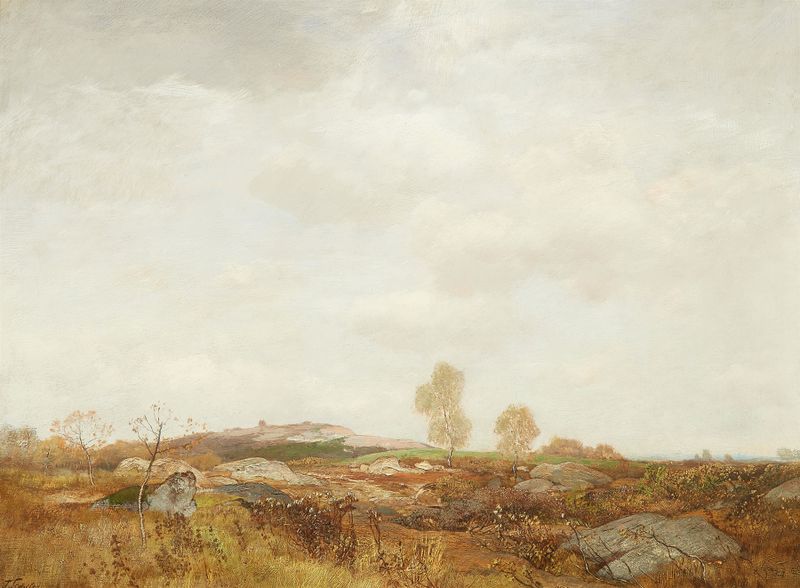
In the serene embrace of landscape, faith breathes life into the forgotten moments, capturing an eternal dialogue between nature and the soul. Look to the horizon, where soft, rolling hills cradle a delicate sky brushed in muted blues and greys. Notice how the trees, with their gentle sways, guide the eye toward the distant peaks, inviting exploration. The artist's use of subtle earthy tones evokes a sense of calmness, while textured strokes suggest the whispers of a breeze.
Each element harmonizes, ensuring that the viewer feels both anchored and uplifted by the scene's tranquility. Yet beneath the surface, deeper currents flow. The juxtaposition of light and shadow reveals not only the landscape's beauty but also its impermanence, suggesting that life teeters on the edge of memory. The lone figure in the distance, almost a silhouette, embodies solitude—a reminder of the individual's journey in nature’s expansive realm.
This tension between presence and absence invites contemplation on the fragility of faith, highlighting how our beliefs are as shifting as the landscape itself. Created in 1904, this piece reflects Toni von Stadler's commitment to capturing the essence of the Franconian countryside. At this time, he was deeply engaged in the resurgence of the plein air movement, where artists sought to express the world around them in vibrant, refreshing ways. This period was marked by a growing appreciation for the emotional resonance of landscapes, aligning with broader shifts in society that sought solace in nature amidst industrialization’s encroachment.