Voralpenlandschaft — History & Facts
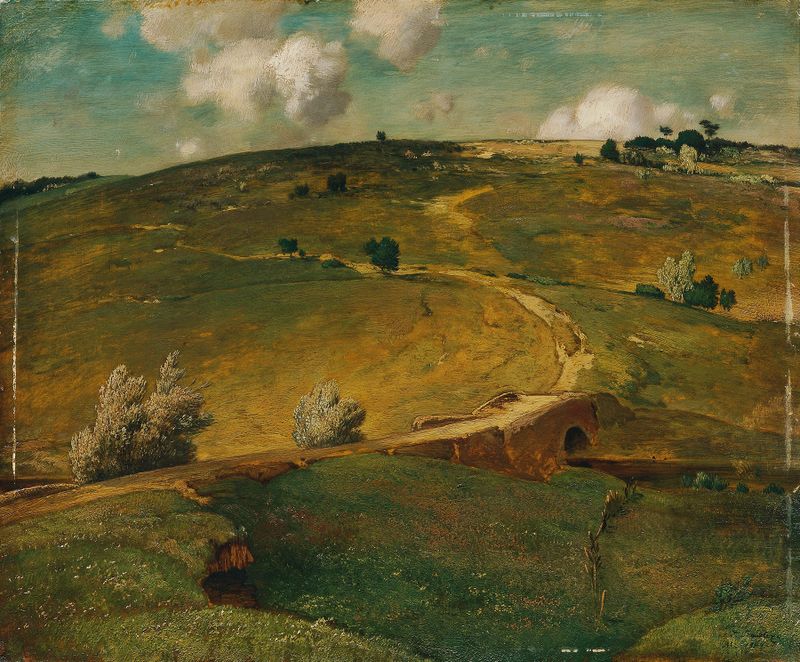
Can beauty exist without sorrow? The landscape unfolds in a serene facade, yet a tension simmers beneath its surface, suggesting the chaos that lies hidden within tranquility. Look to the center of the canvas, where rolling hills rise and fall beneath a twilight sky. A delicate wash of greens and blues envelops the land, each brushstroke rhythmically corresponding to the undulating terrain. Notice how the light softly diffuses through the clouds, casting shadows that dance across the landscape, hinting at both majesty and menace.
The gentle blending of color captures nature's allure while hinting at the underlying violence of the rural world. Amidst this pastoral beauty, the contrasts suggest deeper meanings. The tranquil hills evoke a sense of peace, yet the dark, swirling clouds overhead foreshadow a storm, symbolizing life’s unpredictability. The painting invites contemplation of the dichotomy between serenity and turmoil—how beauty often coexists with inner anguish, reminding us that joy and sorrow are inseparable threads in the fabric of existence.
Each detail—the gentle curve of the hills, the menacing sky—contributes to a narrative that is rich with emotional complexity. In 1910, the artist created this work during a period of intense personal exploration and societal upheaval. Living in Germany, he was influenced by the burgeoning movements of modernism and expressionism, which sought to challenge traditional representations of the world. This artwork reflects not only his personal journey but also the wider artistic dialogue of the time, grappling with the tensions of beauty and violence in a rapidly changing landscape.