From the Banks of the Dniester River — History & Facts
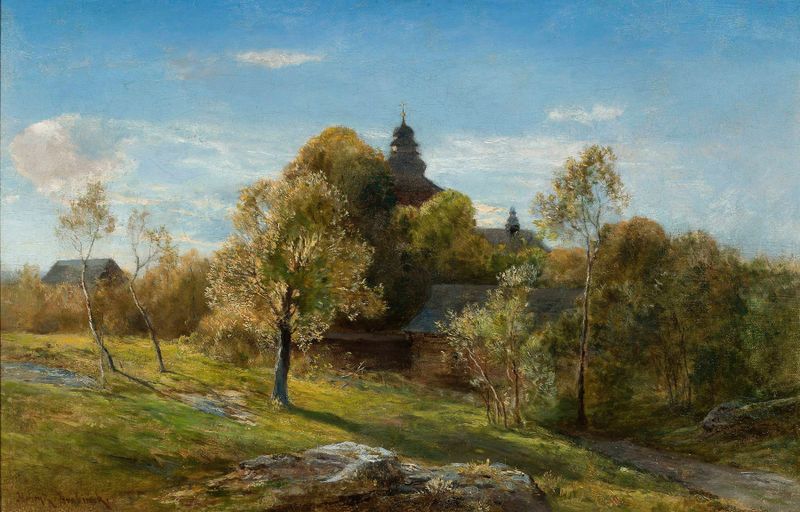
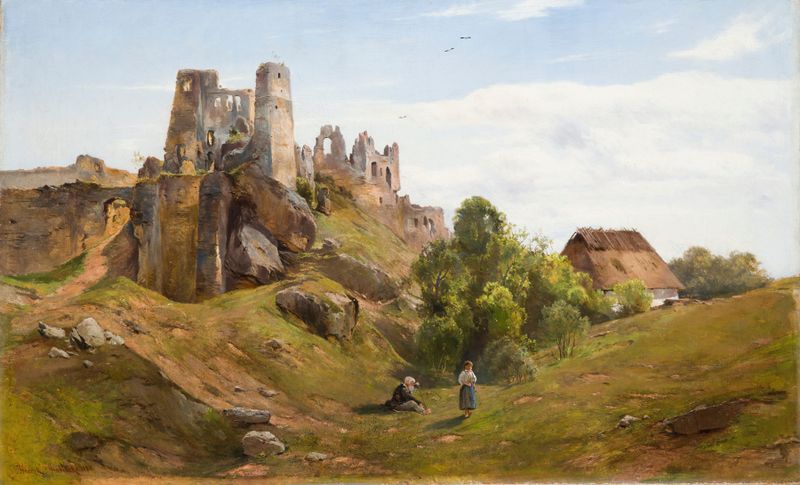
Did the painter know this moment would outlive them? In From the Banks of the Dniester River, the essence of yearning is encapsulated in the tranquil landscape, inviting contemplation of time and memory. Look to the left at the gentle curve of the river, where the water shimmers under the soft embrace of the fading sunlight. The lush green banks glisten, creating a rich contrast with the deepening blues of the evening sky. Notice how the distant horizon blurs with a delicate haze, drawing your gaze into the infinite, while the dark, looming trees stand sentinel, framing the scene with a hint of melancholy.
The brushwork is loose yet deliberate, a technique that evokes both serenity and restlessness in this quiet moment. Delving deeper, the painting reveals an interplay of solitude and connection. The solitary figure near the water's edge seems lost in contemplation, embodying the universal experience of longing for a distant past or a future not yet realized. Each stroke of Grabiński’s brush whispers stories of nostalgia and hope, hinting at the lives that have flowed along this river, uniting generations in their shared experiences.
The warm and cool colors juxtapose harmoniously, symbolizing the duality of human emotion—joy intertwined with sorrow. In 1879, Grabiński painted this piece during a time of personal reflection and artistic exploration. Emerging from the influences of Romanticism, he was inspired by the natural beauty of his homeland, capturing the profound connection between people and their environment. This period marked a crucial moment in Polish art, as artists began to explore individuality and emotional depth, paving the way for future movements.