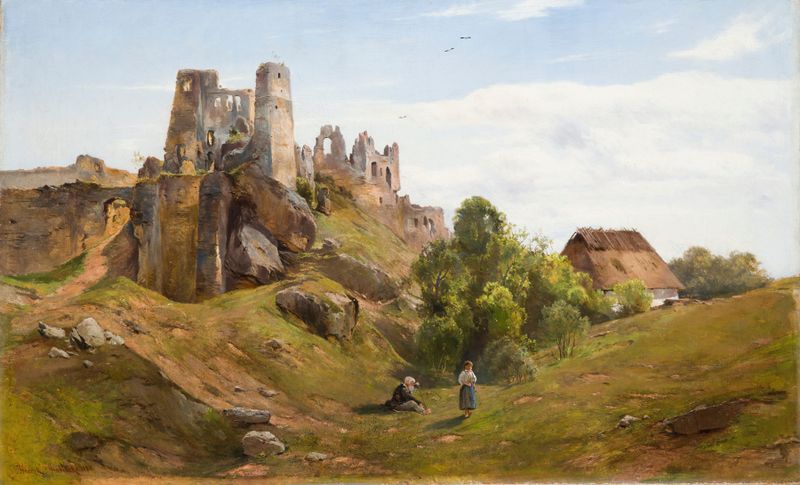
Village near Krakow — History & Facts
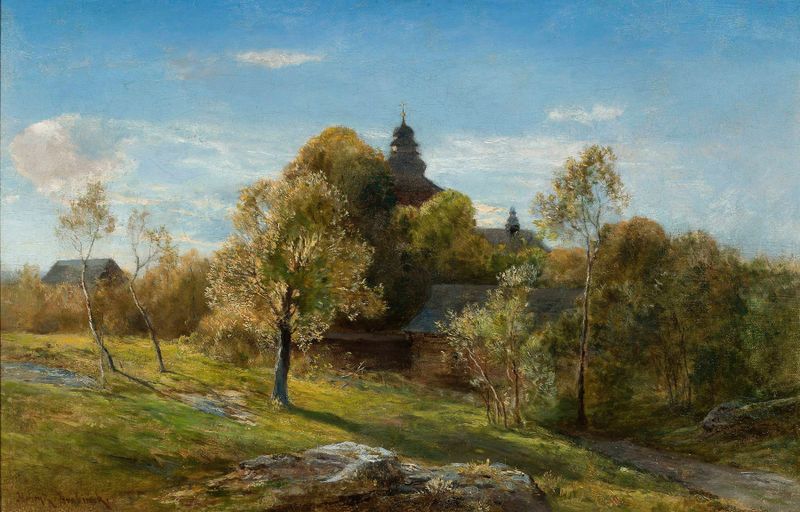
Where does light end, and longing begin? In a world where desire intertwines with the gentle embrace of nature, the answers whisper through the strokes of paint. Look to the foreground, where the vibrant greens of the fields seem to pulse with life under the warm embrace of sunlight. Grabiński’s meticulous brushwork captures the essence of each blade of grass, drawing the eye toward the cluster of rustic cottages nestled at the edge of the village. Notice how the light falls upon the thatched roofs, casting soft shadows that suggest a fleeting tranquility.
The composition invites you to explore the harmony between the village and its expansive surroundings, creating a sense of peace that lays just beneath the surface. Yet, beneath this idyllic portrayal lies a deeper emotional tension. The juxtaposition of the serene landscape with the solitary figures wandering through it evokes a sense of yearning—an ever-present desire for connection to both the land and one another. The distant mountains loom, hinting at obstacles or unfulfilled dreams, while the villagers, though together, appear absorbed in their own contemplative worlds.
Everything in this scene, from the vibrant colors to the gentle, flowing lines, speaks to a longing that resonates with the heart. In 1870, Grabiński painted this piece during a time of significant change in Poland, following the partitions that fragmented the nation. While the world of art was shifting towards modernism, he remained anchored in romanticism, celebrating the rural life of his homeland. This painting reflects not only his personal affinity for the countryside but also embodies the collective longing of a people seeking identity and connection amid the turmoil of their times.