From Waters Edge — History & Facts
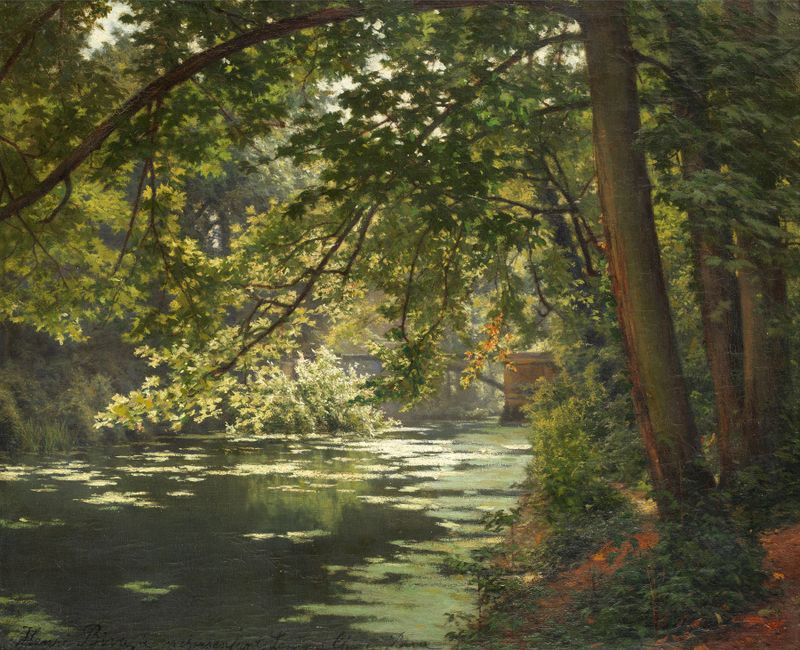
This delicate balance invites us to explore the hidden depths of the natural world, where every hue and shadow tells a story waiting to unfold. In the interplay of light, we find both refuge and revelation. Look to the center of the canvas, where the soft ripples of water reflect a serene palette of blues and greens. The brushwork is fluid, almost ethereal, inviting your gaze to drift along the water's surface.
Notice how the light dances across the scene, illuminating the foliage on the banks with tender warmth, while deeper shadows beckon from the depths below. The composition captures not just a moment, but a state of being, urging the viewer to linger in this tranquil embrace of nature. Beneath the surface beauty lies a profound dialogue between light and darkness. The shimmering water suggests clarity and depth, yet hints at the unseen mysteries lurking just out of view.
The vibrant greens of the plants juxtaposed with the somber blues of the water evoke a sense of harmony and tension, reflecting nature’s duality—its capacity to nurture and conceal. This balance evokes introspection, asking us to consider what lies beyond the frame, waiting to be discovered. Henri Biva painted From Waters Edge during a period marked by a burgeoning interest in impressionism and a fascination with the natural environment. While precise dating remains elusive, his works were often created in the late 19th to early 20th century, amid a broader artistic movement that celebrated light and color.
Biva's engagement with the natural world reflected his desire to capture fleeting moments, offering viewers a glimpse into the beauty and serenity inherent in everyday life.