Midsummer water lilies — History & Facts
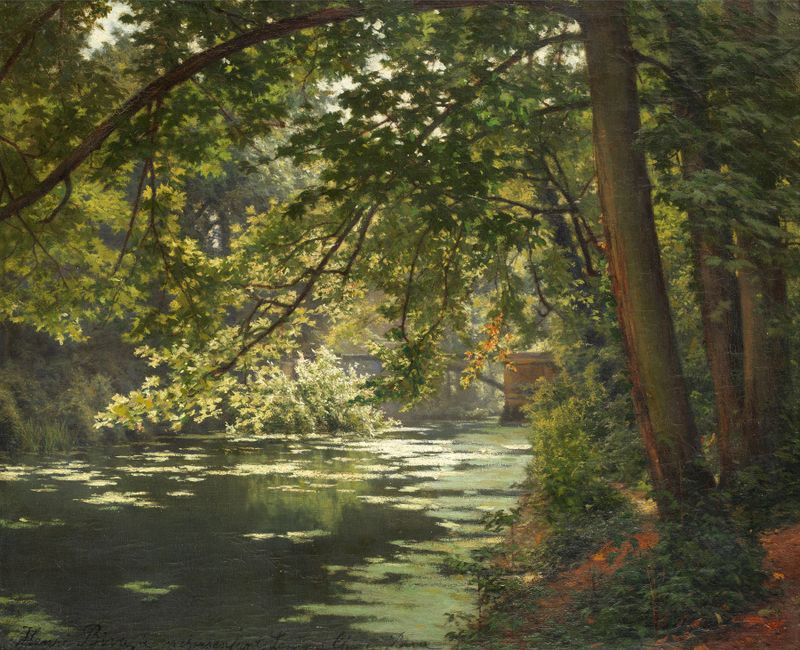
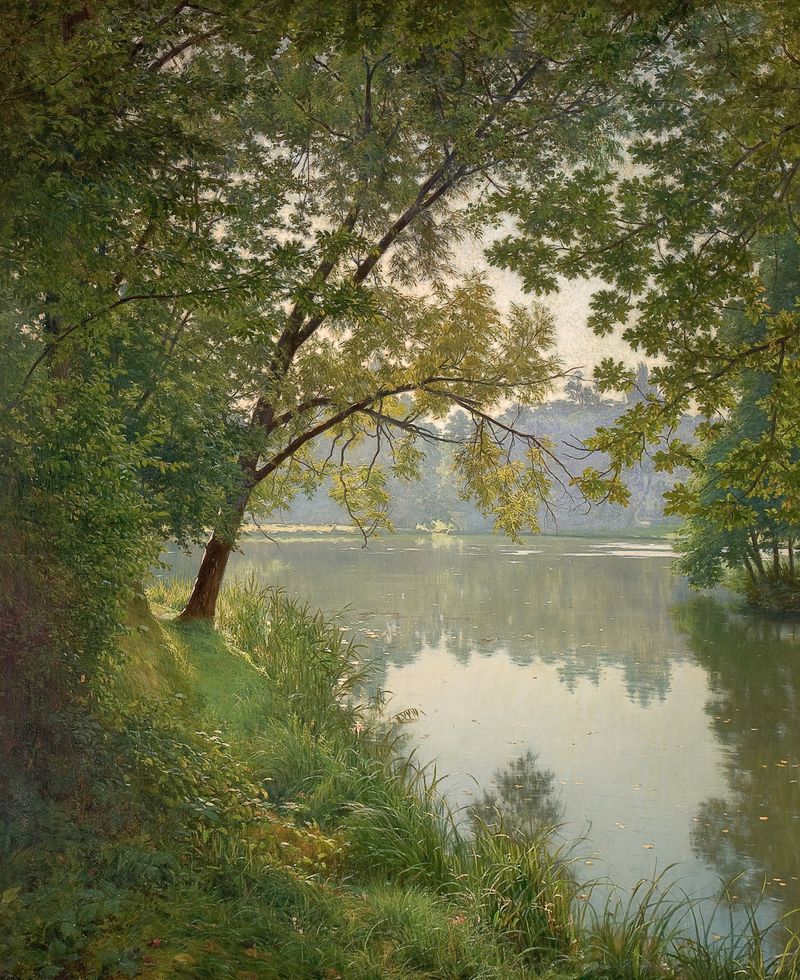
Could beauty survive in a century of chaos? In the midst of a world often overshadowed by turmoil, the delicate balance of nature stands resilient, whispering profound truths through vibrant hues and soft brushstrokes. Look closely at the shimmering surface of the water; the painter’s careful layering invites you to trace the contours of each lily. Notice how the lush greens of the leaves blend harmoniously with the gentle purples and whites of the blossoms, creating a serene yet dynamic composition. The rippling reflections dance beneath the surface, while flecks of sunlight punctuate the scene, drawing the eye into a tranquil embrace.
Each brushstroke reveals a careful attention to detail that breathes life into the stillness. Yet, there’s an underlying tension — a quiet fear of what lies beyond this idyllic view. The seemingly peaceful water lilies contrast sharply with the darker undertones of their environment, hinting at the fragility of beauty in a world fraught with uncertainty. The interplay of light and shadow signifies the duality of existence: serenity amid chaos and the inevitable passage of time that threatens to wash it all away.
Such nuances encourage contemplation of our own mortality and the ephemeral nature of beauty. The artist captured this moment during a time when the art world was transitioning through an array of styles, grappling with post-impressionism. Working in France in the late 19th century, he found inspiration in the natural world around him, seeking solace and clarity amid the growing urban chaos. His focus on landscapes and water scenes reflects a yearning for tranquility, a poignant response to the societal upheavals of his time.