Punts moored on still waters — History & Facts
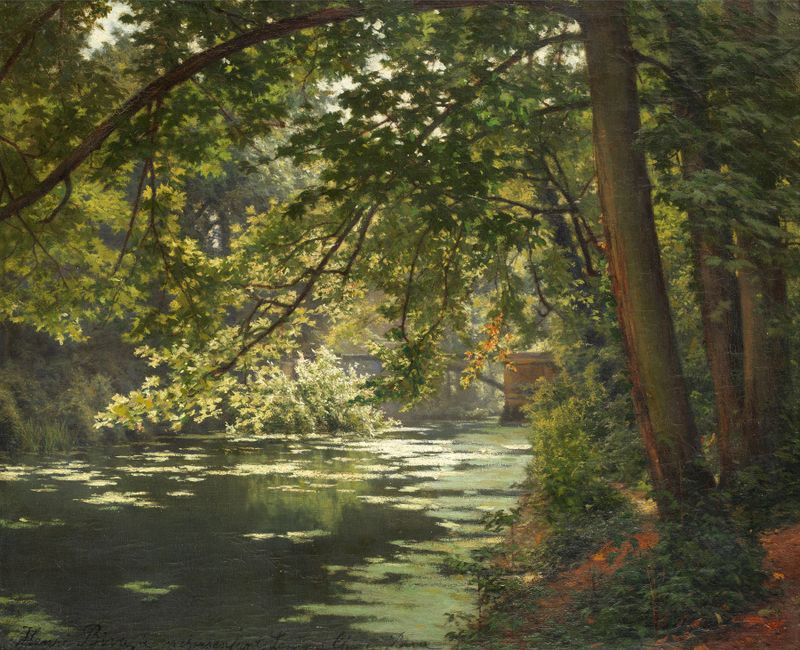
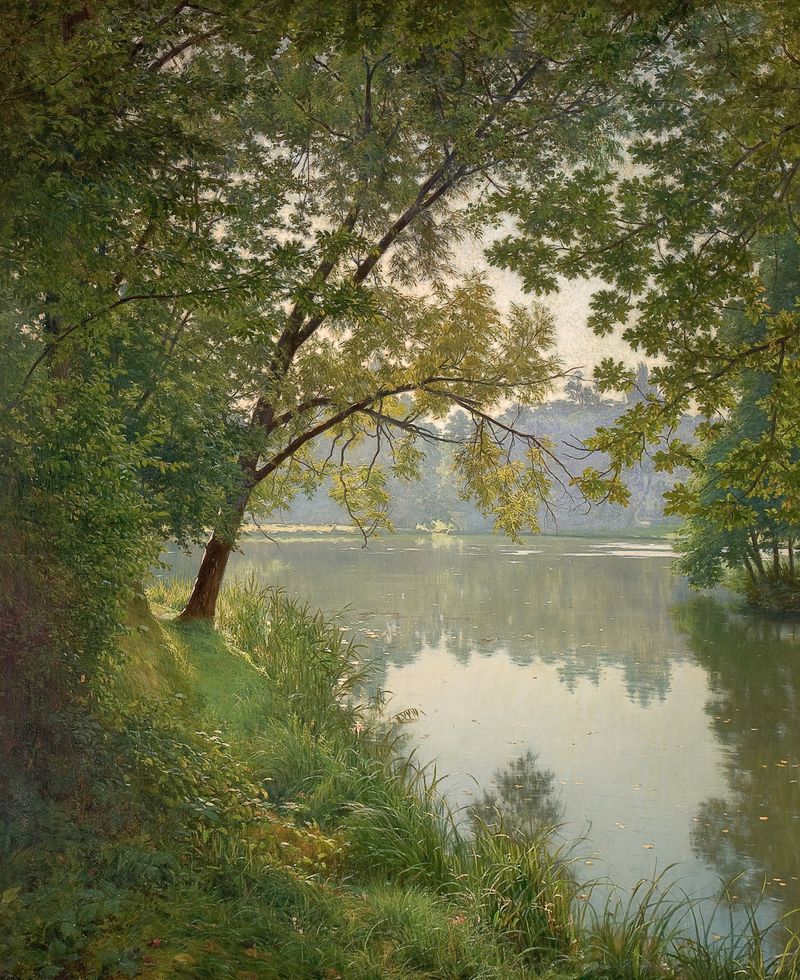
Could beauty survive in a century of chaos? In a world constantly teetering on the brink of turmoil, this artwork invites us to pause and reflect on the fragility of existence. Look to the lower left corner where a collection of moored punts lies serenely against the backdrop of still waters. The gentle ripples shimmer under the soft embrace of light, creating a mirror-like surface that captures the delicate balance between reality and reflection. Notice how the lush greens and warm browns of the landscape harmonize with the cool blues of the water, evoking a sense of tranquility that contrasts sharply with the underlying themes of transience. Each punt, tethered yet vulnerable, symbolizes life's fleeting nature and the moments we hold dear.
The stillness of the water provides a poignant reminder of mortality, while the careful brushwork reveals the artist's sensitivity to the emotional weight of stillness. In the interplay of light and shadow, the viewer is drawn into a contemplative space, where beauty exists not only in the scene but in the quiet echoes of what lies beyond. Henri Biva painted this piece amid the rise of the Impressionist movement, likely in the late 19th century. During this time, he found inspiration in the serene landscapes of France, capturing the essence of nature's ephemeral beauty.
While the world around him was undergoing significant changes, Biva sought solace in these tranquil moments, producing works that celebrate the harmony between humanity and the natural world.