Fuji no yūkei — History & Facts
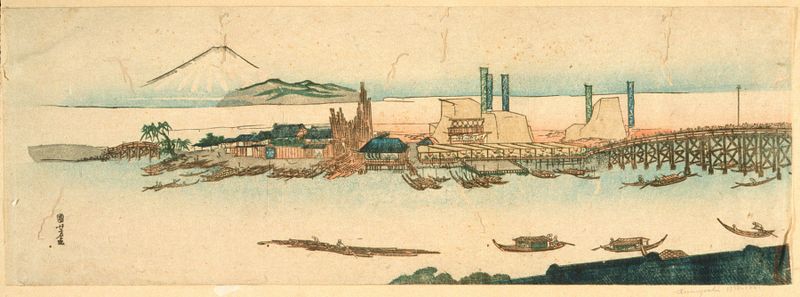
In Fuji no yūkei, the world is infused with a rhythm that transcends the stillness of the landscape. Each brushstroke captures not just a moment, but the pulse of life that ebbs and flows around the iconic figure of Mount Fuji. Look to the left at the undulating waves, where vibrant blues and soft teals ripple across the canvas, creating a sense of movement that draws you into the scene. The mountain looms majestically in the background, draped in soft, ethereal mist, while delicate cherry blossoms frame the foreground, their pink petals seeming to dance lightly in the breeze.
A masterful use of color contrasts captures both the serenity and dynamism of nature, suggesting that stillness and motion exist in harmony. Within this harmonious juxtaposition lies deeper meaning. The mountain, often a symbol of stability, is contrasted against the transient beauty of the blossoms, representing fleeting moments and the cycles of life. The movement of the waves mirrors the imperfections of human experience, while the serene Fuji stands as an eternal witness, invoking a meditation on permanence versus ephemerality.
Such contrasts evoke a poignant emotional tension, reflective of both nature's beauty and humanity's ephemeral pursuits. Utagawa Kuniyoshi painted Fuji no yūkei in 1829 while residing in Edo, a period characterized by dynamic cultural shifts within Japan. His work emerged amidst the flourishing Ukiyo-e movement, which celebrated the beauty of everyday life and nature. At this time, the artist was evolving his style, infusing more dramatic elements and emotional depth into his pieces, reflecting both the vibrancy of his surroundings and the rapid changes occurring within society.