Sumida River Scene — History & Facts
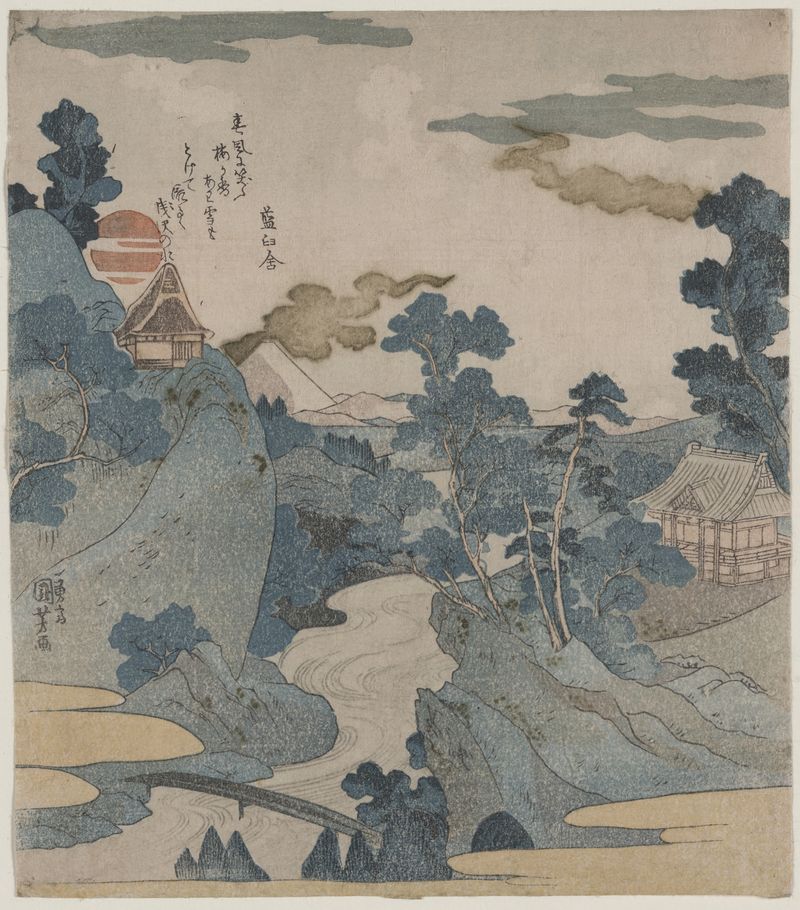
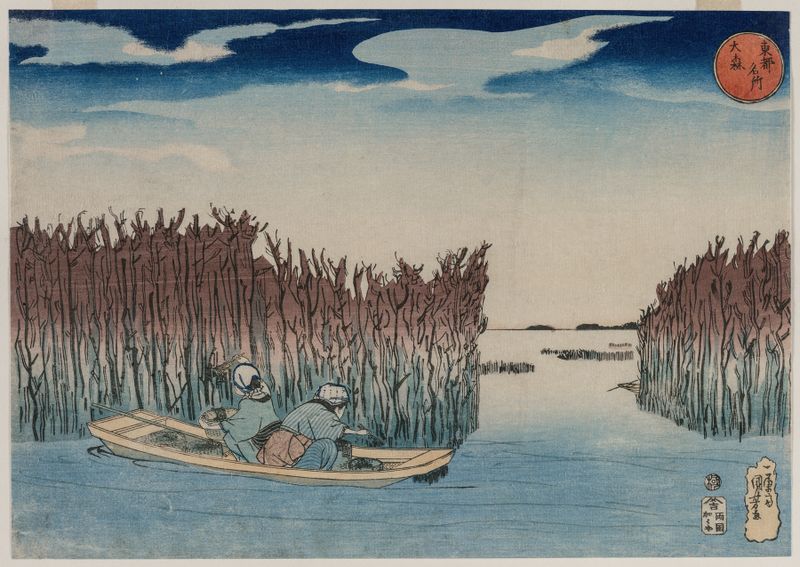
The interplay of decay and beauty forms the heart of this stunning piece, inviting deep reflection on the transience of life. Look to the left at the elegantly flowing waters of the Sumida River, where rippling reflections shimmer under the soft touch of the artist’s brush. Notice how the delicate lines of the riverbanks cradle the vivid hues of blue and green, revealing the lush landscape that envelops the scene. The composition draws the eye to the horizon, where sky and water meet, creating a sense of serenity amid the intricate details that breathe life into the river’s banks. Beneath the surface of this idyllic scene lies a profound commentary on impermanence.
The muted tones of the foreground suggest a once-vibrant life now succumbing to decay, with the presence of wilting flowers and crumbling structures subtly hinting at the passage of time. Yet, in this decay, there is beauty—suggesting that even in decline, nature offers a quiet, captivating grace. The juxtaposition of life and decay evokes a poignant tension that resonates deeply, inviting the viewer to contemplate their own experiences of loss and renewal. Utagawa Kuniyoshi created Sumida River Scene in the mid-19th century, a time when Japan was undergoing significant social and artistic transformation.
The artist was part of the ukiyo-e movement, which aimed to depict the fleeting beauty of everyday life. During this period, Kuniyoshi was particularly influential, pushing the boundaries of traditional Japanese printmaking and reflecting both the beauty and complexity of the world around him.