
Fulnek — History & Facts
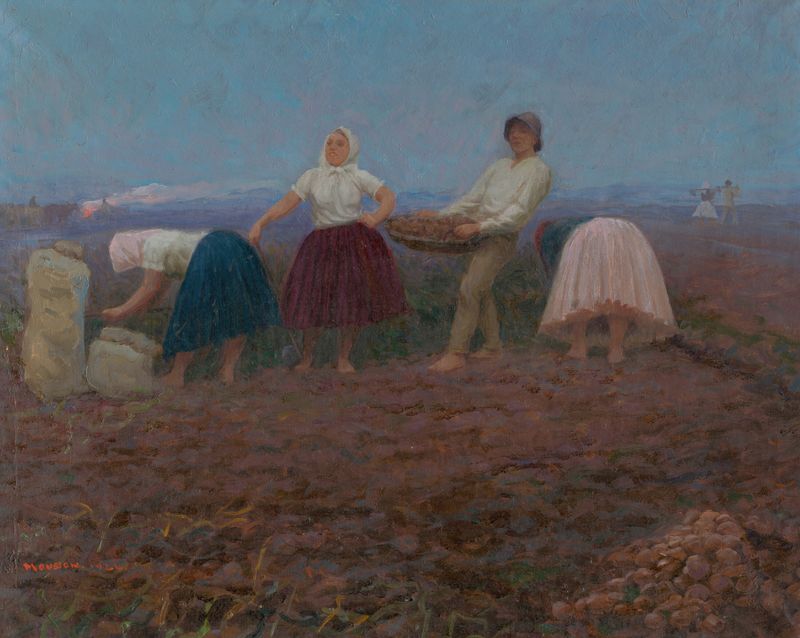
Could beauty survive in a century of chaos? Jozef Teodor Mousson’s Fulnek invites us to ponder this profound question, capturing the essence of yearning amidst turmoil. The painting serves as a testament to resilience, a visual echo of hope that transcends despair. Look to the left, where a delicate interplay of colors unfolds—a washes of muted golds and soft greens blend seamlessly, drawing your gaze to a tranquil landscape that feels alive yet distant. Notice how the brush strokes dance lightly across the canvas, each one imbued with Mousson’s tender touch.
The composition is framed by soft, enveloping shadows, creating a sense of depth and inviting reflection. The seemingly serene foreground contrasts sharply with the heavy clouds that loom, hinting at an underlying tension between peace and uncertainty. As you explore the piece further, the emotional weight becomes palpable. The vibrant foliage symbolizes the enduring spirit of nature, while the ominous sky looms like a specter of the anxieties of the era.
The juxtaposition of light and shadow serves as a metaphor for hope amidst despair—a yearning for beauty that remains steadfast in the face of societal upheaval. Each element, from the billowing clouds to the grounded earth, invites viewers to contemplate their own experiences of longing and resilience. In 1930, Mousson painted Fulnek during a turbulent period marked by the rise of totalitarian regimes in Europe and a world recovering from the Great War. Residing in Czechoslovakia, he faced the challenges of a changing artistic landscape, with movements like Surrealism gaining momentum.
Yet, despite these upheavals, Mousson’s work remained anchored in a quest for beauty, serving as a sanctuary in a world on the brink of chaos.
More Artworks by Jozef Teodor Mousson
Browse all →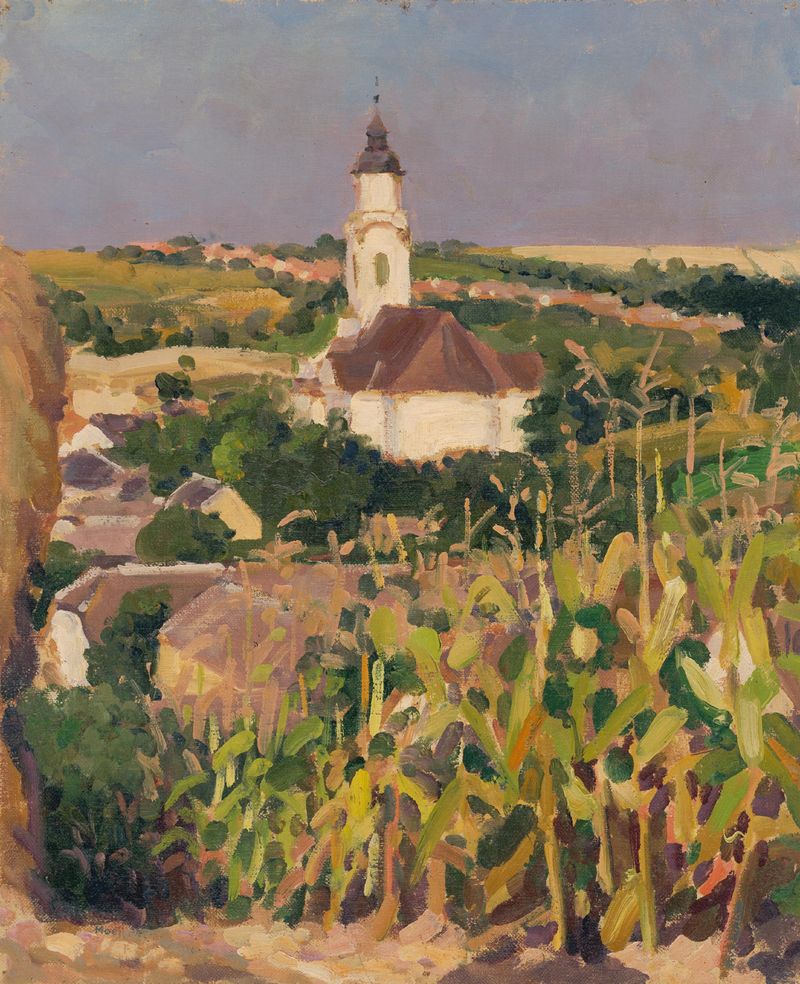
Eastern Slovakia Village
Jozef Teodor Mousson
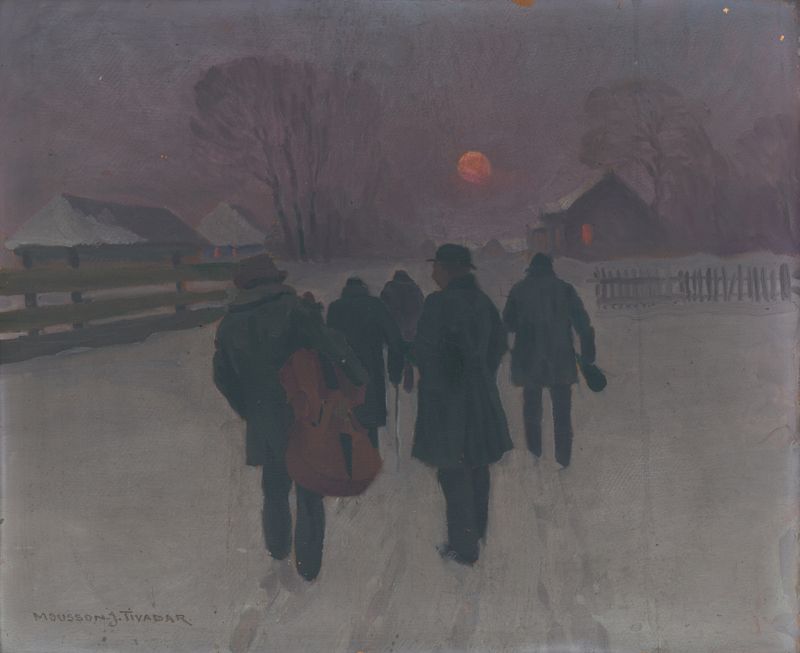
Musicians Returning in the Early Morning through Snowed Landscape
Jozef Teodor Mousson

Na pobreží
Jozef Teodor Mousson

V zime na dedine
Jozef Teodor Mousson

Trh v Michalovciach II.
Jozef Teodor Mousson
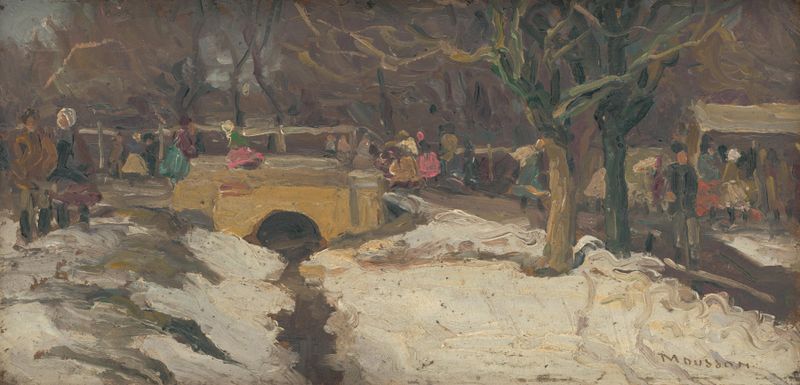
Market
Jozef Teodor Mousson
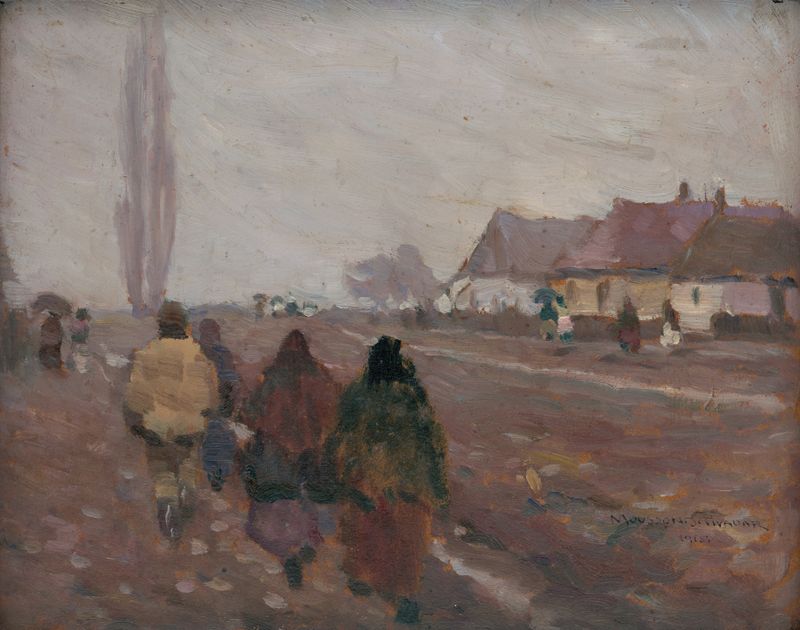
On the Road from the Michalovice Market
Jozef Teodor Mousson

Potato Digging
Jozef Teodor Mousson

Na dedine
Jozef Teodor Mousson
Potato picking
Jozef Teodor Mousson





