
Furuer, Levanger — History & Facts
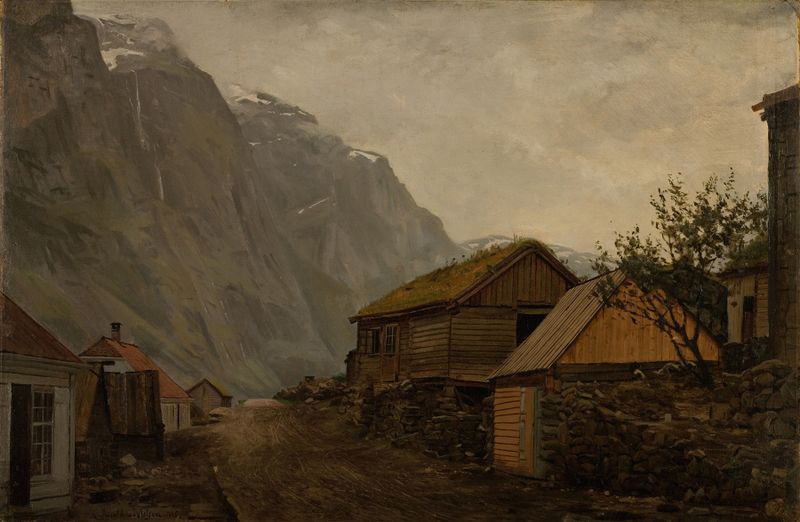
Can paint confess what words never could? In Furuer, Levanger, the quiet sorrow of loss resonates in every brushstroke, a profound reflection on the fragility of memory and the weight of absence. Look to the left at the soft hues of twilight blending into the water, where a delicate interplay of blues and grays evokes a sense of longing. The horizon, barely defined, suggests a boundary between the known and the unknown, while the muted colors reflect the melancholic mood of the scene. Notice how the still surface of the water mirrors the sky, creating a harmony that feels both serene and haunting, inviting the viewer to contemplate what might have been. The emotional tension in this artwork lies in its contrasts—between light and darkness, presence and absence.
The gentle ripples hint at the movement of time, a reminder that even in stillness, life continues to unfold. The fading light serves as a metaphor for lost opportunities and unspoken words, rendering the landscape not merely a setting but an embodiment of grief. Each element, from the solitary tree to the distant hills, whispers stories of what was left behind. Amaldus Nielsen painted Furuer, Levanger in 1871 while residing in Norway, a period when the country was grappling with profound transformations in art and society.
Influenced by Romanticism, he sought to capture the emotional depth of nature, reflecting both his personal experiences and the broader cultural shifts of his time. The work stands as a testament to his ability to convey complex emotions through landscape, offering viewers a glimpse into his introspective journey.
More Artworks by Amaldus Nielsen
Browse all →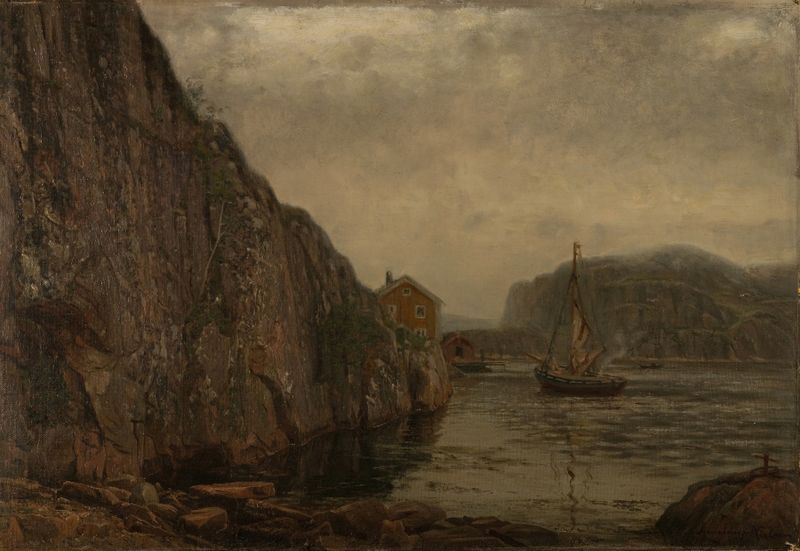
Skjærgård, Ny-Hellesund
Amaldus Nielsen
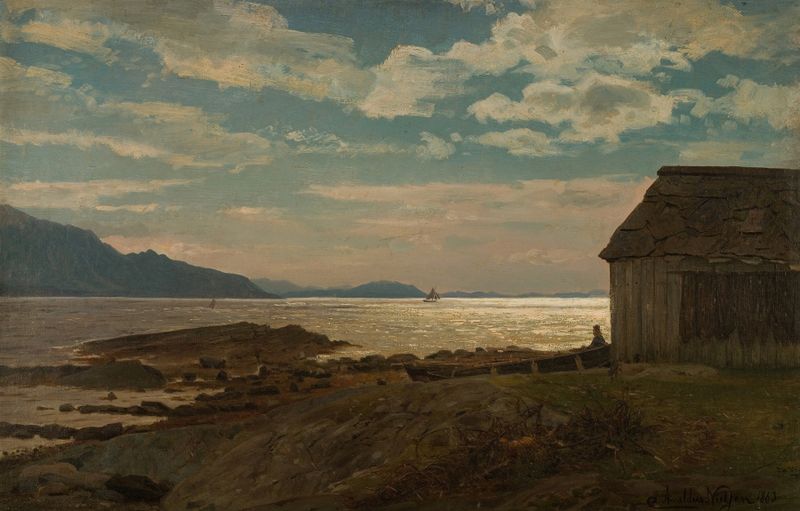
Fra Ølvestranden, Hardanger
Amaldus Nielsen
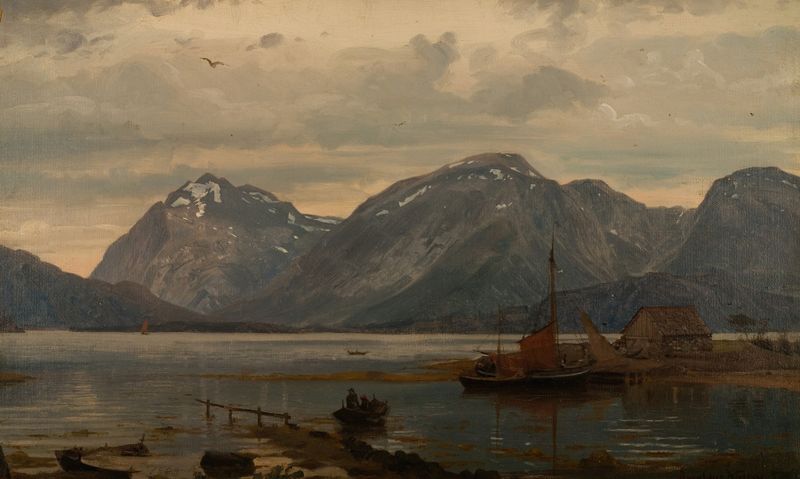
Fra Englafjellene, Hardanger
Amaldus Nielsen
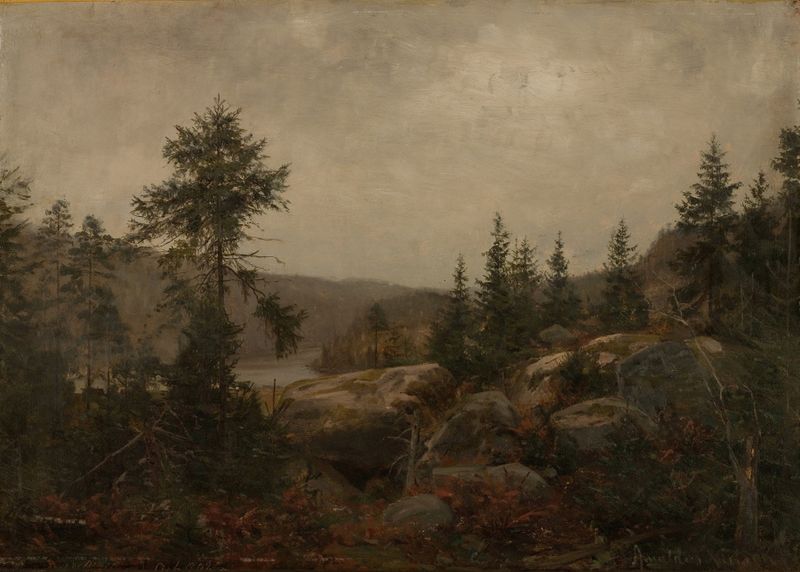
Duskregn . Gården Foss, Mandalselven
Amaldus Nielsen
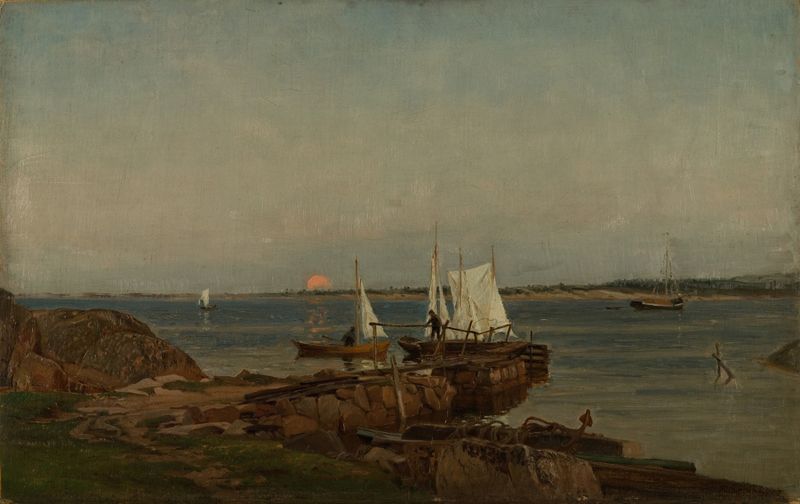
Sommernatt, Hvaler
Amaldus Nielsen
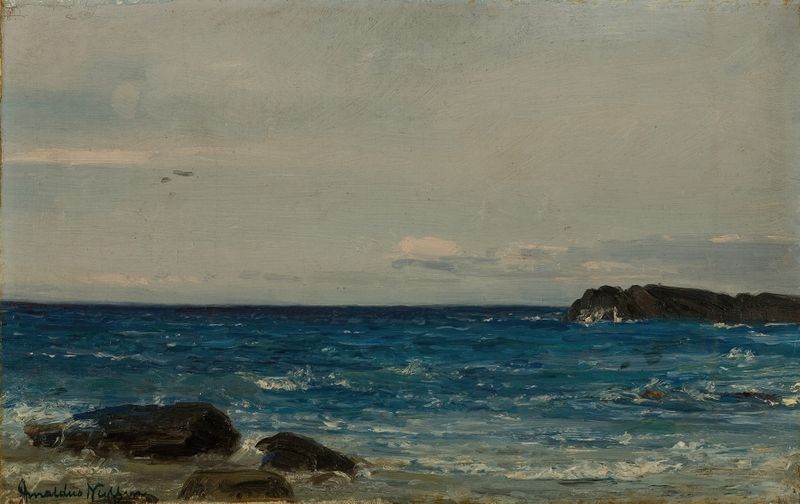
Fra Jæren
Amaldus Nielsen
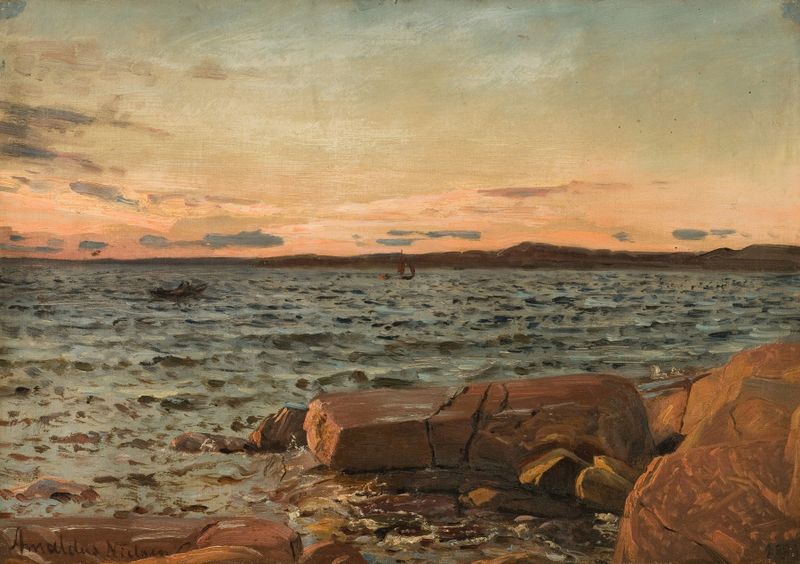
Solgangsvind, Hvaløene
Amaldus Nielsen
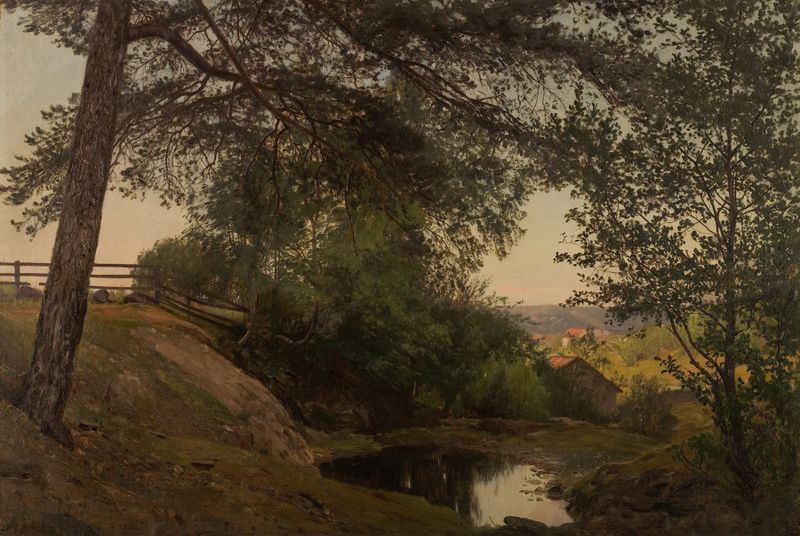
Mellom trærne. Lervik, Stord
Amaldus Nielsen

Båtbyggeri, Lillesand
Amaldus Nielsen
Regnstemning, Gudvangen
Amaldus Nielsen





