
Galata bridge, Constantinople — History & Facts
In the soft glow of twilight, light becomes a language, whispering secrets and stories through the architecture and waters of a city teetering between East and West. It captures not just a moment, but the essence of a place where shadows dance and histories converge, each ray revealing the delicate interplay of time. Look to the right at the vibrant hues of the sunset reflected in the Bosphorus, where the warm oranges and purples bleed into the cool blues of the water. Notice how the bridge, a connecting thread of human endeavor, stands resilient against the backdrop of a city alive with movement.
The figures populating the scene — fishermen, merchants, and passersby — are rendered with tender attention to detail, their gestures frozen in time, highlighting the artist's mastery of capturing ordinary life through a lens of extraordinary light. Delve deeper into the layers of this work, and you’ll uncover the tension between progress and tradition. The bridge symbolizes connection, yet the figures on either side reflect a dichotomy of existence — the quick pace of modernity versus the slow rhythm of the waters below. This contrast echoes the journey of a city in flux, where every fisherman casts a line not just into the water, but into the fabric of an evolving culture. In 1857, during a period of burgeoning change in both the art world and the Ottoman Empire, the artist captured this scene in Constantinople.
At that time, the city was a melting pot of influences, reflective of the broader tensions of modernization and the preservation of heritage. Preziosi's work serves not only as a document of a moment but also as a commentary on the shifting identities within a historical landscape.
More Artworks by Amadeo Preziosi
Browse all →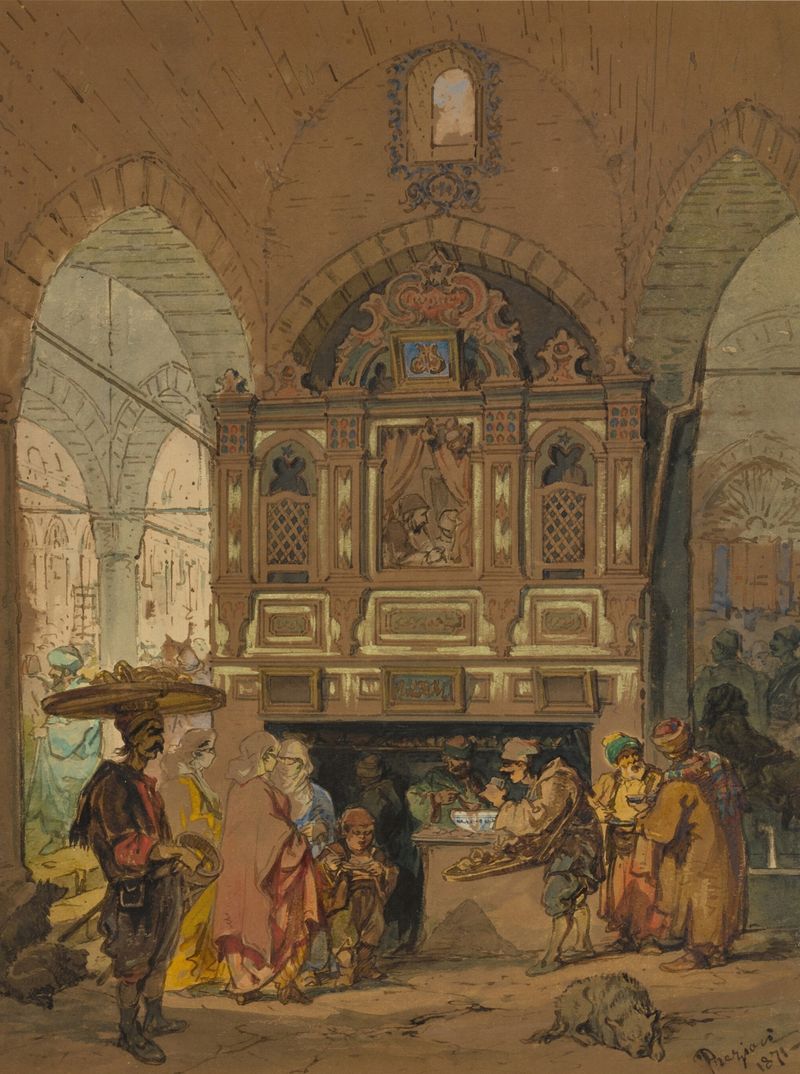
The Grand Bazaar in Constantinople
Amadeo Preziosi
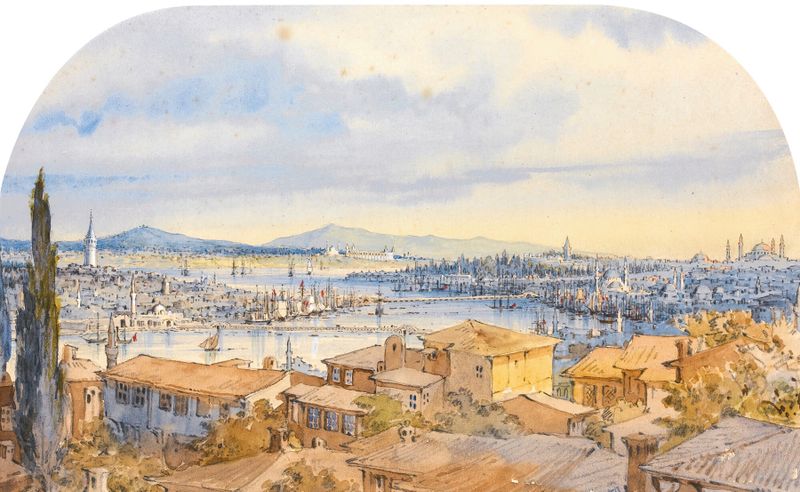
View of the golden horn
Amadeo Preziosi
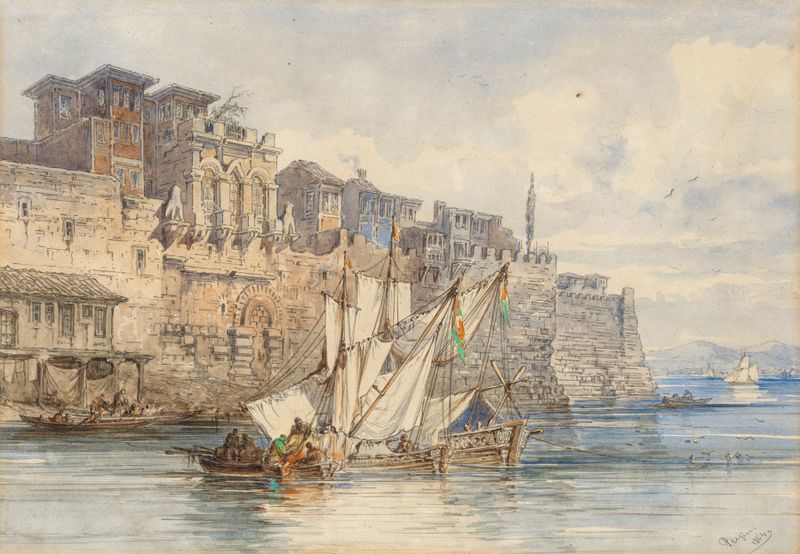
The Palace of Boukoleon on the shore of the Sea of Marmara
Amadeo Preziosi

Istanbul seen from Eyüp cemetery
Amadeo Preziosi
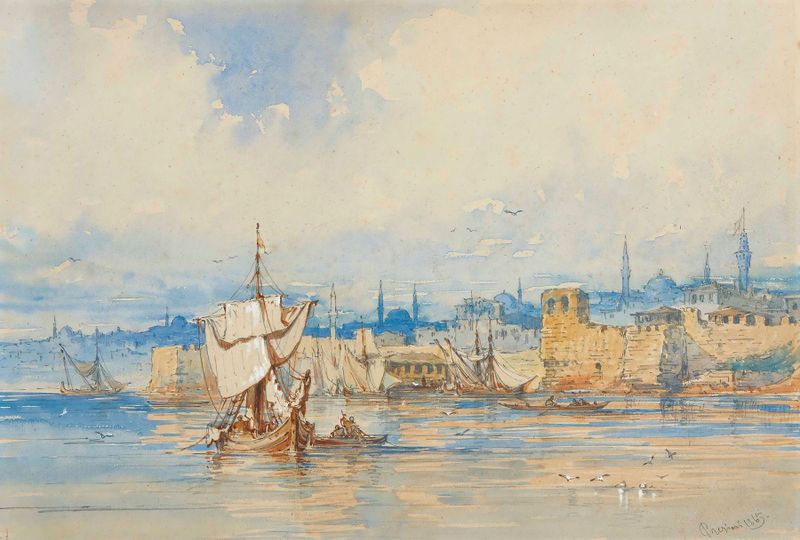
Fishing boats on the Sea of Marmara, at Kumkapi, Istanbul
Amadeo Preziosi
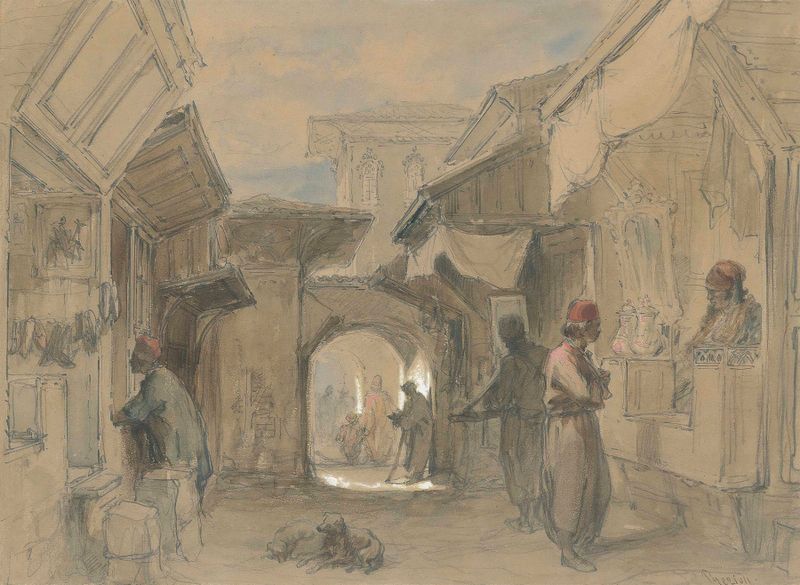
A Bazaar in Constantinople
Amadeo Preziosi

A Street in Old Istanbul
Amadeo Preziosi
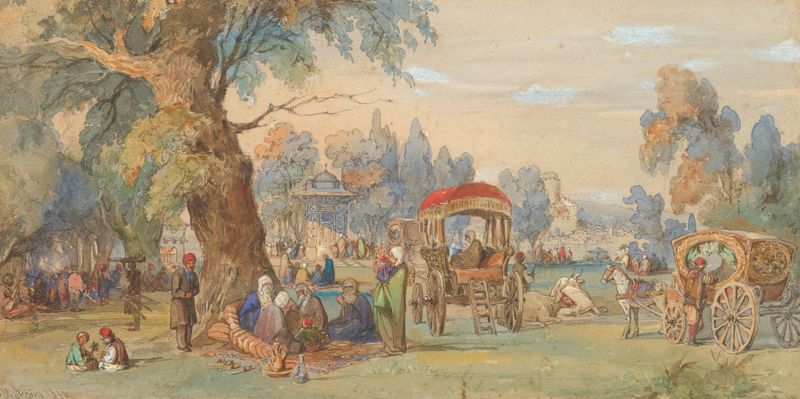
A Party At The Sweet Waters Of The Bosphorus, Constantinople
Amadeo Preziosi

View over the Bosphorus showing the Fortress of Rumeli Hissar (Rumelihisarı), Constantinople
Amadeo Preziosi

Marché au Caire
Amadeo Preziosi





