
Istanbul seen from Eyüp cemetery — History & Facts
Did the painter know this moment would outlive them? In the stillness of 1860, as shadows stretched across the Eyüp cemetery, one could almost hear the echoes of history whispering through the tombstones, each a testament to a life once lived. The view of Istanbul unfurls, a vibrant tapestry where the past and present intertwine, suspended in the delicate embrace of time. Look to the foreground where the gravestones stand resolute, adorned with ornate details that draw the eye. Notice how the sunlight filters through the tree branches, casting dappled patterns on the weathered stone.
The palette is a harmonious blend of earthy tones punctuated by flashes of blue and gold, capturing the essence of a city steeped in centuries of culture, life, and death. The careful composition directs the gaze toward the skyline, where the minarets of Istanbul punctuate the horizon, inviting contemplation of the eternal. Beneath the surface, emotional tensions emerge in the juxtaposition of life and mortality. The cemetery, a silent witness to the passage of time, contrasts sharply with the vibrant city beyond, bustling yet distant.
Each grave serves as a reminder of the fleeting nature of existence, while the sprawling urban landscape symbolizes the continuity of life. This duality speaks to the artist's intent, prompting viewers to reflect on their own place within the relentless march of time. Amadeo Preziosi created this work while living in Istanbul, a period marked by his fascination with the city’s blend of cultures and histories. A prominent painter in the mid-19th century, he was heavily influenced by the Romantic movement, which prioritized emotion and individual experience.
As the Ottoman Empire was undergoing significant changes, Preziosi's depiction of the cemetery reflects both the nostalgia for the past and an acknowledgment of the evolving world around him.
More Artworks by Amadeo Preziosi
Browse all →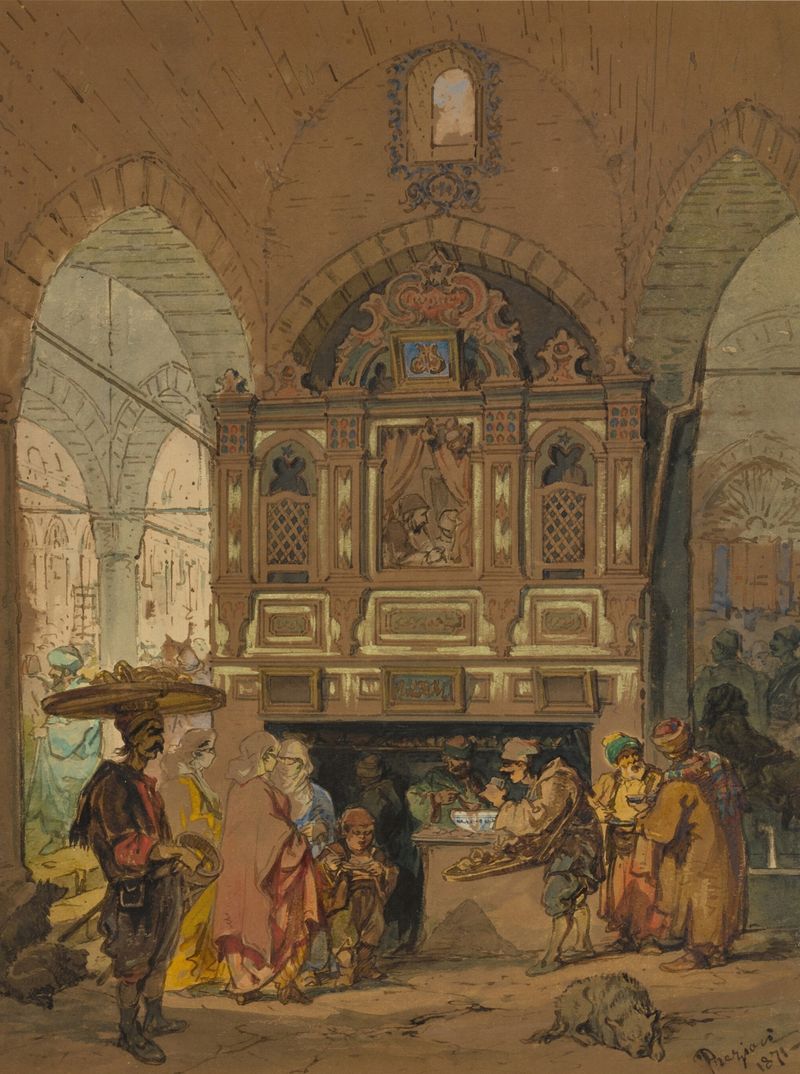
The Grand Bazaar in Constantinople
Amadeo Preziosi
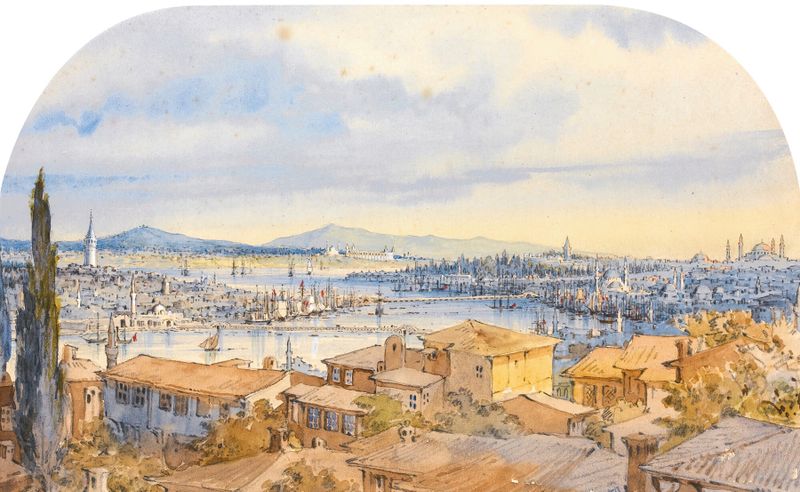
View of the golden horn
Amadeo Preziosi
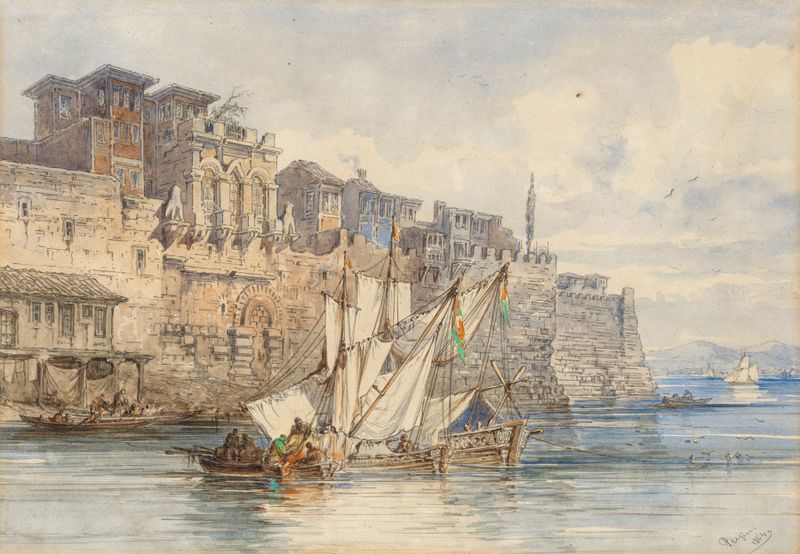
The Palace of Boukoleon on the shore of the Sea of Marmara
Amadeo Preziosi
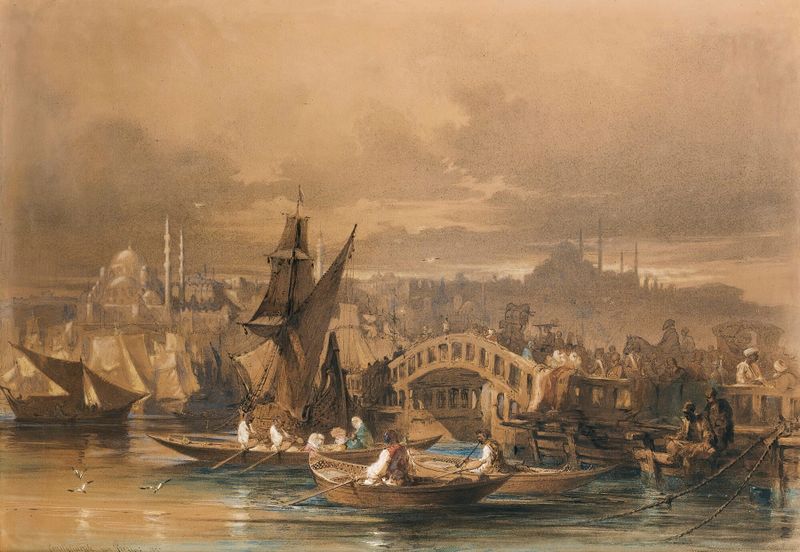
Galata bridge, Constantinople
Amadeo Preziosi
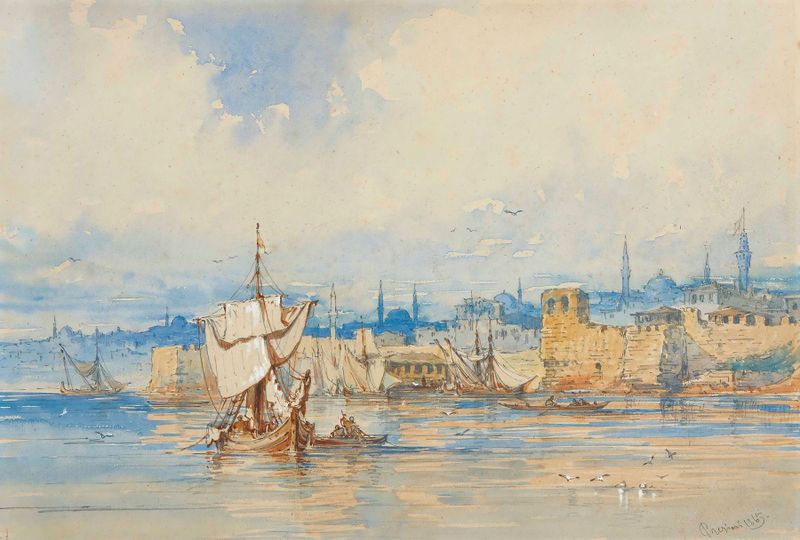
Fishing boats on the Sea of Marmara, at Kumkapi, Istanbul
Amadeo Preziosi
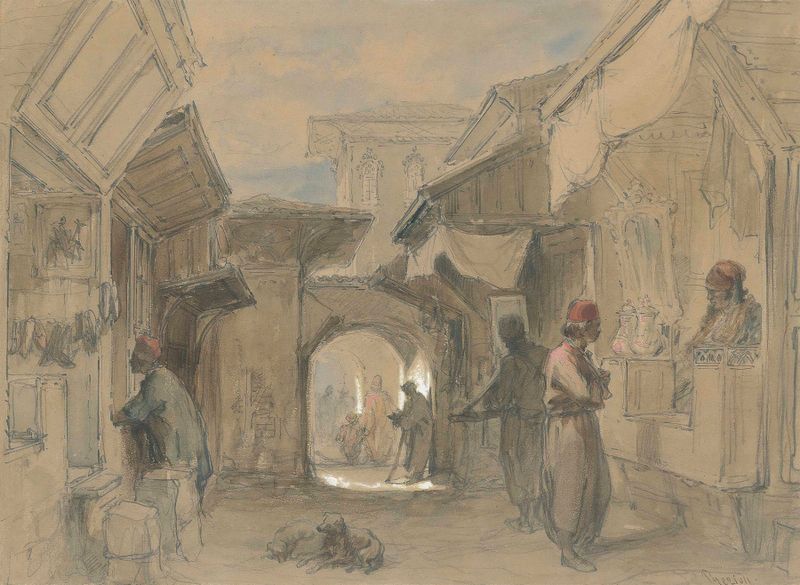
A Bazaar in Constantinople
Amadeo Preziosi

A Street in Old Istanbul
Amadeo Preziosi
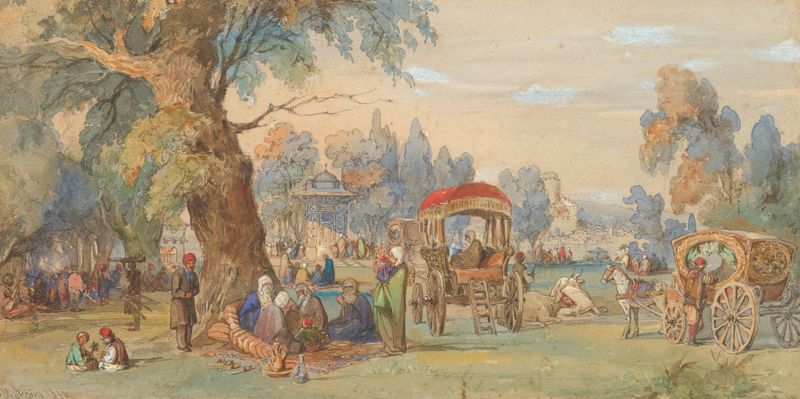
A Party At The Sweet Waters Of The Bosphorus, Constantinople
Amadeo Preziosi

View over the Bosphorus showing the Fortress of Rumeli Hissar (Rumelihisarı), Constantinople
Amadeo Preziosi

Marché au Caire
Amadeo Preziosi





