The Grand Bazaar in Constantinople — History & Facts
Can beauty exist without sorrow? In the stillness of The Grand Bazaar in Constantinople, silent echoes of bustling life resonate through the vibrant hues and intricate patterns of a world where time seems to hold its breath. Look to the left at the delicate arches framing the entrance, their ornate designs inviting you into a space brimming with color. Focus on the rich tapestry of textiles—crimson, azure, and gold—that spills out into the scene, each fold and drape meticulously rendered. The warm light filters through the gaps in the structures, casting soft shadows that dance across the cobblestones, while figures in traditional attire move gracefully yet purposefully, their presence both vibrant and elusive, suggesting the transient nature of life and commerce. Beneath the surface of this bustling scene lies a profound juxtaposition.
The marketplace, full of life and commerce, is simultaneously infused with a haunting silence, suggesting stories untold and dreams unfulfilled. The serenity of the light contrasts sharply with the potential chaos of the bazaar atmosphere, reflecting the artist's contemplation on beauty amid the inevitable sorrows that time brings, a poignant reminder of the fragility of existence and the weight of history in every vibrant thread. Amadeo Preziosi painted this work in 1871, during a time when he was immersed in the rich cultural tapestry of the Ottoman Empire. Living in Constantinople, his experiences in the city shaped his artistic vision, capturing not just the sights but the diverse stories that unfolded within its bustling marketplaces.
The artwork stands as a testament to his dedication to portraying the intricate beauty and complexities of life in a world on the cusp of change.
More Artworks by Amadeo Preziosi
Browse all →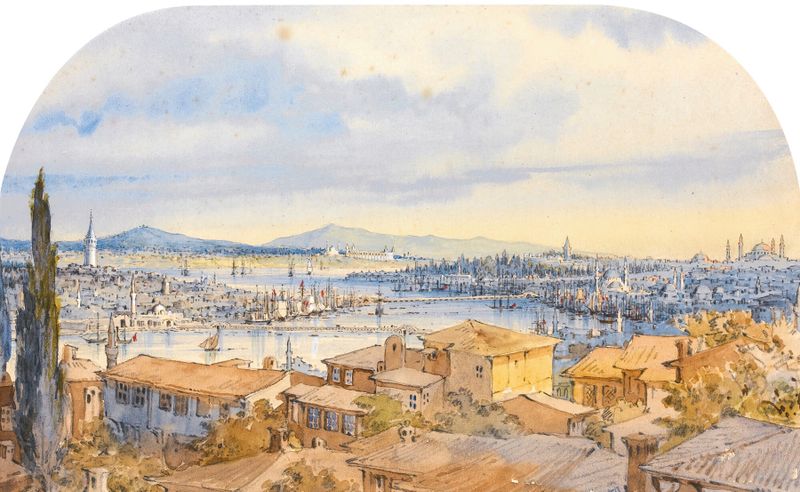
View of the golden horn
Amadeo Preziosi
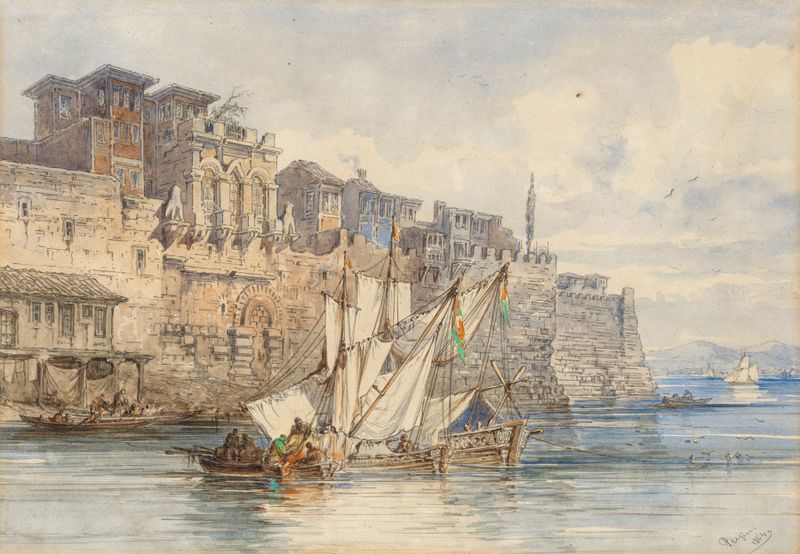
The Palace of Boukoleon on the shore of the Sea of Marmara
Amadeo Preziosi
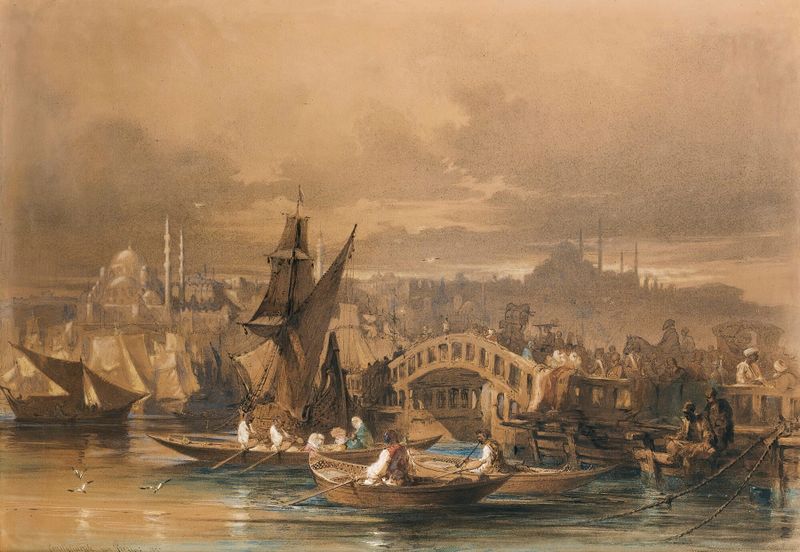
Galata bridge, Constantinople
Amadeo Preziosi

Istanbul seen from Eyüp cemetery
Amadeo Preziosi
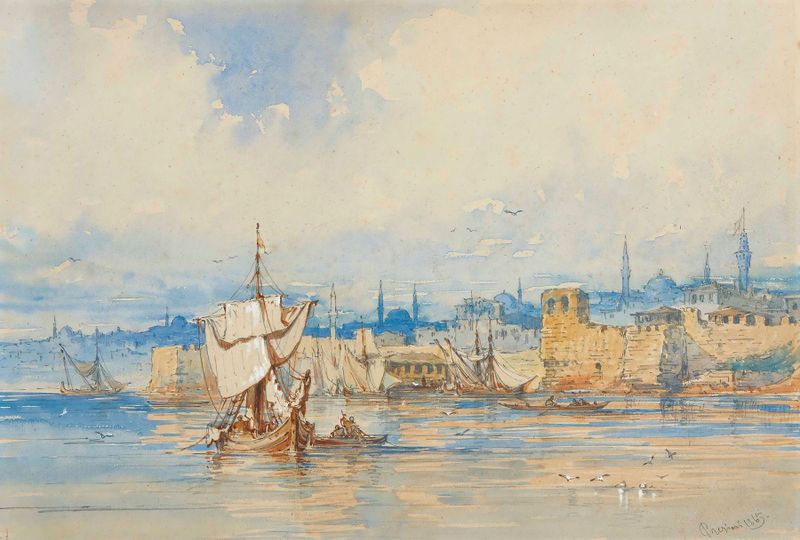
Fishing boats on the Sea of Marmara, at Kumkapi, Istanbul
Amadeo Preziosi
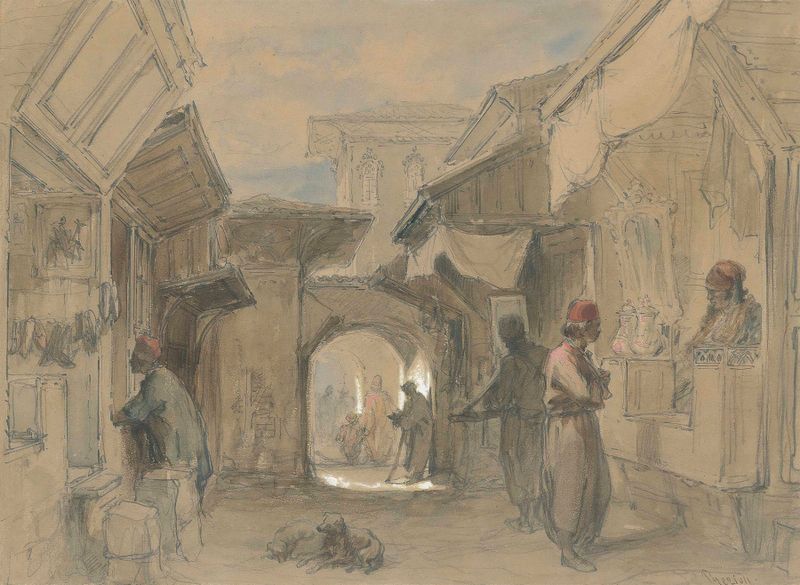
A Bazaar in Constantinople
Amadeo Preziosi

A Street in Old Istanbul
Amadeo Preziosi
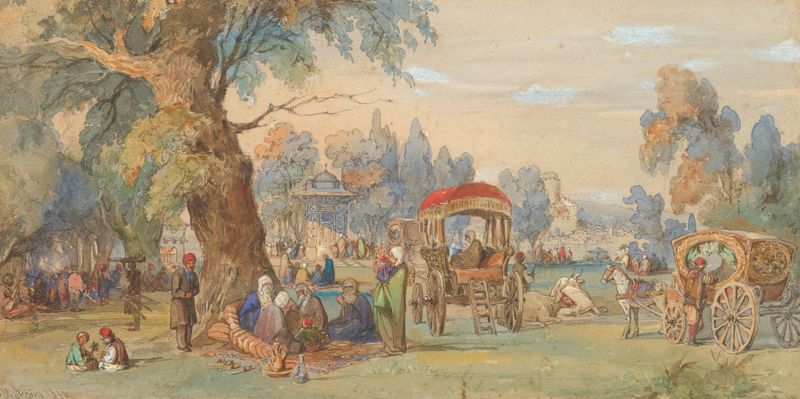
A Party At The Sweet Waters Of The Bosphorus, Constantinople
Amadeo Preziosi

View over the Bosphorus showing the Fortress of Rumeli Hissar (Rumelihisarı), Constantinople
Amadeo Preziosi

Marché au Caire
Amadeo Preziosi