
Garveriet, Mandal — History & Facts
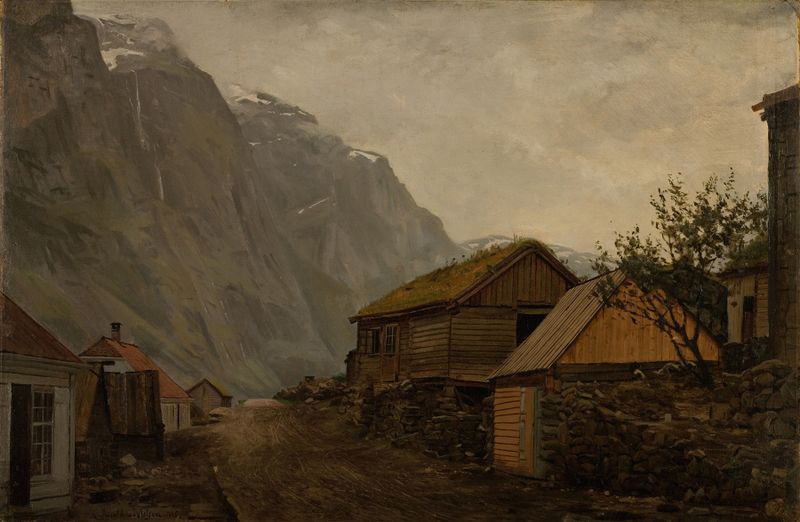
In the hush of a painter’s studio, the act of creation can be a dance with sorrow, each stroke a tribute to the heart’s unseen burdens. Look to the left at the gentle ripples of water reflecting an array of muted blues and greens, mirroring the complexity of emotions that flow beneath the surface. Notice how the artist employs soft brushwork to create a serene landscape, inviting the viewer into a moment suspended in time. The harmonious composition captures the essence of Mandal, where nature and human influence intertwine, defined by the careful placement of trees and the delicate handling of light that seems to whisper secrets of the past. Yet, beneath this tranquil facade lies an undercurrent of grief.
The subdued palette hints at loss, while the absence of figures evokes a stark solitude, as if the landscape itself mourns. Each element speaks of resilience in the face of inevitable change, suggesting an unseen story of those who once thrived in this vibrant setting. It encourages contemplation of nature's quiet power to encapsulate both beauty and sorrow in an ever-shifting world. Amaldus Nielsen painted this work in 1858 amidst a flourishing national romanticism in Norway, a time when artists sought to express both the grandeur of their landscapes and the complexities of human emotion.
Straddling the line between the beauty of nature and the weight of personal grief, this piece reflects his own journey as he navigated the artistic currents of his era, striving to encapsulate the essence of his homeland while confronting the shadows that lingered within.
More Artworks by Amaldus Nielsen
Browse all →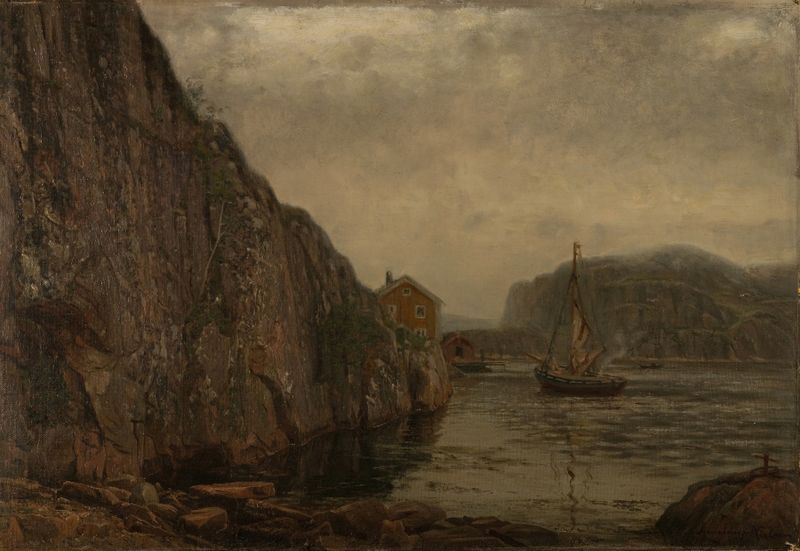
Skjærgård, Ny-Hellesund
Amaldus Nielsen
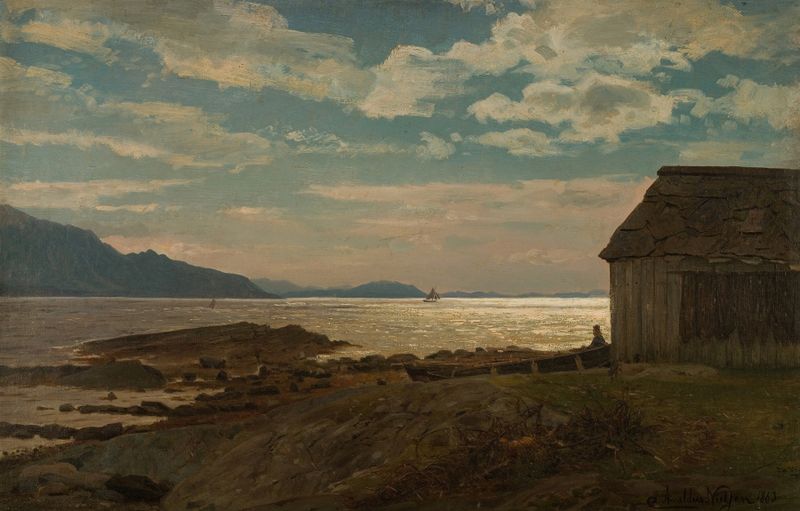
Fra Ølvestranden, Hardanger
Amaldus Nielsen
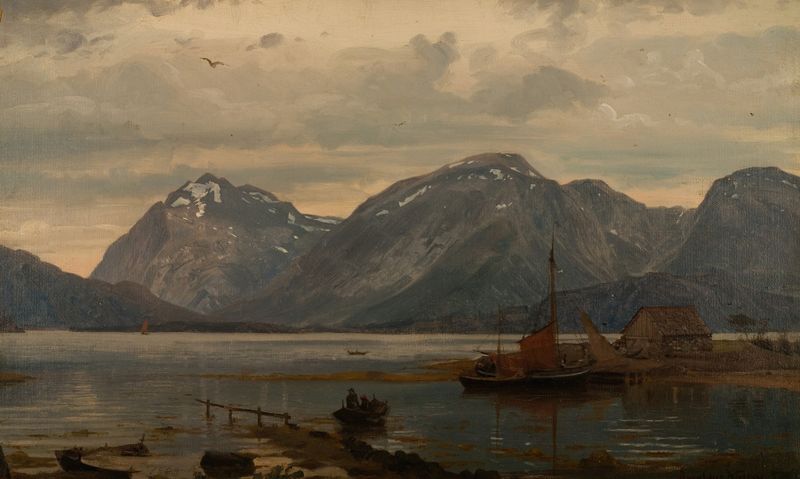
Fra Englafjellene, Hardanger
Amaldus Nielsen
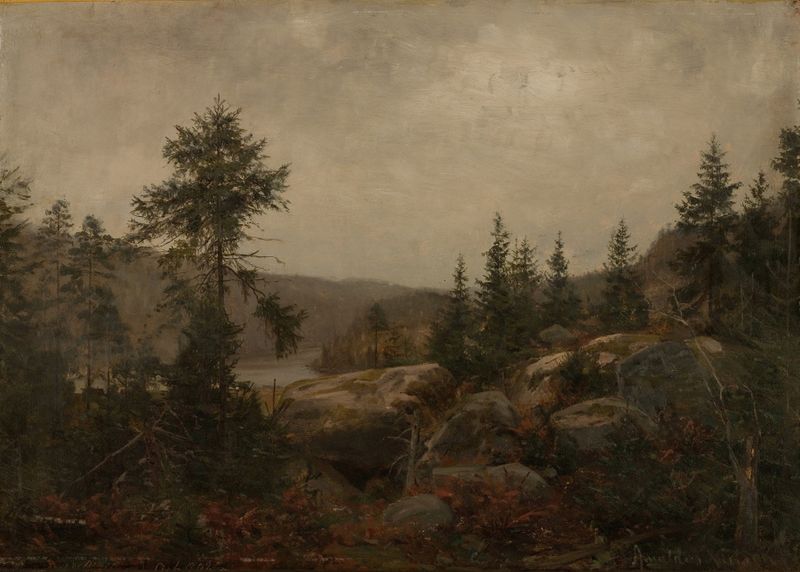
Duskregn . Gården Foss, Mandalselven
Amaldus Nielsen
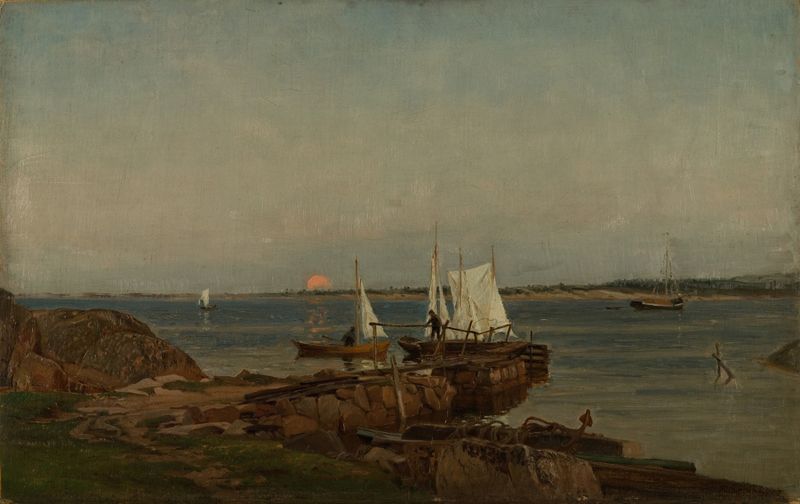
Sommernatt, Hvaler
Amaldus Nielsen
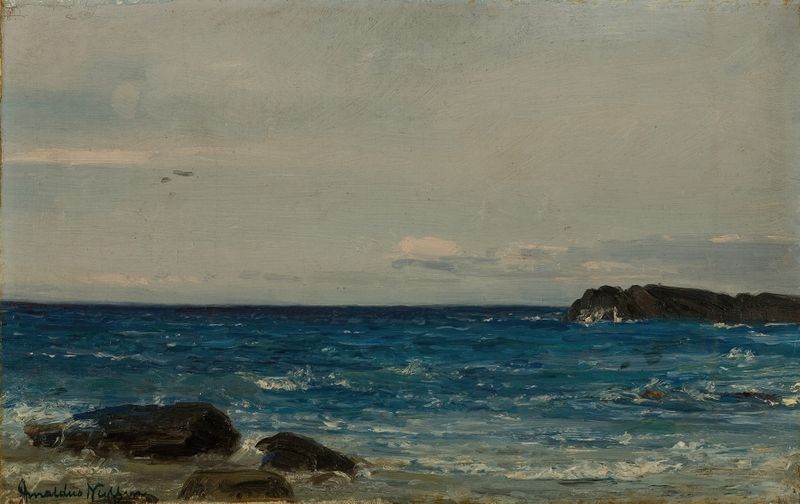
Fra Jæren
Amaldus Nielsen
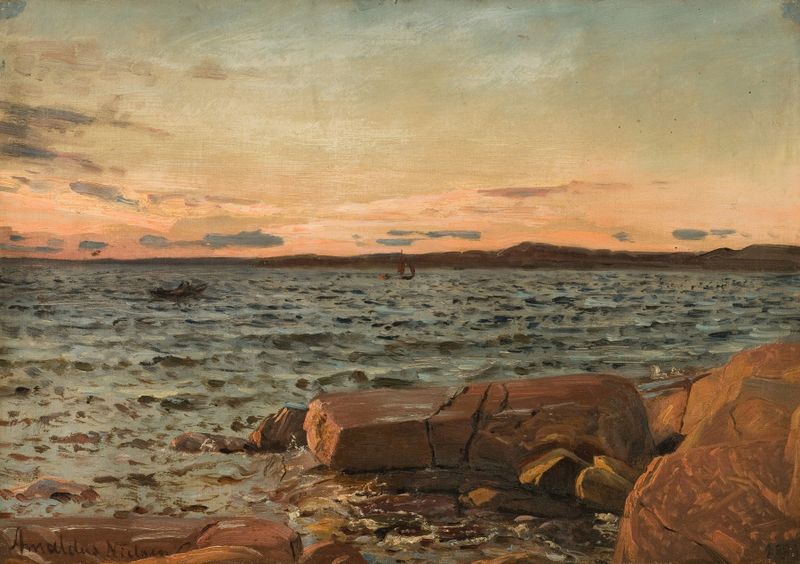
Solgangsvind, Hvaløene
Amaldus Nielsen
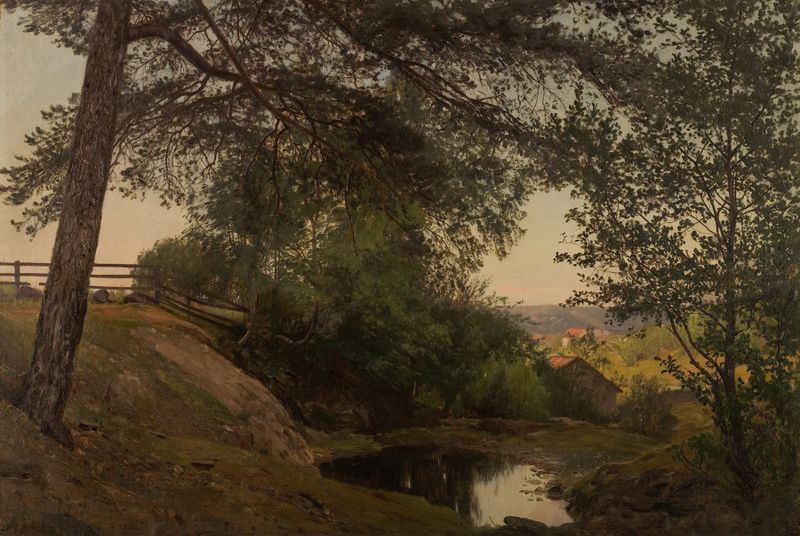
Mellom trærne. Lervik, Stord
Amaldus Nielsen

Båtbyggeri, Lillesand
Amaldus Nielsen
Regnstemning, Gudvangen
Amaldus Nielsen





