
Gelée blanche — History & Facts
Can paint confess what words never could? In Gelée blanche, the deeply reflective tones capture a world steeped in a quiet melancholy that resonates with the soul. Look to the center of the canvas, where a serene, frost-kissed landscape unfolds beneath a pallid sky. The soft, muted whites and blues create a delicate harmony, inviting your eye to move across the rolling hills gently wrapped in a shroud of snow. Notice how the trees stand as solemn sentinels, their skeletal branches stretching into the ethereal atmosphere, while the muted palette evokes a sense of stillness, as if time has paused, holding its breath in reverence. Hidden within this tranquil scene are layers of emotional tension; the interplay of light and shadow suggests both beauty and isolation.
The glistening frost reflects a fleeting moment of nature's splendor, hinting at the fragility of life itself. Yet, amidst this beauty lies an undercurrent of desolation, emphasized by the absence of human presence — a poignant reminder of solitude in the face of nature's splendor. In 1899, during a period of personal and artistic exploration, the artist crafted this piece while residing in France, amidst a burgeoning Impressionist movement that sought to capture fleeting moments of light and color. Loiseau was finding his voice, experimenting with the emotional depths of landscape painting as he faced the complexities of life and art in a rapidly changing world.
More Artworks by Gustave Loiseau
Browse all →
Rue de village en Normandie
Gustave Loiseau
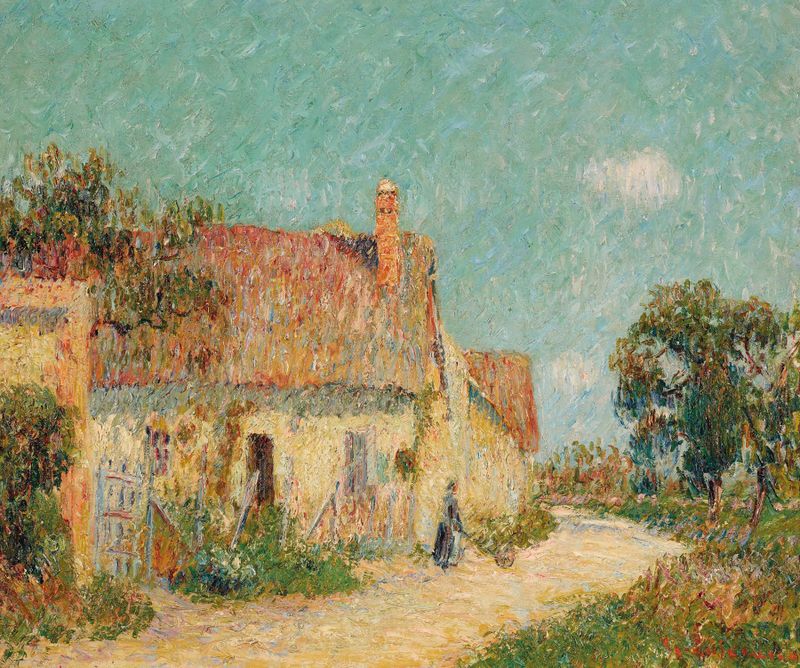
Chaumière en Normandie
Gustave Loiseau

Paysage d’Hiver à Chaponval
Gustave Loiseau
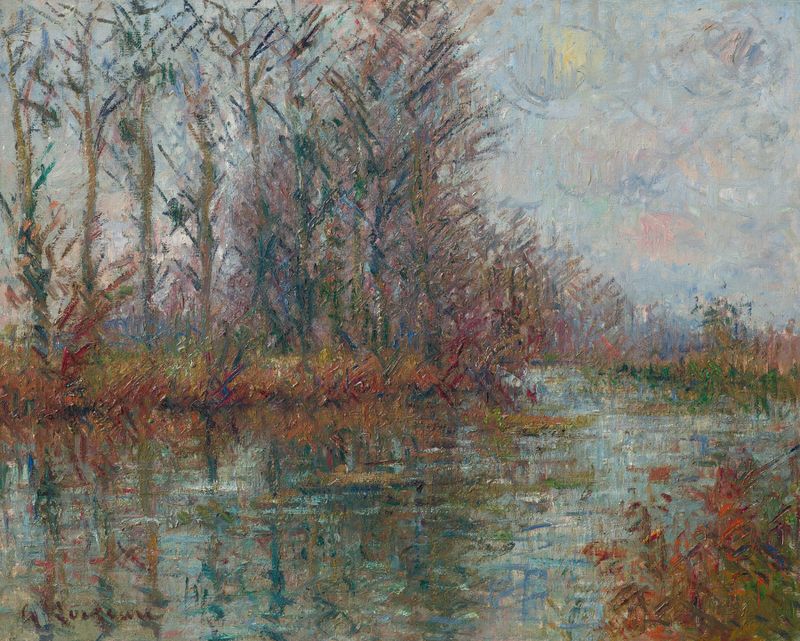
Tournant de rivière, L’Eure
Gustave Loiseau

Pont Marie, Paris
Gustave Loiseau

Le Bras De Mer
Gustave Loiseau

Le Pont Suspendu À Triel
Gustave Loiseau

Bord de la rivière
Gustave Loiseau
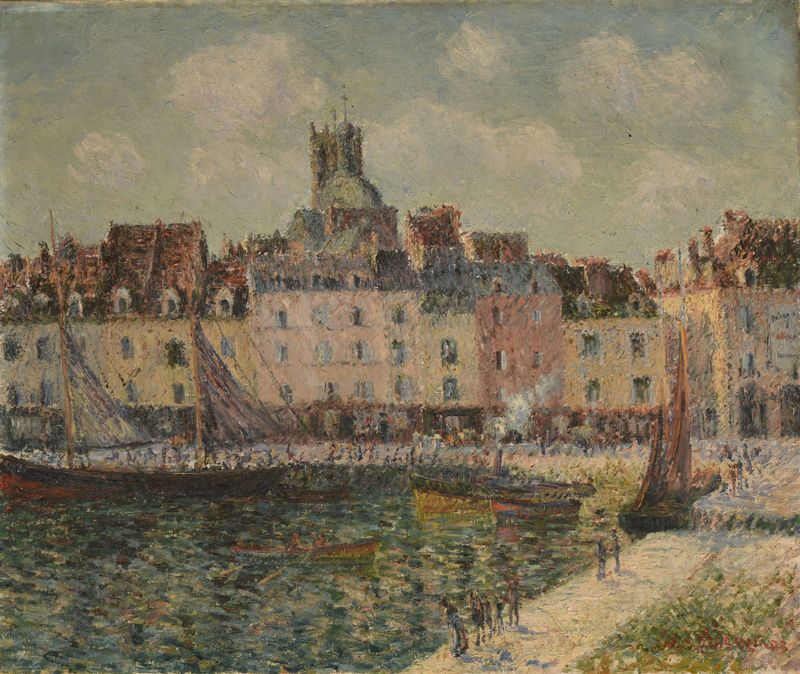
Le Quai Duquesne à Dieppe
Gustave Loiseau

Rocher la Teignouse, Cap Fréhel
Gustave Loiseau





