General view of Buenos Aires — History & Facts
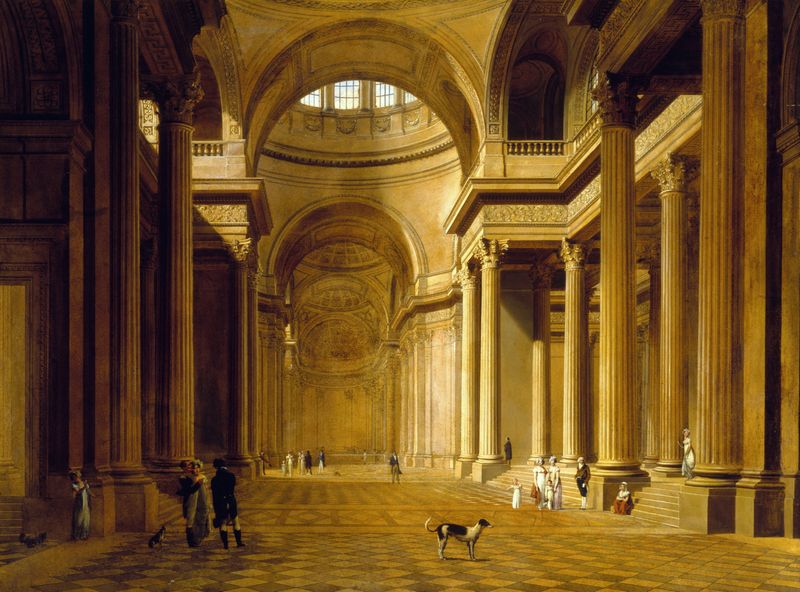
Where does light end, and longing begin? In the embrace of a cityscape, where the shadows of history intertwine with the hopes of its inhabitants, grief finds its quiet voice. Look to the center of the canvas where towering buildings rise like sentinels against a hazy sky. Notice how Boilly captures the interplay of light and shadow, illuminating the bustling streets below while draping the skyline in a melancholic twilight. The meticulous detail in each structure reveals the architect’s ambition, yet their heights evoke a sense of isolation, a reminder of the unyielding march of time.
The muted palette underscores this tension, as ochres and blues blend in harmonious yet somber unity. Beneath the surface of this vibrant city, there lies an undercurrent of longing. The crowds, animated yet distant, reflect a collective pursuit for connection amidst the anonymity of urban life. Each figure, lost in their own world, hints at personal stories of loss and aspiration.
The horizon, though bright with possibility, hints at the emotional toll that progress can exact, as each architectural marvel stands as both a beacon of hope and a testament to the passage of time. In 1836, Boilly painted this scene during a pivotal moment in Buenos Aires' transformation into a modern metropolis. He was captivated by the city’s burgeoning identity and the complexities of its social fabric. As a French artist immersed in the vibrant cultural currents of his era, Boilly found in this landscape an opportunity to explore the interaction of light and life, encapsulating both the energy and the grief of a city in transition.