Gezicht in Gelderland — History & Facts
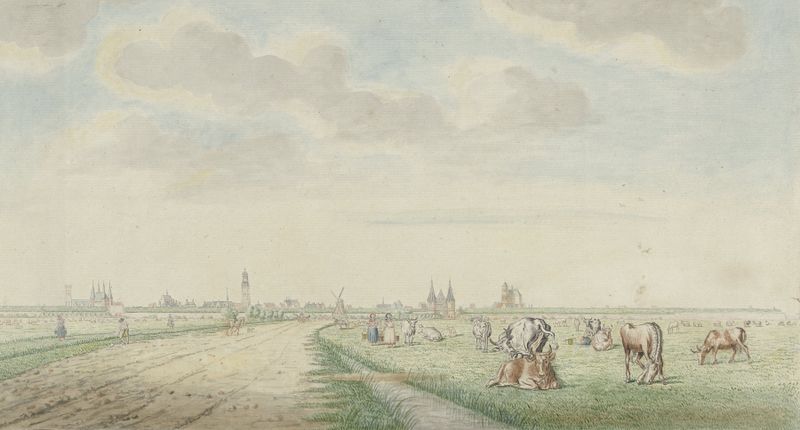
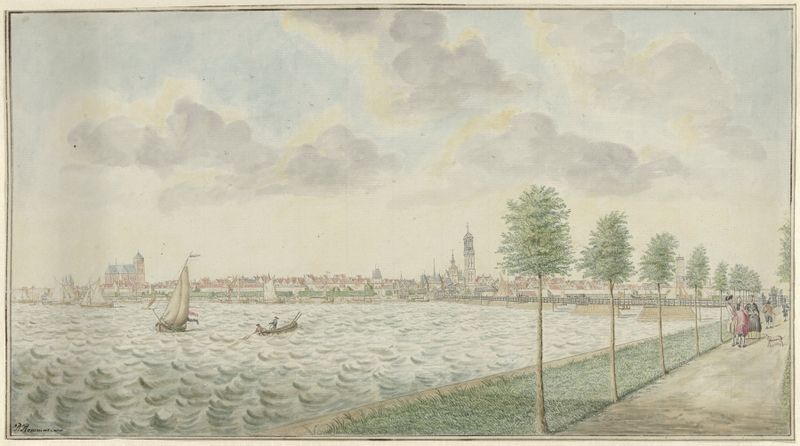
In the stillness of a dream, landscapes unfold like whispered secrets, inviting reflection and contemplation. Here lies a canvas that transcends mere representation, beckoning us into a tranquil reverie. Look to the left at the rolling hills, softly brushed with muted greens and browns, each stroke evoking the gentle touch of a lullaby. The sky, an ethereal blend of pastel blues and whites, envelops the scene in a delicate embrace, casting a serene glow over the meandering river that winds its way through the valley.
The meticulous attention to light and shadow hints at a fleeting moment, as though time stands still in the artist's vision, inviting the viewer to linger just a moment longer. Yet beneath this idyllic surface lies a profound tension between reality and illusion. The distant mountains represent the unreachable dreams that constantly elude us, while the placid water reflects not only the landscape but also the inner tranquility we yearn for. Subtle details, like the delicate flowers dotting the foreground, remind us of life’s transient beauty—a fleeting moment captured in the embrace of nature's quiet grandeur. Pieter Remmers created Gezicht in Gelderland during the late 18th century, a time when artists sought to capture the essence of the natural world with heightened sensitivity.
Living through a period rich in artistic exploration, he was influenced by the growing Romantic movement, which celebrated emotion and individual perception. This work showcases his desire to evoke introspection, allowing viewers to connect deeply with their own dreams and reflections in the serene countryside.