Gezicht op Kampen van de rivierzijde — History & Facts
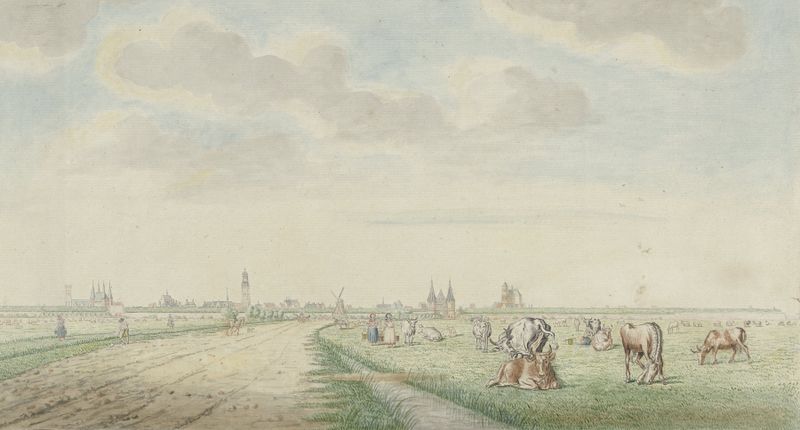
Can beauty exist without sorrow? In Gezicht op Kampen van de rivierzijde, a serene river landscape, the answer lingers in the delicate balance between tranquility and the haunting void that underlies existence. Look to the foreground where the calm waters mirror the soft brushstrokes of the twilight sky, painted in hues of lavender and peach. The horizon, where water meets land, draws your gaze towards the quaint silhouette of Kampen, its historical architecture outlined against a fading day. Notice how the gentle ripples caress the riverbank, creating a silken texture that invites contemplation, while shadows stretch long, suggesting the inevitable passage of time. As you delve deeper into the scene, subtle contrasts emerge.
The warm colors of the setting sun infuse the landscape with a sense of fleeting joy, while the barren trees on the river’s edge evoke a poignant reminder of loss and the cyclical nature of life. The stillness of the water juxtaposed with the distant cityscape hints at both the beauty of human existence and the emptiness that can accompany it. Here lies the void—a space that invites reflection on what is present and what is absent. Pieter Remmers painted this piece between 1770 and 1810, during a period marked by emerging Romantic ideals in art.
Living in the Netherlands, he focused on capturing the essence of his surroundings while grappling with the themes of nature and human emotion. As a landscape artist, he contributed to a shift from strict realism to a more emotive representation of scenes, echoing the deeper currents of sentiment that defined his time.