Gezicht op Kampen van de landzijde — History & Facts
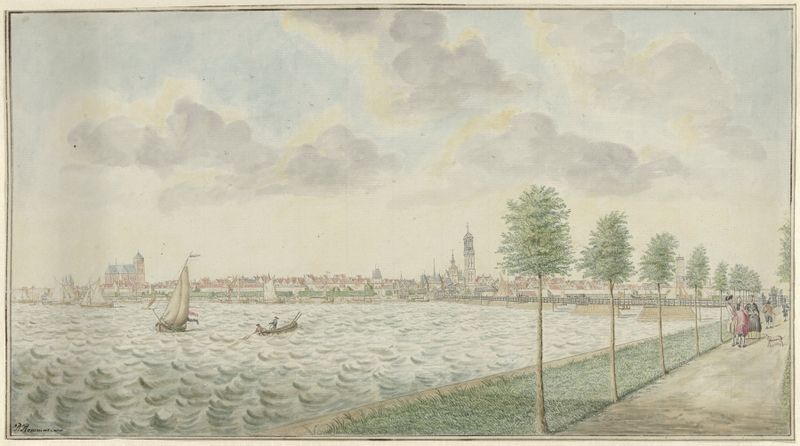
In the quiet embrace of a landscape, the essence of legacy lingers, whispering stories of those who walked before us. The viewer is invited into a world where the past and present intersect, urging contemplation of what endures through time. Look to the foreground, where delicate grasses sway gently in an unseen breeze, each blade meticulously rendered. The intricate play of earthy tones reaches out, leading your gaze to the serene waters that reflect the soft, diffused light of a setting sun.
Notice how the composition draws you towards the distant horizon where the silhouettes of Kampen emerge, their architecture speaking not only of beauty but of the resilience of a community shaped by history. Delve deeper, and you’ll uncover a profound contrast between the tranquil waters and the bustling life of the town on the horizon. The calmness of nature cradles the vibrancy of human existence, suggesting a harmony between the two. The soft palette reveals a nostalgia, a longing for times past, encouraging viewers to ponder the enduring legacy of both the land and its people. Created between 1770 and 1810, the work reflects a period of transition in the Netherlands, marked by artistic innovation and a growing appreciation for landscape as a genre.
During this time, the artist found inspiration in both the beauty of the natural world and the historical narratives embedded in the towns of his homeland, capturing a moment that would resonate for generations.