Gezicht op de abdij van Göttweig — History & Facts
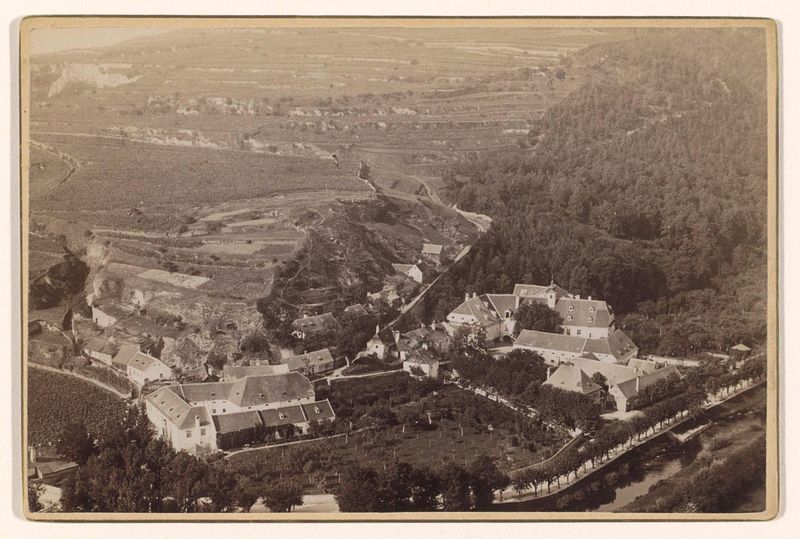
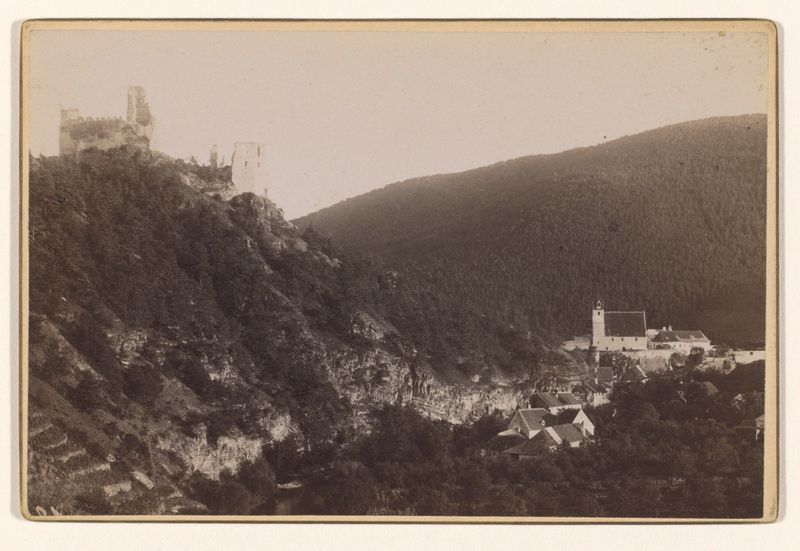
Can beauty exist without sorrow? In the ethereal representation of the abbey, one can almost hear the whispers of history mingling with the rustle of leaves, inviting contemplation on the essence of truth itself. Look to the right at the majestic towers of the abbey rising against a backdrop of soft, golden light filtering through the clouds. The artist employs a delicate palette of blues and greens to evoke a serene atmosphere, while the precise brushwork captures the architectural details with reverence. Notice how the foreground merges seamlessly with the gentle undulations of the landscape, inviting the viewer’s gaze to traverse the scene, as if walking through the very space depicted. Within this tranquil vista lies a profound contrast between the idyllic setting and the weight of its sacred purpose.
The abbey stands as a testament to faith and permanence, yet the surrounding nature, alive and shifting, suggests the fleeting nature of existence. Each leaf and shadow holds a story, hinting at the interplay of joy and melancholy that defines the human experience. The light that bathes the scene accentuates this duality, illuminating both the beauty of the moment and the shadows of the past. Franz von Prandtstetter painted this work between 1890 and 1910, a period marked by artistic introspection and a quest for deeper meaning in the wake of industrialization.
Living in Austria, he found inspiration from the landscapes around him, reflecting the harmony between nature and spirituality. This painting exemplifies not only his artistic vision but also the broader search for truth that characterized this transformative era in art history.