
Gezicht te ‘s-Gravenhage — History & Facts
In the quiet corners of our existence, fear often lingers, invisible yet potent, shaping our lives. Look to the center of the composition where the canal glimmers, reflecting a muted, melancholic sky. The architectural lines of the buildings rise stoically, their facades capturing a blend of light and shadow that hints at untold stories. Notice the figures strolling along the water’s edge, their silhouettes softened by the gentle glow of twilight, suggesting both companionship and solitude.
The careful application of color—earthy browns, deep greens, and the delicate blues of the sky—creates a sense of calm, yet lingers with an undercurrent of unease. Dig deeper into the contrasting elements at play. The serene surface of the water belies the unsettling stillness of the scene, inviting questions about what lies beneath. The figures, while seemingly engaged in their moment, evoke an air of detachment, as if they are trapped in their own fears, disconnected from the beauty around them.
The juxtaposition of the tranquil landscape and the emotional distance of its inhabitants breeds a tension that resonates with viewers, prompting introspection. Adrianus Eversen painted Gezicht te ‘s-Gravenhage during the late 19th century, a period marked by rapid urbanization and social change in the Netherlands. As he navigated his own artistic evolution, the work reflects a longing for stability amid uncertainty, capturing the essence of a world in transition. While his landscapes are often celebrated for their beauty, this piece subtly hints at the complex emotions of fear and isolation that accompany change.
More Artworks by Adrianus Eversen
Browse all →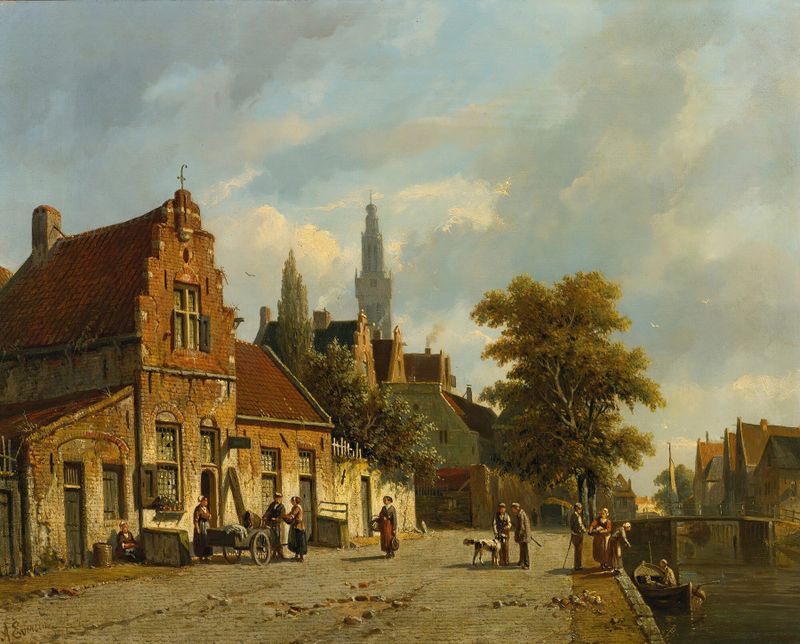
A Town In Holland
Adrianus Eversen
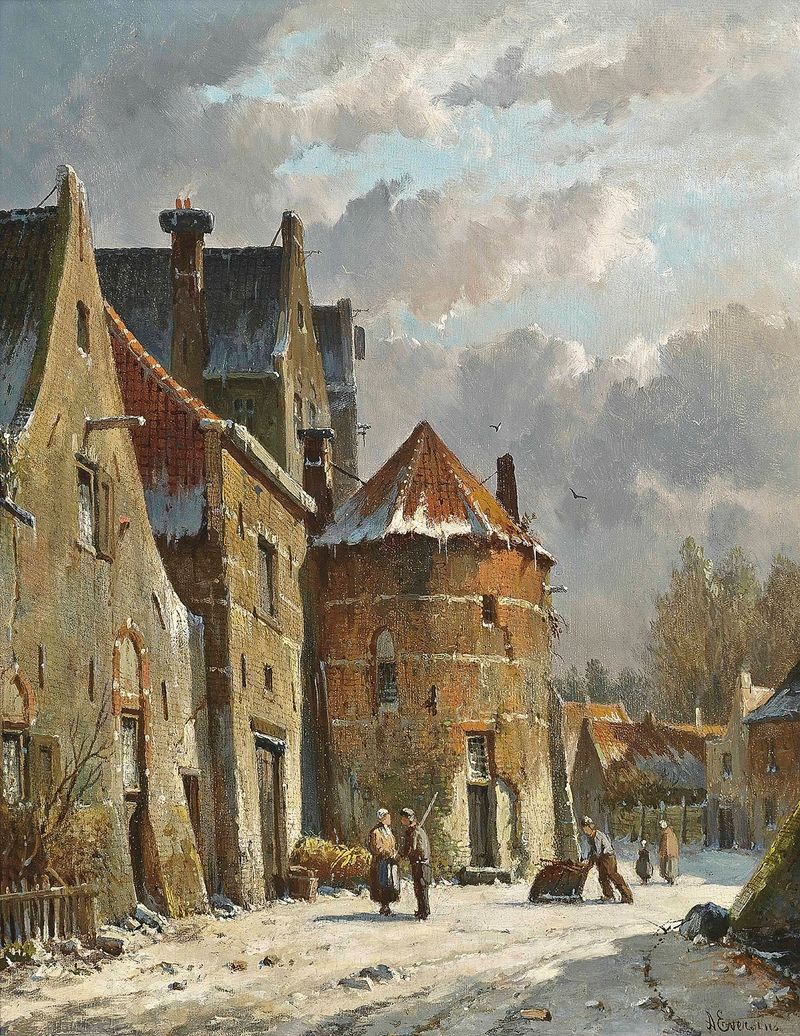
Figures On A Dutch Street, Winter
Adrianus Eversen
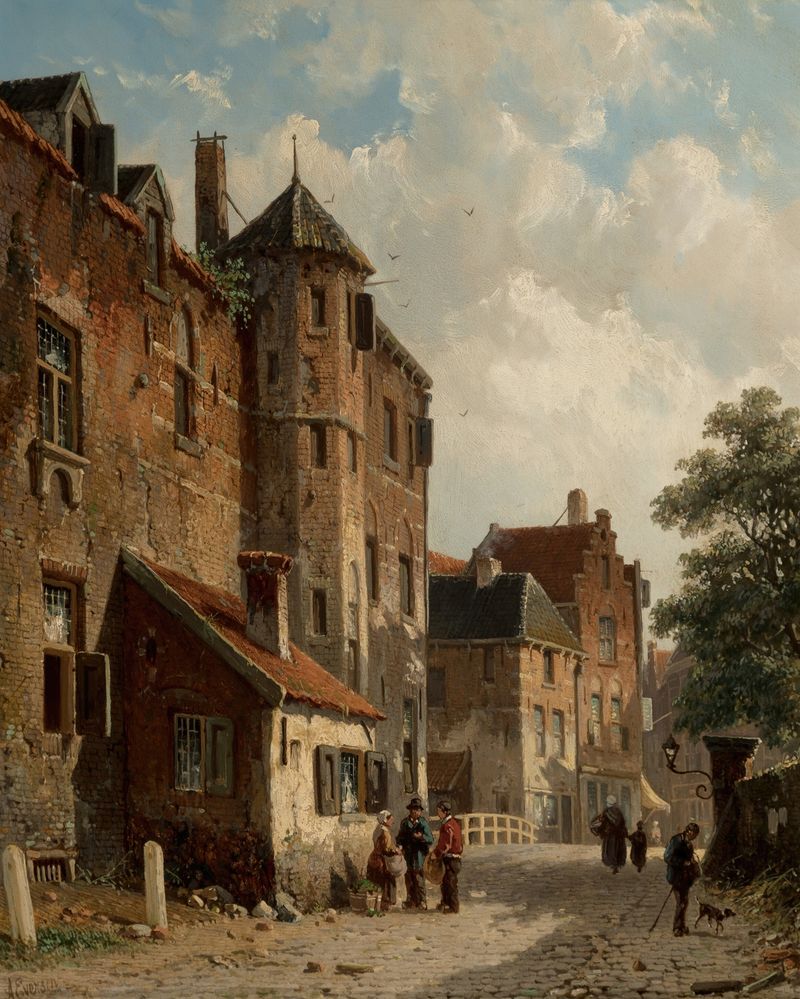
View of a sunlit Dutch street scene
Adrianus Eversen

A Dutch street scene
Adrianus Eversen
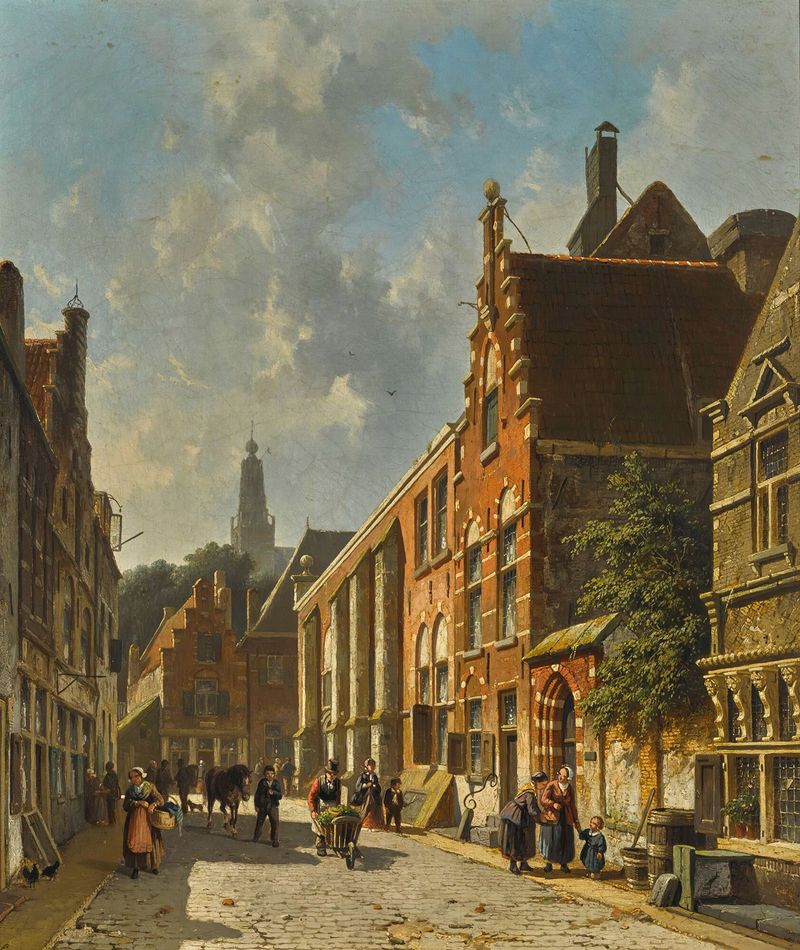
A busy street in summer
Adrianus Eversen
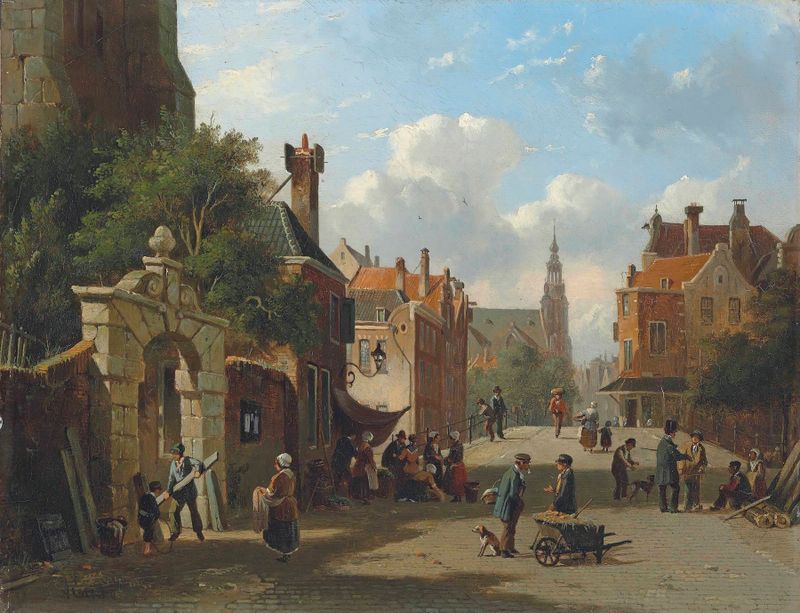
A busy street in Holland
Adrianus Eversen
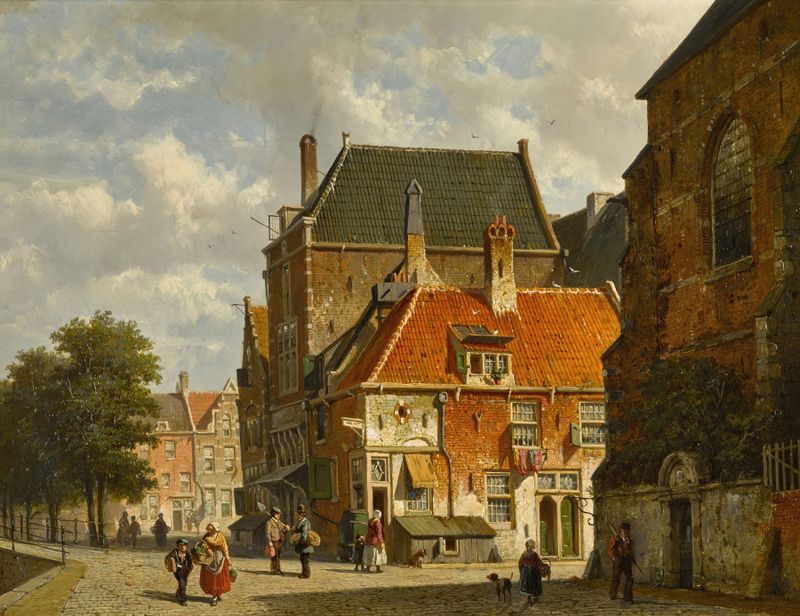
Figures on a Sunlit Street
Adrianus Eversen
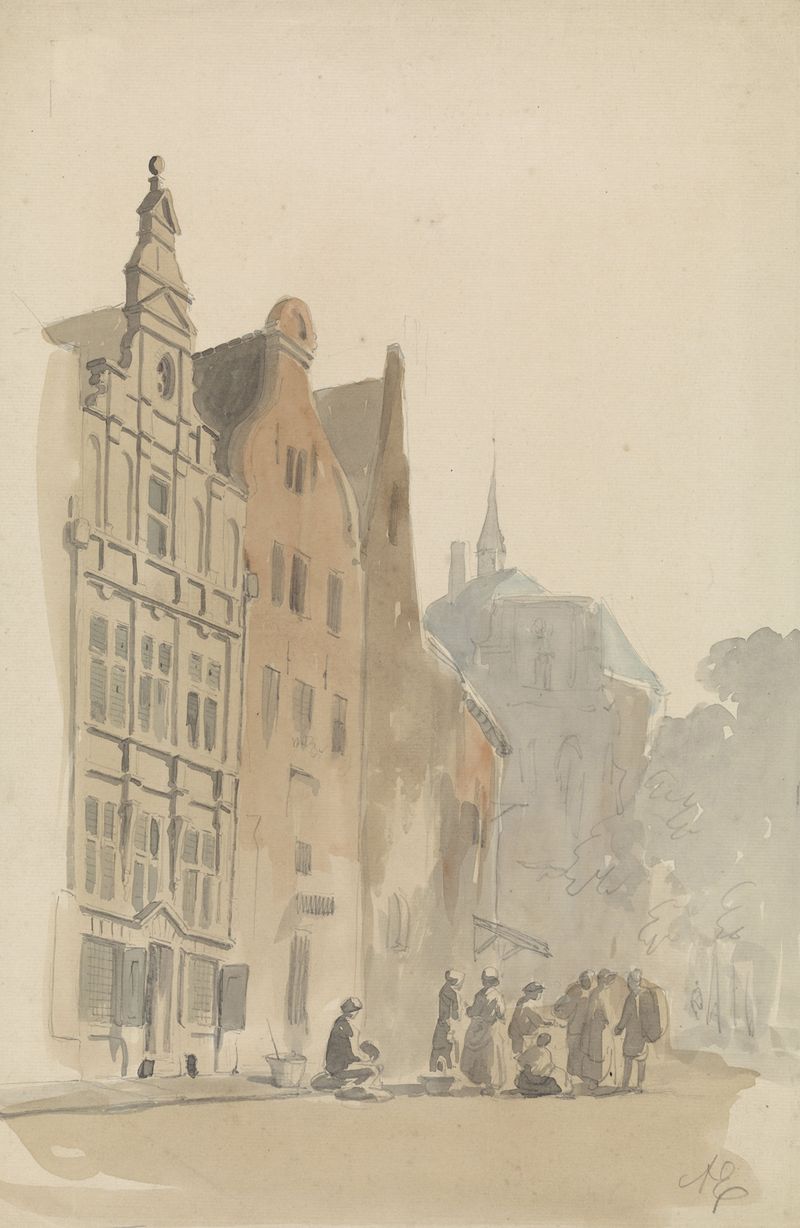
Ronde Lutherse kerk en enige huizen te Amsterdam
Adrianus Eversen
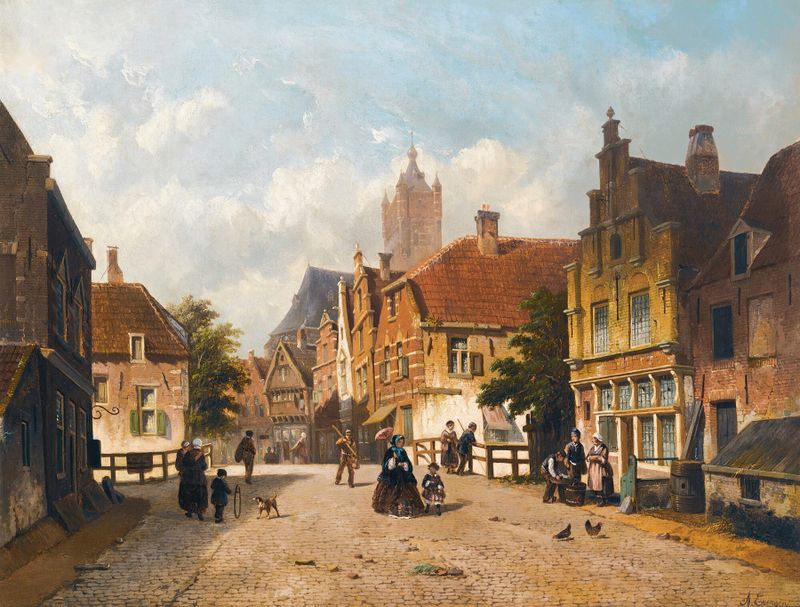
A dutch street
Adrianus Eversen

Achter de Westerkerk in Enkhuizen
Adrianus Eversen





