
A Dutch street scene — History & Facts
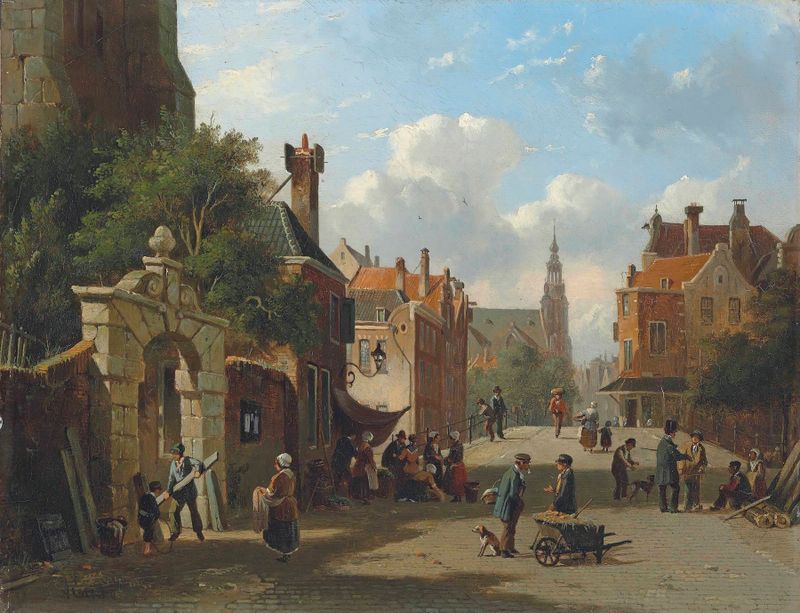
What secret hides in the quiet of the canvas? In A Dutch street scene, the subtle decay of life and architecture whispers stories of times long past, beckoning the viewer to listen closely. Focus on the cobbled path, where the intricate details invite your gaze. As your eyes wander down the street, you’ll notice the warm, earthy tones of the buildings softly merging with hints of vibrant green, suggesting both life and the grip of nature. The sky, a muted canvas of gray, casts a gentle light over the scene, accentuating the shadows that dance along the facades.
Eversen’s brushwork, with its delicate textures, draws you into this serene moment frozen in time. Beneath the surface, a profound tension emerges. The juxtaposition of the lively street activity against the weathered buildings speaks to the inevitable passage of time — a reminder that beauty often lies in impermanence. The children playing, carefree and lively, contrast with the crumbling brickwork, hinting at a fleeting innocence set against the backdrop of decay.
Each element in the composition plays a role in this delicate equilibrium, urging the viewer to contemplate the cycle of life. In 1858, Adrianus Eversen painted this scene while living in the Netherlands during a period marked by industrial growth and urban transformation. As cities modernized, this artwork reflects a nostalgic connection to the past, capturing the essence of everyday moments amid changing landscapes. Eversen’s focus on street life exemplifies a broader artistic movement that sought to celebrate ordinary experiences in an era of rapid change.
More Artworks by Adrianus Eversen
Browse all →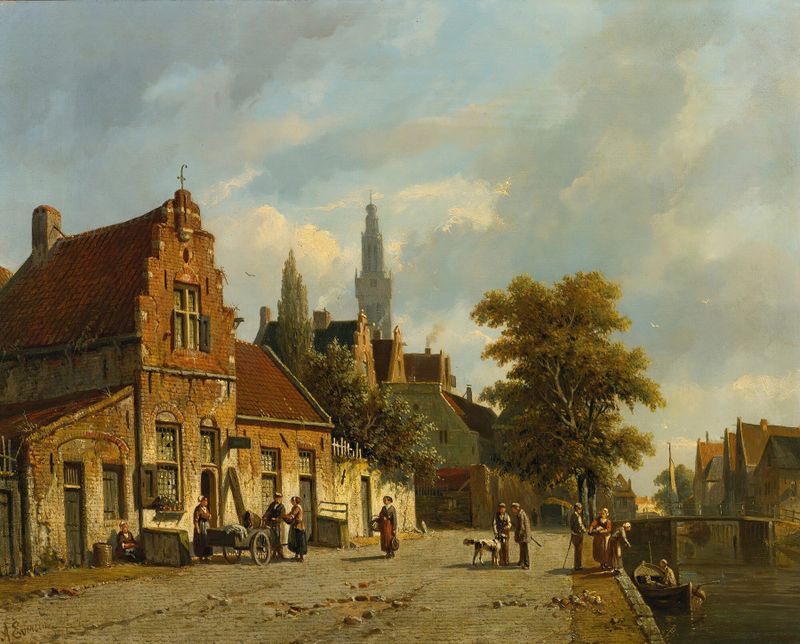
A Town In Holland
Adrianus Eversen
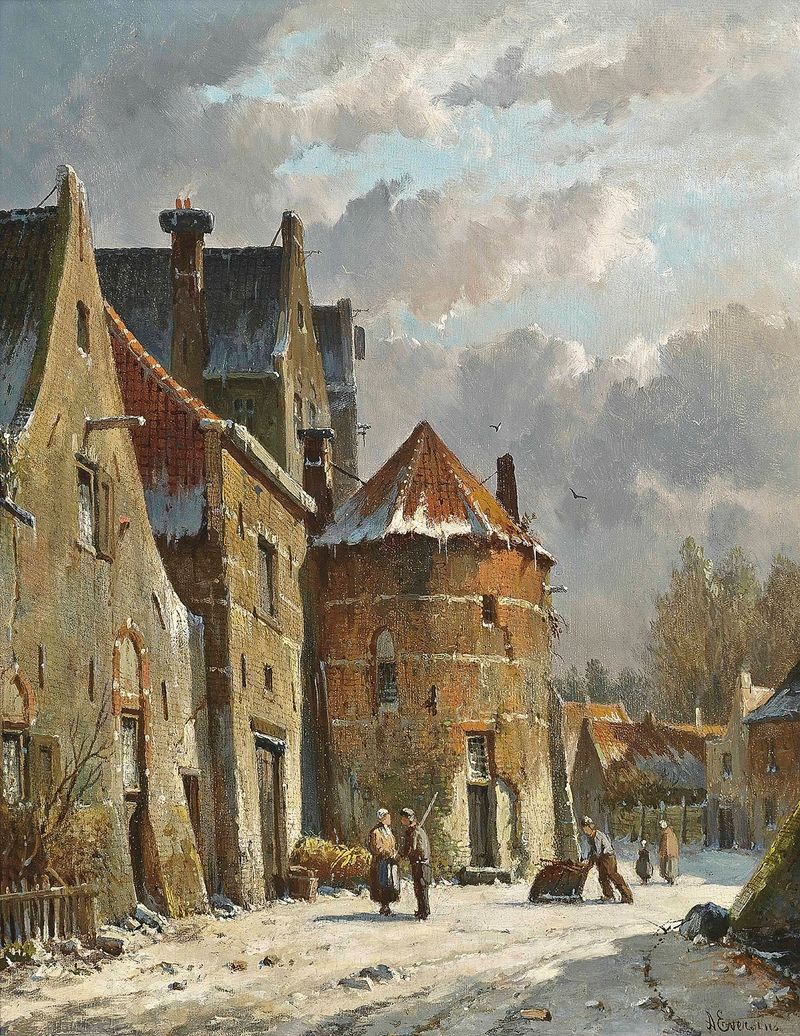
Figures On A Dutch Street, Winter
Adrianus Eversen
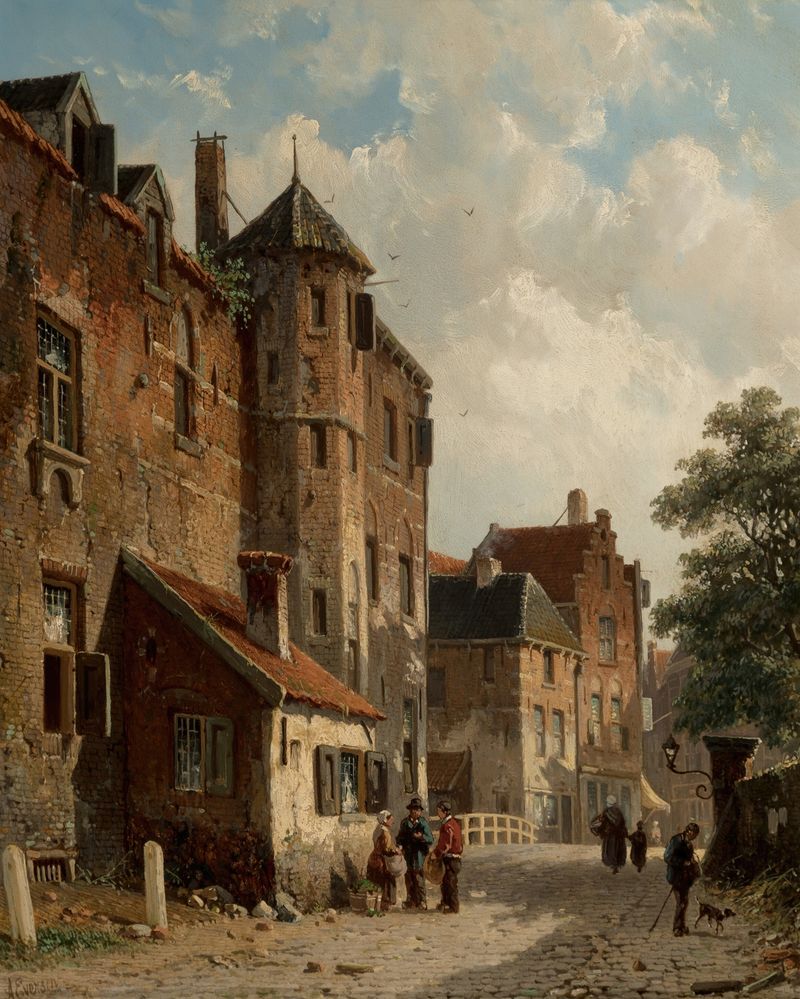
View of a sunlit Dutch street scene
Adrianus Eversen
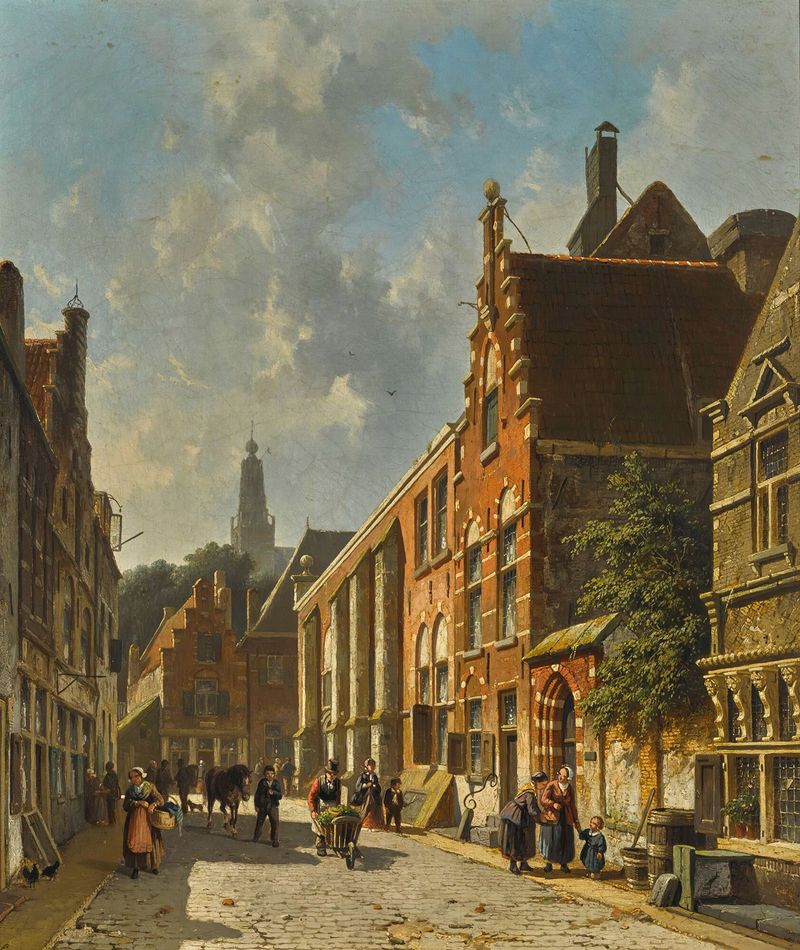
A busy street in summer
Adrianus Eversen
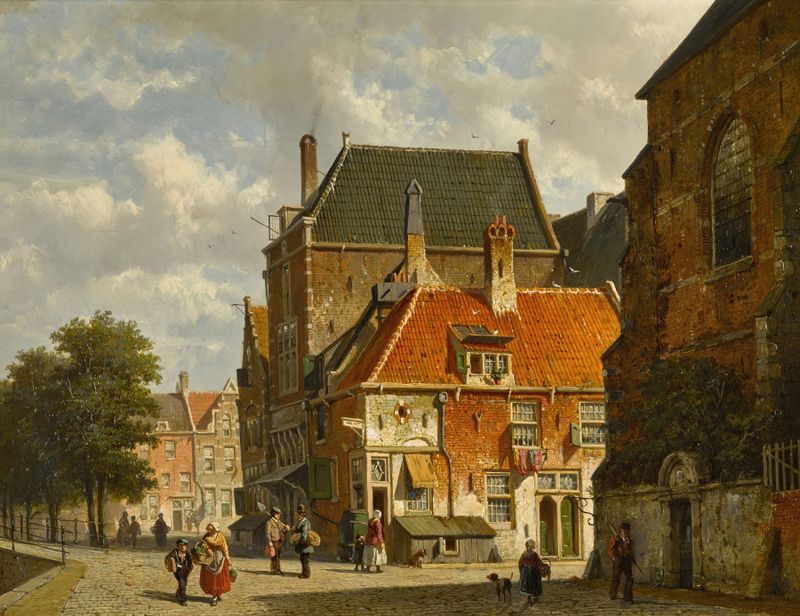
A busy street in Holland
Adrianus Eversen
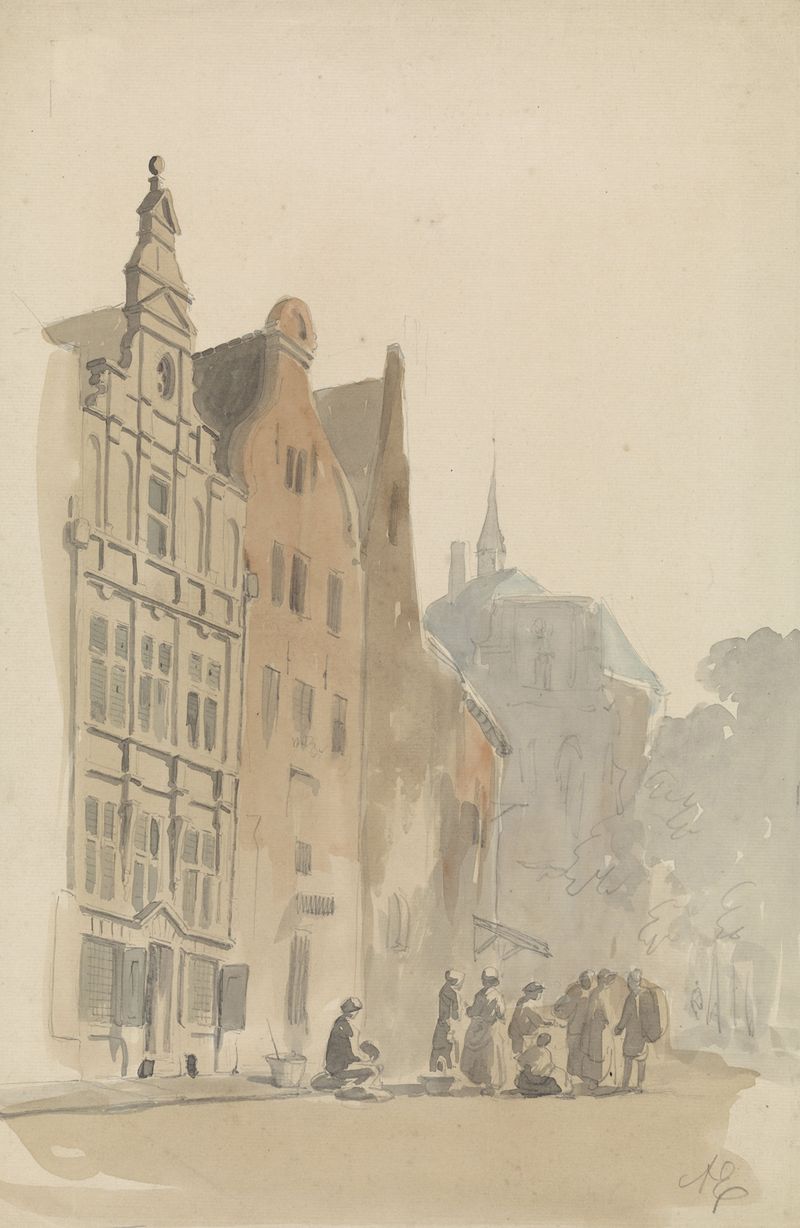
Figures on a Sunlit Street
Adrianus Eversen
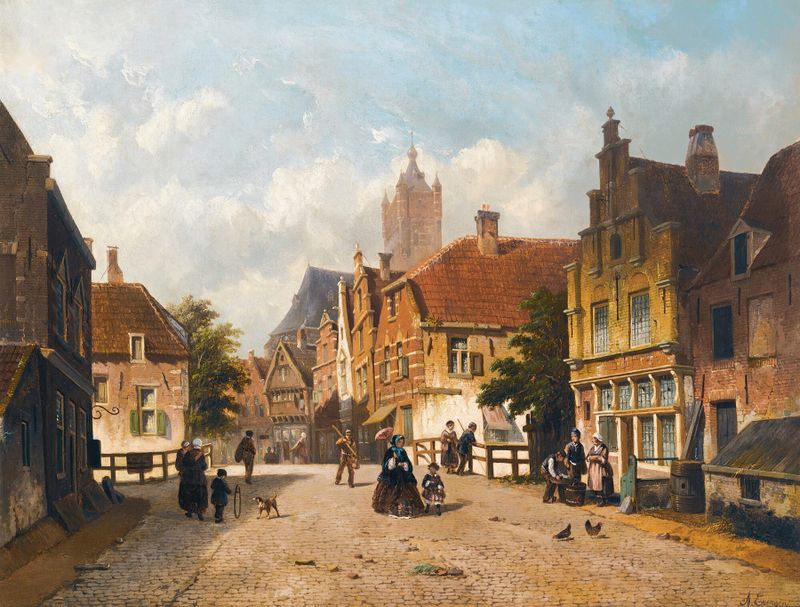
Ronde Lutherse kerk en enige huizen te Amsterdam
Adrianus Eversen
A dutch street
Adrianus Eversen

Achter de Westerkerk in Enkhuizen
Adrianus Eversen

Ansicht auf die die Westkerk in Enkhuizen
Adrianus Eversen





